Chimney Inspection Tier 2 in Houston, TX
Camera-verified flue condition documented for disclosure or your own records. The actual footage, not a summary.
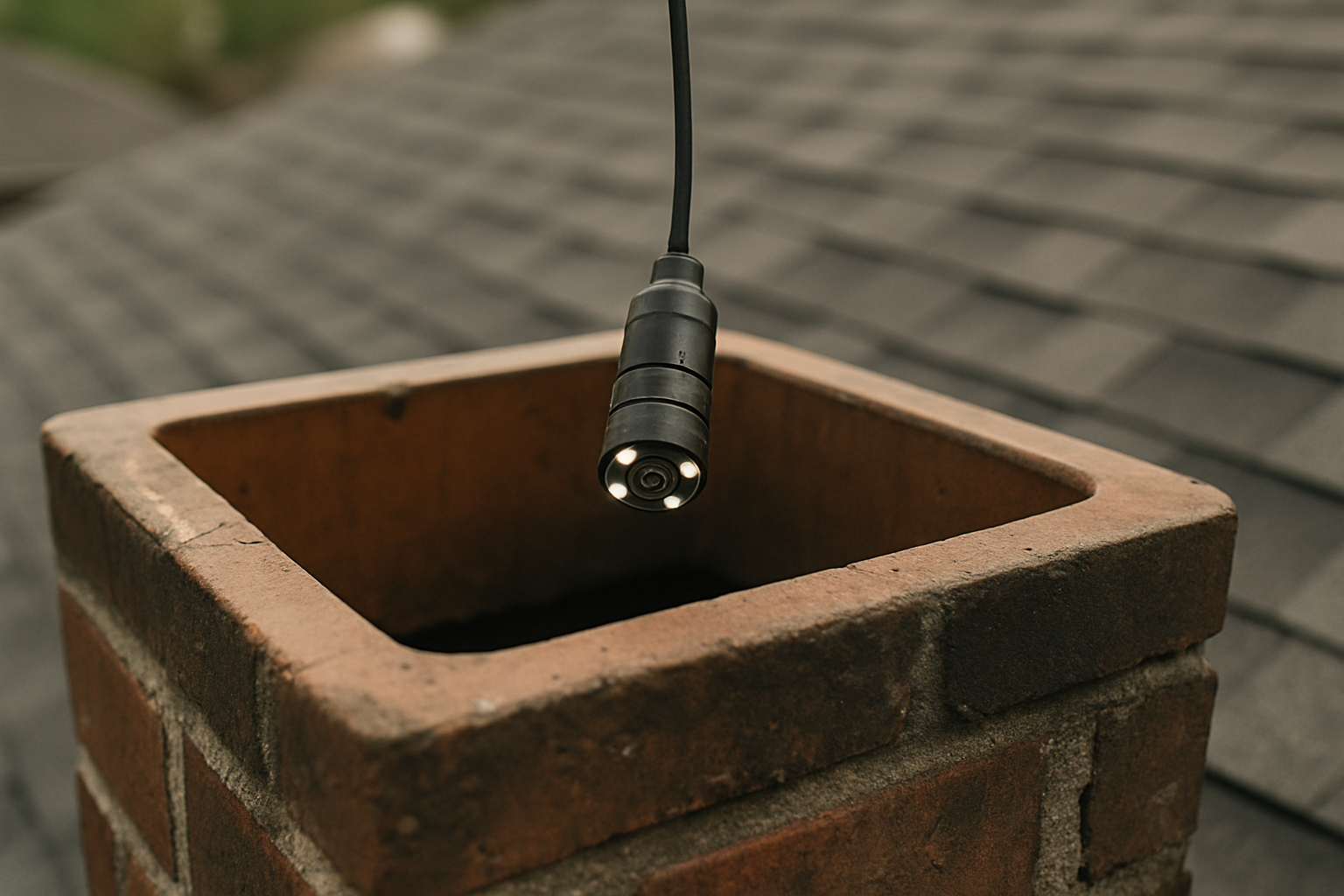
Chimney Inspection Tier 2 in Houston, TX
15+
Years in Business
NFPA
211 Standard
CCTV
Full Flue Footage
Camera-Verified Flue Condition Documented for Disclosure or Your Own Records
A Tier 2 chimney inspection, also called a Level 2 chimney inspection, uses a camera system inside the flue to assess what a visual check cannot reach.
This inspection is required by NFPA 211 (the National Fire Protection Association's chimney safety standard) whenever a home changes ownership, a fuel type changes, or a chimney event like a fire or major storm has occurred. The camera records the full liner interior, every joint, every crack, every section of terra cotta, stainless, or cast-in-place material. At 832 Home Service, you receive that recording alongside our written findings. Not a summary. The actual footage.
Houston's Real Estate Pace Makes This Inspection Critical
In Houston, the chimney is the most commonly skipped item in a home inspection, and the most expensive to discover after closing.
A standard home inspection gives the chimney one visual pass from the firebox opening. That check can see soot accumulation and obvious damage at the firebox level. It cannot see the liner above the smoke chamber. It cannot see cracked joints 15 feet up the flue.
Houston's southeastern real estate corridor, League City, Webster, Seabrook, and Clear Lake City, moves quickly. Buyers and sellers often schedule a home inspection and assume the chimney is covered at the right depth. It isn't. Understanding the difference between a chimney inspection and cleaning helps buyers recognize what each service actually covers before they make that assumption.
A Tier 2 chimney inspection with camera documentation fills that gap. It produces a verified record of flue liner integrity, the condition of the liner material, that goes directly into a disclosure package or repair negotiation. That's not a detail. That's liability protection for whoever owns the property at closing. Given how Houston's climate accelerates chimney deterioration, camera inspection is especially important in this market, moisture cycles, heat stress, and storm exposure create damage patterns that a visual pass at the firebox will never reveal.
Three Situations That Call for a Tier 2 Inspection
Each of these situations requires camera access, and each produces a different finding.
832 Home Service has conducted Tier 2 inspections for real estate transactions across the Houston metro since 2010, including properties in Pearland, Friendswood, and Sugar Land. The call usually comes from one of three directions, and each one needs something slightly different from the inspection report.
If you're selling a Houston property
The goal is documentation. A recorded camera scan of the full flue interior goes directly into a disclosure package. Sellers in Pearland and Sugar Land have used our inspection video in their disclosure packages, it removes a negotiating point before it becomes one.
If you're buying a Houston home
Post-2000 construction across Friendswood, Pearland, and Sugar Land often uses prefab chimney systems. These manufactured units look similar to masonry chimneys from outside. Inside, the liner materials, joints, and chase construction are completely different, and more vulnerable to certain failure types. Where a Tier 1 chimney inspection for routine assessments can identify surface-level concerns at the firebox, it cannot reach the liner sections above the smoke chamber where prefab systems are most likely to show joint failures. A Level 2 chimney inspection before you close tells you exactly what you're buying. It also helps you understand chimney repair costs before closing so you can negotiate from a position of documented fact rather than assumption.
If you've changed fuel types or had a chimney event
Converting from wood to gas changes the thermal and moisture profile inside the flue. A liner sized and surfaced for wood-burning isn't automatically correct for gas. Similarly, any significant chimney fire or named storm event, and Houston gets both, is a mandatory trigger for a Tier 2 inspection under NFPA 211. The camera finds heat fractures in the liner, debris forced into concealed chimney areas, and joint separation behind the smoke chamber. In cases where the camera reveals liner damage, chimney relining if liner damage is confirmed is often the recommended next step before the appliance reconnects. If the damage is severe enough, we'll also explain Tier 3 inspection after a chimney fire or major event, particularly in situations involving a confirmed chimney fire or structural compromise that goes beyond what camera documentation alone can resolve.
These are three different situations. They share one answer: camera documentation of the full flue interior.
What Happens When We Find Something
If the camera reveals a problem, you get the finding in writing, with footage, before any repair conversation starts.
The inspection is a diagnostic tool. We document what we find. You decide what to do with that information.
In a real estate transaction, that might mean negotiating a repair credit. For a fuel-type change, it might mean relining before the new appliance connects. For a post-storm assessment, it might mean an insurance claim submittal.
The inspection report and video are yours. We don't tie the inspection finding to a repair quote unless you ask us to.
Our Standards for Every Tier 2 Inspection
Every component accessible by camera or visual assessment gets documented, nothing skipped, nothing assumed.
- ✓ Full CCTV inspection (chimney camera) from firebox opening to flue termination
- ✓ Video recording of the complete liner interior, delivered to the client
- ✓ Written findings report matching video timestamps to written observations
- ✓ Assessment of flue liner integrity across all accessible liner sections
- ✓ Review of accessible concealed chimney areas, smoke chamber, liner joints, visible crown underside
- ✓ Notation of any fuel-type change indicators or chimney event evidence
- ✓ Real estate chimney inspection documentation formatted for disclosure or negotiation use
A camera goes in. The footage comes out. You see exactly what we see.
How We Run a Tier 2 Inspection
Diagnostic Phase
We begin at the firebox. We confirm the appliance type, fuel type, and any known history, recent fires, prior repairs, fuel conversions. This takes about 10 minutes and shapes what we're looking for before the camera enters the flue.
Camera Implementation
The CCTV inspection system, a flexible camera lowered through the full length of the flue, captures continuous footage from the firebox collar to the flue termination at the cap. We pause at joints, liner transitions, and any visible anomaly. Still images are captured at every flagged point. The footage runs continuously and is timestamped. For a standard single-flue chimney in Houston, the camera pass takes 20 to 35 minutes. Multi-flue systems take longer. A fast camera pass misses joint gaps at the mortar line, we don't rush the footage.
Post-Inspection Documentation
After the camera pass, we complete the exterior visual assessment, cap condition, crown condition, flashing at the roofline, and visible masonry above the roofline. These findings are integrated into the written report alongside the video documentation. You receive the full video file and the written report before we leave the property. If you need the report formatted for a specific disclosure document or insurance carrier, let us know at booking. We can structure the findings accordingly.
Areas We Serve in Greater Houston
832 Home Service runs Tier 2 chimney camera inspections across the full Houston metro.
We serve Houston, Pearland, Friendswood, Sugar Land, League City, Webster, Seabrook, Clear Lake City, Pasadena, Baytown, Katy, The Woodlands, Conroe, Spring, Cypress, Tomball, Missouri City, Bellaire, West University Place, Galveston, Texas City, and all surrounding communities.
Frequently Asked Questions
What is the difference between a Tier 2 and a Tier 1 chimney inspection? +
A Tier 1 inspection is a visual check of readily accessible areas, typically from the firebox opening and exterior. A Tier 2 inspection adds a CCTV camera pass through the full flue interior, documenting joints, liner condition, and concealed areas a visual pass cannot reach. Tier 2 is required by NFPA 211 for home sales, fuel-type changes, and after a chimney fire or major storm event.
Do I actually receive the inspection video? +
Yes. You receive the full video file along with the written findings report before we leave the property. It's the actual footage, not a summary. The written report matches video timestamps to specific observations so you can see exactly what we saw.
How long does a Tier 2 inspection take? +
For a standard single-flue chimney in Houston, the camera pass alone takes 20 to 35 minutes, plus roughly 10 minutes for the diagnostic phase and additional time for the exterior visual assessment. Multi-flue systems take longer. We don't rush the footage, a fast pass misses joint gaps at the mortar line.
Can you format the report for a real estate disclosure or insurance claim? +
Yes. If you need the report structured for a specific disclosure document or insurance carrier, let us know at booking and we'll format the findings accordingly. The documentation is designed to go directly into a disclosure package or repair negotiation.
Will you tie the inspection to a repair quote? +
No, not unless you ask us to. The inspection is a diagnostic tool. We document what we find and the report and video are yours. You decide what to do with that information, whether that's negotiating a repair credit, relining before a new appliance connects, or submitting an insurance claim.
Ready to Get Started?
Contact our team today for a free consultation.