Convert your wood-burning Houston fireplace to gas logs in one scheduled visit BTU-sized, venting verified, and burning the same day.
Gas log installation starts with the firebox BTU output and venting type must match what’s already there.
Vented or ventless isn’t an aesthetic choice, it’s structural. Vented gas logs require a working, open flue. Ventless sets require a sealed damper and specific room-volume clearances. We confirm which setup your firebox can safely support before anything is ordered. BTU rating is matched to opening width, gas supply-line pressure is checked, and the log set fits the space correctly not approximately. If you’re still weighing options, our gas vs. wood-burning fireplace guide walks through the key differences.
The set you want and the set your firebox supports are not always the same thing here’s a real example.
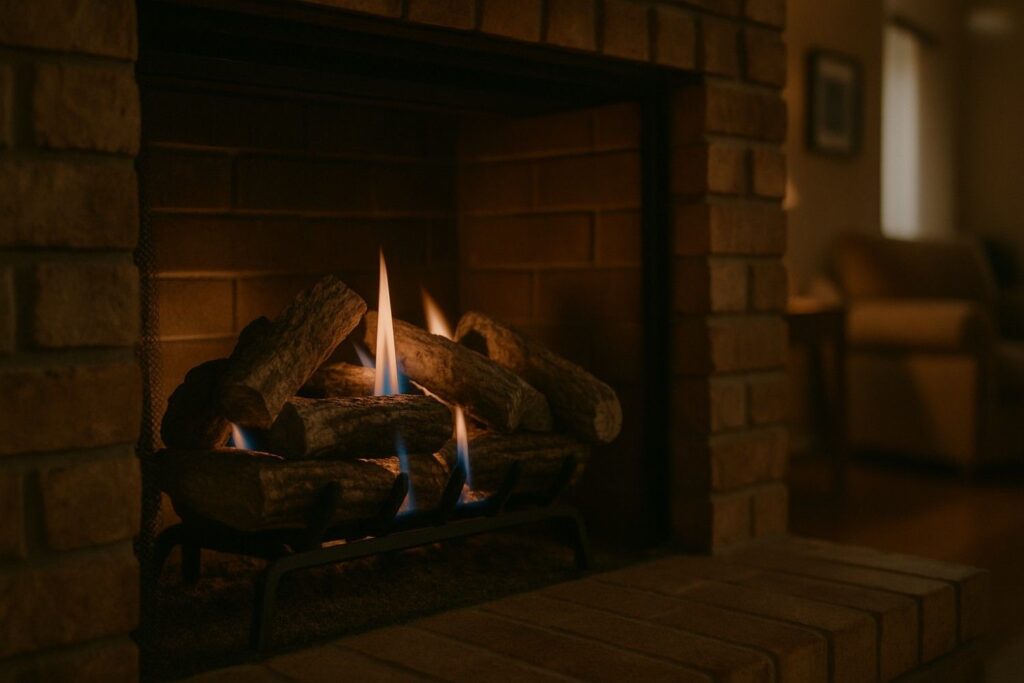
I’m Marcus, one of the senior installation techs here at 832 Home Service. I’ve been doing gas log work across Houston since 2013. One call that sticks with me came from a homeowner in Meyerland a 1978 brick ranch with a wide-mouth masonry firebox, roughly 42 inches across.
She’d already picked out a 30-inch log set at a showroom. It looked right visually. But that opening width requires a BTU output a 30-inch set simply can’t produce effectively the flames would have looked small and weak against the back wall. She also had a ventless set in mind, which wasn’t compatible: her damper was functional and her ceiling height put her below the room-volume threshold for a ventless installation.
We walked through three things at the assessment: opening width, available BTU range for that width, and whether her existing gas stub-out was on the correct side of the firebox for the burner assembly. It wasn’t the stub was roughed in on the left, and the set she wanted was right-side-entry. That’s a $0 discovery if caught before ordering, and a real problem if caught on installation day.
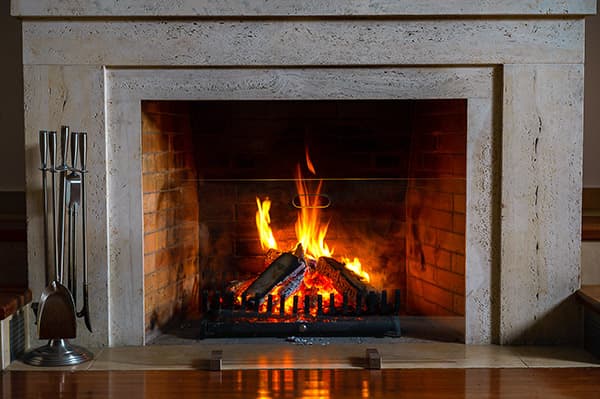
We reoriented the burner spec, matched a 36-inch vented set with the correct BTU rating for her space, and had it burning the same afternoon. She used it the following weekend during the first real cold front of the season. That’s the difference sizing makes before the equipment is ordered.
Every installation gets BTU sizing, venting verification, and a live-burn test before we leave.
Output rating confirmed against firebox opening width before any set is specified.
Supply-line pressure verified at the stub-out before the burner assembly is connected.
Damper permanently blocked open or sealed per ventless installation
Gas connection, BTU rating, venting type, and test result recorded and left with the homeowner.
Damper function, room volume, and local requirements checked before installation type is selected.
Positioned per manufacturer spec placement directly affects combustion quality and ember-bed appearance.
Set ignited, flame pattern confirmed, and pilot assembly verified before the crew leaves.
The process runs in a fixed sequence assessment first, sourcing second, repair third.
The primary sizing variable. A set too small looks out of scale and underperforms thermally; too large won't fit within required clearances from the firebox walls.
Vented sets burn with an open flue for a more realistic flame and require a working open flue we recommend a chimney inspection to confirm your flue is ready before installation. Ventless sets seal the damper and require specific room-volume minimums. Your firebox and layout decide which is appropriate.
A stub-out on the wrong side means the burner assembly is specified accordingly, and low supply pressure affects BTU output. Both are checked before ordering.
Houston's ~75% year-round humidity corrodes damper hardware on unused fireplaces. A vented installation requires a functional damper, so we conduct a professional gas fireplace inspection before installation to assess damper operation and firebox condition, following CSIA guidelines. If the damper has seized or corroded, you may also need gas fireplace repair first.
Houston’s short fireplace season makes the installation timeline matter more than most homeowners expect.
Greater Houston gets roughly 30 to 45 nights per year cold enough to use a fireplace. That window is narrow when it arrives, the last thing you want is a two-week wait between your first cold front and your first fire.
Many older Houston fireplaces were built in the 1960s and 70s with throat dampers now painted shut or corroded from coastal humidity. A vented gas log set requires a properly functioning open damper. If yours shows wear, we can handle damper repair or replacement before converting to gas logs checked as part of the pre-installation assessment, not discovered mid-job.
We serve Greater Houston including Sugar Land, The Woodlands, Pearland, Galveston, and surrounding communities. Our crews run 12 strong, and most standard installations existing gas line confirmed, firebox in normal condition are complete in a single scheduled visit.
Non-standard openings have workable solutions we identify the path before you’re committed to a product.
Not every Houston firebox was built to catalog dimensions. Older masonry fireplaces especially pre-1980s often have opening heights or widths that fall between standard log-set sizes, and 1990s prefab inserts sometimes have shallow fireboxes that limit log-set depth.
Here’s how we handle it: we measure opening width, depth, and height at the first visit. If your firebox falls between standard sizes, we identify which set can be safely installed either slightly undersized with appropriate BTU adjustment, or through a custom burner-pan configuration that fills the opening correctly. It isn’t a guess. It’s measured, and you know exactly what will be installed and why before we place any order.
832 Home Service performs preventive chimney inspections across the Greater Houston area.
Contact our team today for a free consultation. Call 832 Home Service at (832) 662-3437 or email info@832chimneyservices.com
832 Home Service sizes and installs gas log sets for Houston fireplaces vented and ventless, standard and non-standard openings. Tell us your firebox opening width and whether you have an existing gas stub-out, and we’ll confirm what’s needed before your appointment.
WhatsApp us
Tell us what’s going on and we’ll get back to you, often the same day.
Prefer to talk? (832) 662-3437