Your gas fireplace gets a full component sequence test, gas valve to remote receiver, before any part is replaced.
Gas fireplace repair means identifying the actual failed component, not the first one that looks suspicious.
At 832 Home Service, we repair gas fireplaces across the Greater Houston area by testing components in a defined sequence. Gas supply and valve first. Then the pilot assembly, thermocouple or thermopile, ignition module, and remote receiver. Every repair starts with a full diagnostic sequence. That way, the part we replace is the part that actually failed.
We service both atmospheric gas fireplaces, units that draw combustion air from the room and vent through a traditional flue, and direct-vent systems. If your unit won’t ignite, won’t stay lit, or doesn’t respond to the remote or wall switch, we find out exactly why before anything is pulled and replaced. For homeowners who want a thorough evaluation before committing to repair, we also offer a professional gas fireplace inspection in Houston that follows the same co
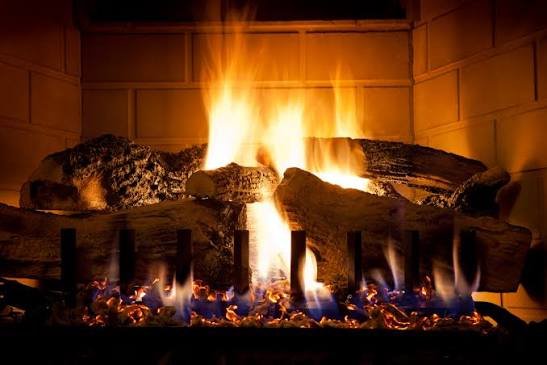
Gas Supply & Valve
Pilot Assembly
Thermocouple / Thermopile
Ignition Module
Remote Receiver
Houston’s climate works on gas fireplaces even when they’re not being used.
Here’s what most Houston homeowners don’t realize about their gas fireplace. It runs for roughly three months a year. The other nine months, the unit sits in a home where humidity averages above 70 percent and temperatures routinely exceed 95°F. That environment doesn’t leave the fireplace untouched. If you’re weighing your options, understanding how gas and wood-burning fireplaces compare in atmospheric vs. direct-vent configurations can help clarify which system you have and what maintenance it requires. To learn more about how this specific climate accelerates wear on fireplace components, see our resource on how Houston’s heat and humidity accelerate component wear.
Burner port blockage, the obstruction of individual gas ports on the burner manifold by dust, debris, or spider webs, happens during those dormant months. Houston’s warm climate means spiders and insects use gas appliance orifices as nesting sites year-round. Thermocouple tips oxidize in high humidity. Remote receivers lose signal sensitivity after extended periods without power cycling. Because blocked burner ports and dormant-season ignition failures can create carbon monoxide risk, we recommend reviewing the CPSC carbon monoxide safety guidance for gas appliances and scheduling a carbon monoxide safety inspection for gas appliances if your unit has been sitting unused for an extended period.
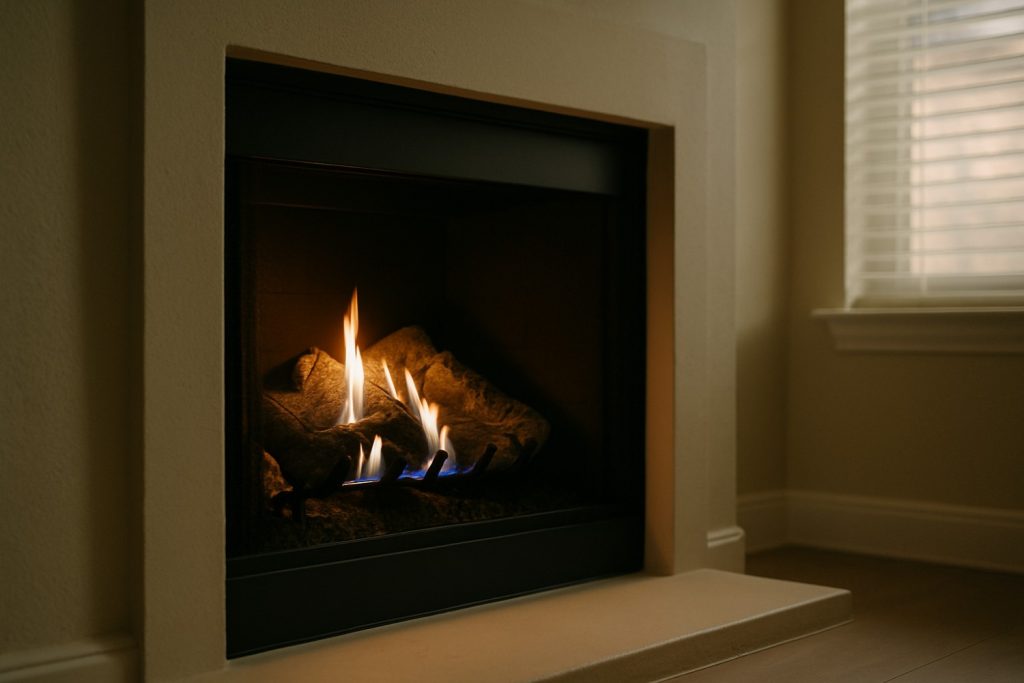
Then November arrives. The homeowner turns the unit on and gets nothing. No pilot, no ignition, or a flame that starts and immediately goes out. The failure feels sudden. It wasn’t. Every component we test was being acted on by heat and humidity since the previous February. That’s the environment we work in across Houston. Every gas fireplace repair we diagnose accounts for it.
The installation follows three phases, each phase confirmed before the next begins.
Every installation starts with a site visit and pre-installation chimney inspection. We measure the space, assess structural conditions, calculate the flue height-to-opening ratio, and review Houston permit and code requirements against International Code Council residential building codes. For wood-burning systems, we assess combustion air; for gas, we confirm gas capacity and venting type. The flue system is fully designed before construction begins, so any location issues are identified early. The homeowner receives a complete design scope and quote before work starts.
Installation begins with the flue system. Chase framing is built to the flue dimensions. Our chimney liner installation for new fireplaces follows the confirmed flue system design, liner diameter, material, and termination all specified before the chase frame goes up. Firebox construction and hearth framing follow the confirmed design. Firebox clearance requirements are measured and documented at each stage. The combustion air inlet, if required, is installed and tested during this phase. Surround and mantel work follows structural completion. We assess footing requirements at the design phase.
We run the fireplace before the project is closed. For wood-burning systems, that means a test fire with smoke observation at the firebox face, smoke shelf, and cap termination. For gas systems, we verify ignition, pilot function, gas valve response, and thermocouple operation under live-fire conditions. Draft performance is confirmed against the design calculations. Any adjustment needed is made before we leave. The homeowner receives a written scope summary covering the installed components, fuel type specifications, and the flue dimensions documented at completion.
Every gas fireplace repair we perform follows the same documented component sequence, no shortcuts.
Gas supply and valve tested before the pilot assembly, thermocouple, ignition module, or remote receiver.
performed with OEM-matched specifications for the unit's BTU output and valve hold requirements.
included on every service call, ports cleared manually if blockage is present before ignition is tested.
both serviced, we document which type is present and adjust the diagnostic protocol accordingly.
Component readings recorded before any part is swapped, voltage output, gas pressure, signal response.
The electronic component that generates the spark for ignition, checked for carbon deposit on the electrode tip and electrode gap widening before replacement is recommended.
the unit runs through a full ignition cycle before the crew leaves the property.
This repair call shows exactly why testing in sequence matters.
I pulled up to a Sugar Land home last November. The homeowner had a direct-vent gas fireplace that worked fine the previous winter. She turned it on and got a pilot outage, the standing pilot flame extinguished and would not relight automatically. Classic first symptom of thermocouple failure, right? That’s what it looked like. But I run the sequence before I pull anything.
Gas supply, confirmed. Valve, tested with the meter. It was passing the minimum voltage hold requirement, but just barely. The thermocouple output was also low, but not below the minimum floor on its own. Here’s the problem: both components were marginal. The thermocouple was generating just enough current to hold the valve open under ideal conditions. Sugar Land’s summer humidity had oxidized the thermocouple tip enough to drop its output by about 20 percent. In cooler, drier air, that marginal output wasn’t enough.
If I had replaced only the thermocouple, which is the most common gas fireplace repair, and the one most people expect, the new thermocouple would have worked. For a while. But the gas valve was still reading marginal. It would have failed within one or two seasons. The homeowner would have been back on the phone with the same symptom and a different cause. For homes with atmospheric systems rather than direct-vent units, the flue condition is also part of the picture, we handle chimney relining for atmospheric gas fireplace venting when the liner is contributing to draft or combustion problems.
I replaced both components, documented both readings before and after, and confirmed full operation before I left. That’s what the sequence catches, the second problem hiding behind the first.
The outcome depends on which component failed, and whether more than one failed at the same time.
Several variables shape what a gas fireplace repair actually involves:
Single-component vs. compound failure: A gas valve malfunction alongside a marginal thermocouple means two components need attention. Addressing only the thermocouple may provide a short-term fix. The sequence test identifies compound failures before any part is replaced.
System type: Atmospheric gas fireplaces and direct-vent units have different pilot assemblies, thermocouple specifications, and ignition modules. The repair sequence is the same, but the components are not interchangeable.
Dormancy duration: A gas fireplace dormant for nine months in Houston’s heat and humidity may show more thermocouple oxidation and burner port blockage than a unit used year-round in a controlled environment. We factor this into the assessment.
Age and part availability: Units installed before 1995 may require sourced or cross-referenced components. We confirm part availability before quoting the repair to avoid delays between diagnosis and completion.
Remote control configuration: Fireplaces with integrated smart control modules require separate testing of the control module architecture in addition to the standard receiver check.
One more thing worth noting: a pilot outage is the most common first symptom reported by Houston homeowners at the start of burning season. It’s also the symptom with the most possible causes. That’s why the sequence exists.
Because the most common repair is not always the actual failure. A marginal gas valve can present the same symptom as a bad thermocouple, and replacing only the thermocouple produces a short-term fix. We test the full sequence, gas supply and valve first, so the part we replace is the part that actually failed.
Often it’s a signal problem, not a gas problem. Remote receiver failure is one of the most frequently misdiagnosed conditions we see in Houston. Aging receivers, weak power supply components, or interference from nearby electronics can push a marginal receiver below the response threshold. We test the receiver as part of the component sequence and replace it when it’s the actual cause.
The failure feels sudden, but it wasn’t. Your unit runs roughly three months a year and sits dormant for nine months in a home where humidity averages above 70 percent and temperatures exceed 95°F. Thermocouple tips oxidize, burner ports get blocked by dust and spider webs, and receivers lose sensitivity. Every component was being acted on by heat and humidity since the previous February.
Yes. We service both atmospheric units, which draw combustion air from the room and vent through a traditional flue, and direct-vent systems. The repair sequence is the same, but the pilot assembly configurations, thermocouple specifications, and ignition module designs differ. We document which type is present and adjust the diagnostic protocol accordingly.
Units installed before 1995 sometimes require sourced or cross-referenced components. We confirm part availability before quoting the repair, so there are no delays between diagnosis and completion.
(832) 662-3437
832 Home Service dispatches gas fireplace repair technicians across the Greater Houston area. If you’re within the Greater Houston service area and your gas fireplace isn’t working, we can reach you.
Contact our team today for a free consultation.
Your gas fireplace gets a full component sequence test, gas valve to remote receiver, before any part is replaced. Call 832 Home Service at (832) 662-3437 or email info@832chimneyservices.com to schedule your gas fireplace repair in Houston. You can also reach us through the contact form on our website. Describe the symptom, no pilot, no ignition, or a flame that won’t stay lit, and we’ll get the right diagnostic on the schedule.
WhatsApp us
Tell us what’s going on and we’ll get back to you, often the same day.
Prefer to talk? (832) 662-3437