
Mortar mix matched to your chimney’s age. Repointing done right the first time, with the mix selection documented in every project record.
Mortar mix selection matched to the chimney’s age and brick hardness is what separates a lasting repair from one that damages the masonry it was meant to protect.
Here’s the core issue. Modern Portland cement mortar is formulated for contemporary brick – which is fired at higher temperatures and is harder than the clay brick used in Houston’s mid-century construction. That older brick is the softer element in the joint system.
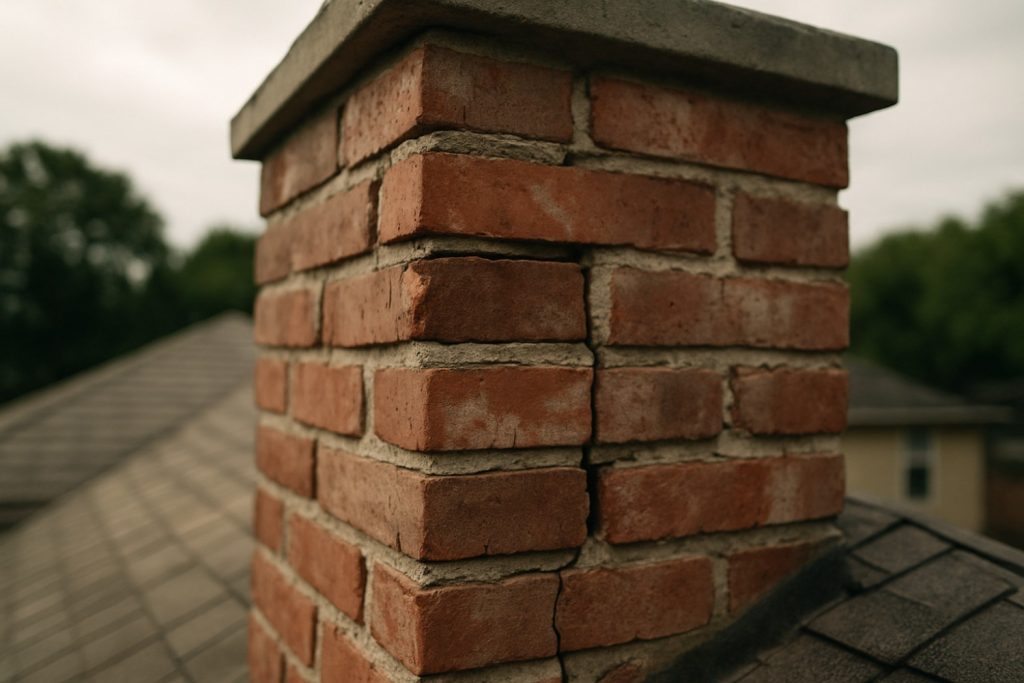
When two materials of different hardness are bonded together, thermal and mechanical stress always breaks the softer one. If the mortar is harder than the brick, the brick face separates before the mortar fails. You end up with spalling brick damage caused by water intrusion brick faces detaching from the body of the brick – on a chimney that just received new mortar.
Mortar mix composition – the ratio of Portland cement, masonry cement, lime, and aggregate – is matched to the hardness and flexibility of the surrounding brick before we start any repointing job.
Minimum rake depth on every joint
Elevations documented per job
Serving Greater Houston
Repointing standards followed
832 Home Service has performed chimney mortar repair and repointing across Houston since 2010 – including on pre-1960 masonry where lime-based mortars require a different approach entirely.
We work regularly in Pasadena, Baytown, Deer Park, and La Porte. These are eastern Houston communities built predominantly between the 1940s and 1970s, sitting on some of the heaviest clay-bearing Harris County soil in the metro. Joint deterioration rates in this corridor run higher than in newer suburban developments to the north and west. See our resource on neighborhoods with highest mortar failure rates in Houston for a detailed breakdown of where joint deterioration is most concentrated across the metro.
Here’s what most homeowners don’t realize about chimney repointing: the mortar mix matters as much as the labor. Newer Portland cement formulations are harder than the brick used in pre-1960 construction. Pack a hard modern mix into a soft brick joint and you’ve shifted the weakest point from the mortar to the brick face. The brick cracks instead of the mortar. That’s a more expensive repair than the one you were trying to avoid.
We document the mortar mix selection in every project record, following Chimney Safety Institute of America repointing standards. You know what was used and why. That record matters when you sell the house, file an insurance claim, or schedule the next service visit.
(832) 662-3437
Every material choice, sequencing decision, and documentation step follows a defined standard.
Mix type is matched to the chimney's age and existing masonry. Portland cement in a lime-mortar chimney cracks the adjacent brick. We identify the original mix before touching a joint.
Every full repair scope includes a documented liner crack log. We do not skip liner documentation on exterior-only repairs.
Structural work first - crown, liner, masonry. Waterproofing last, after every repaired surface has cured.
Replacement crowns are formed with a minimum 2.5-inch overhang on all four sides - the dimension that sheds Houston's rainfall away from the brick face below.
Mechanically fastened two-part flashing only. Sealant-only flashing fails under Houston's thermal roof movement. Where water intrusion has already compromised surrounding masonry, we also address chimney leak repair as part of a full scope - not as a separate follow-up call.
Written repair scope with component-level findings delivered before work starts. No verbal summaries.
Roofline inspection of all four elevations. We probe joints manually, document active loss, and select the mortar mix before removal starts.
Mechanical cutting to a uniform depth. New mortar packed in lifts, one elevation at a time, managed for Houston's heat.
Cured joints inspected for voids and bond. Final profile documented and photographed. You receive a copy of the record.
Chimney repointing is the process of removing deteriorated mortar and replacing it with fresh, correctly matched material restoring structural bond and water resistance to the joint system.
Houston’s ground doesn’t sit still. The city’s expansive clay soil absorbs water during the wet season and releases it during the dry season. That cycle happens every year, in every neighborhood, under every chimney in the metro. Each time it does, the foundation shifts slightly. That movement travels up through the masonry. According to Harris County Flood Control District soil and drainage data, the region’s expansive clay composition creates measurable seasonal ground movement that compounds year after year when mortar joints go unaddressed. Houston’s clay soil accelerates chimney deterioration in ways that compound season after season when mortar joints go unaddressed.
Mortar joints – the thin layers of mortar between chimney bricks that bind the masonry together, seal the surface against water, and accommodate small amounts of structural movement – are the weakest point in any chimney. They absorb the movement that the bricks themselves cannot. Over time, they lose mass. Gaps form. Water enters. The cycle accelerates.
Catching failing joints early costs far less than replacing bricks – see the cost of catching joint failure early versus brick replacement to understand just how significant that difference can be. Chimney repointing in Houston stops the progression before water does the next phase of damage.
A Baytown brick chimney where south-facing joints had lost more than a full inch of material. Efflorescence stopped after the next two rain cycles once repointed with lime-rich Type S.
Every installation starts with a site visit and pre-installation chimney inspection. We measure the space, assess structural conditions, calculate the flue height-to-opening ratio, and review Houston permit and code requirements against International Code Council residential building codes. For wood-burning systems, we assess combustion air; for gas, we confirm gas capacity and venting type. The flue system is fully designed before construction begins, so any location issues are identified early. The homeowner receives a complete design scope and quote before work starts.
In eastern Houston’s older brick chimneys, the first sign of clay-soil joint failure is often invisible from the ground – and it can go unnoticed for years at a time.
832 Home Service field technician, Greater Houston Area
A 1958 brick chimney in Baytown. The homeowner had noticed white powder on the chimney’s exterior – efflorescence (white mineral deposits appearing on chimney exteriors when water moves through masonry and carries dissolved salts to the surface). He assumed it was a cosmetic issue.
From the roofline, the joint picture was different. The south-facing side of the chimney had mortar joints that had lost more than a full inch of material in the lower two courses. The original mortar was lime-based – soft, flexible, appropriate for the era. But over roughly six decades of Houston wet-dry cycling, the clay soil subsidence – the vertical and lateral movement of Houston’s expansive clay soil as it absorbs and releases water through wet and dry seasons had worked those joints loose. Water had been entering for at least two seasons based on the efflorescence pattern and the depth of the softening found when probing the joints.
The north-facing side was in significantly better condition. That’s typical. South-facing joints get direct UV exposure year-round in addition to the moisture cycling. The combination accelerates the mortar deterioration rate – the speed at which joint material breaks down – by a measurable factor compared to shaded or north-facing joints on the same chimney.
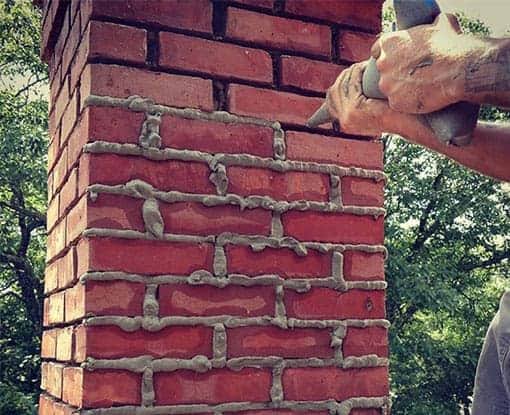
We matched a Type S mortar with a lime-rich formulation appropriate for the original masonry. Tuckpointing – which is the same process as repointing, meaning we cut out the deteriorated material to a uniform depth and pack in new mortar – was completed on all four elevations. The south-facing courses required a second depth pass because the deterioration had progressed unevenly. The efflorescence stopped after the next two rain cycles. The joints held. The homeowner’s repair cost was a fraction of what brick replacement would have run.
Our repointing process runs in three stages: assessment, installation, and performance verification each stage documented before the next begins.
We start at the roofline with a close inspection to assess full extent of joint deterioration across all four chimney elevations. We probe joints manually to assess the depth of deterioration. We document which elevations show active loss and which are in stable condition. Soft probing, crumbling material, or visible gaps deeper than ¼ inch indicate joints that need full-depth removal.
We also check the surrounding brick faces for early spalling. Joint failure and brick face failure often appear together on Houston’s older chimneys. Finding spalling at the diagnostic stage changes the repair sequence – the spalling is addressed before repointing begins on affected courses.
Mortar mix selection happens here, before any removal starts. We confirm the chimney’s approximate construction era, assess the existing mortar’s lime content by hardness and color, and select the replacement mix accordingly. This is also when we identify whether lime mortar – the softer, more flexible formulation used in pre-1950 construction – is the correct specification, or whether a balanced Type S is appropriate. When diagnostic findings reveal damage that extends well beyond the joints themselves, we recommend comprehensive chimney repair when damage goes beyond joints before repointing work begins.
Joint removal begins with mechanical cutting to a uniform ¾-inch depth. We work one elevation at a time. New mortar is packed in lifts – thin layers allowed to stiffen slightly between applications – to prevent slumping in Houston’s heat. Houston’s summer ambient temperatures above 90°F can accelerate cure and reduce bond strength if the mortar dries too fast. We manage this with dampened joints and shading where needed.
Chimney joint repair – whether described as repointing, tuckpointing, or mortar joint replacement – produces the same outcome when done correctly: a fully bonded joint with adequate depth, correct profile, and material properties matched to the surrounding masonry. We also recommend waterproofing after mortar joints are restored to seal the surface and prevent water from re-entering through the restored joint system.
After the mortar has cured, we inspect the completed joints for voids, cracking, or inadequate bond at the brick interface. We document the final joint profile and photograph the completed elevations. The project record includes the mix specification, the elevations treated, the rake depth used, and the date of completion. You receive a copy.
Correct chimney repointing starts at the right depth and uses the right material both confirmed before work begins on any Houston chimney.
Mortar is removed to a minimum joint depth (rake depth) of ¾ inch before any new material is placed. Less than ¾ inch means the new mortar lacks sufficient surface area to bond under thermal or movement stress - it will pull out.
Mortar type, lime content, and aggregate specification are written into the project record for every job.
We use angle grinders or oscillating tools to cut uniform channels. This avoids the micro-cracking that hammer-and-chisel removal causes in the surrounding brick face.
The finished mortar joint profile matches the original - concave, flat, or V-joint - to preserve original drainage behavior and visual consistency.
New mortar is protected from direct sun and rain during the 24-to-48-hour initial cure window. Houston's UV and intermittent rain make this step non-negotiable.
We complete all joint work on one elevation before moving to the next, so water cannot enter an open joint on an unfinished face during our work window.
Type O or lime-dominant Type S
Original brick is soft mortar must be the weaker element
Type S (balanced)
Transitional brick hardness lime still appropriate
Type S or Type N Portland
Modern hard brick tolerates a harder mix
They describe the same process: cutting out deteriorated mortar to a uniform depth and packing in new mortar. Whether called repointing, tuckpointing, or mortar joint replacement, the correct outcome is a fully bonded joint with adequate depth, correct profile, and material properties matched to the surrounding masonry.
Modern Portland cement mortar is harder than the soft clay brick used in Houston’s pre-1960 construction. Pack a hard mix into a soft brick joint and thermal and mechanical stress will break the brick face instead of the mortar – a more expensive repair than the one you were trying to avoid. We match the mix to the chimney’s age and brick hardness before starting.
We remove mortar to a minimum joint depth (rake depth) of ¾ inch before placing any new material. Less than that and the new mortar lacks sufficient surface area to bond under thermal or movement stress, so it pulls out over time.
South-facing joints get direct UV exposure year-round in addition to Houston’s moisture cycling. That combination accelerates the mortar deterioration rate by a measurable factor compared to shaded or north-facing joints on the same chimney. Uneven deterioration sometimes requires a second depth pass on the worst elevations.
Yes. Every project record includes the mix specification, the elevations treated, the rake depth used, and the date of completion, along with photographs of the completed elevations. You receive a copy. That record matters when you sell the house, file an insurance claim, or schedule the next service visit.
The white powder is efflorescence, mineral deposits left behind as water moves through the masonry. It’s a signal that water is entering, often through failing joints, not just a cosmetic issue. Addressing the joints stops the source. We also offer efflorescence removal as part of the restoration.
(832) 662-3437
832 Home Service provides chimney mortar repair and repointing throughout the Greater Houston area.
832 Home Service has matched mortar to masonry and repointed chimneys across Houston since 2010 the project record includes the mix selection every time. Contact our team today for a free…
Call 832 Home Service at (832) 662-3437 or email info@832chimneyservices.com to schedule your Chimney Repointing assessment.
WhatsApp us
Tell us what’s going on and we’ll get back to you, often the same day.
Prefer to talk? (832) 662-3437