
Remove the white stains and identify the water moving through your masonry. Cleaning efflorescence without stopping the moisture means the deposits return after the next rain.
Efflorescence removal means cleaning the salt deposits off chimney masonry and then finding the water path that put them there.
Efflorescence – the white or gray crystalline deposit that forms on masonry surfaces when water carries soluble salts through the brick or mortar – is a visible indicator of active moisture movement. The salts aren’t coming from outside the brick. They’re already inside it. Water dissolves them, pulls them toward the surface, and deposits them there as it evaporates. The residue you see is the exit point of a moisture path that runs through the masonry behind it. As the National Concrete Masonry Association guidance on efflorescence explains, this salt migration process is driven entirely by water movement through the masonry system.
Removing the deposit without identifying the moisture path means the next rain refills the same route. The salts migrate again. The stains come back in the same spot. Our chimney efflorescence diagnostics service is specifically designed to identify the moisture source behind the deposits and trace that path before it can repeat.
That pattern shows up constantly across Houston – homeowners cleaning the white residue off their chimney, watching it return after the next round of heavy rain, cleaning it again. The fix is always temporary when the water movement is still happening underneath.
Using the wrong cleaning solution on chimney efflorescence can damage the masonry it’s meant to clean.
Standard acid-based efflorescence removers work correctly on hard, dense modern brick. That brick tolerates mild acid contact without surface damage. Apply that same product to soft historic brick – common in Houston’s pre-1960 neighborhoods – and you etch the surface. The salts come off, but so does the protective outer layer of the brick face. Now the masonry is more porous than it was before cleaning. More water enters. More salt migration happens. The efflorescence returns faster.
A pH-appropriate cleaning solution – a cleaning agent selected based on the alkalinity or acidity of the masonry surface – is how we avoid that cycle. We match the product to the brick before we start. The selection depends on the age, composition, and condition of the masonry we’re working on.
We document what product we used and why. The homeowner gets that information as part of the service record.
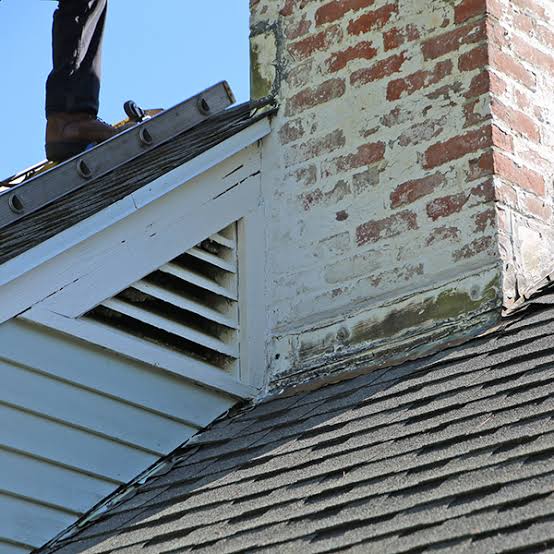
We start by mapping where efflorescence appears, its height on the chimney, and the weather conditions that trigger it. Location and height help identify the moisture path. Deposits near the crown may point to crown damage or failed cap seating, while deposits along mortar joints can indicate joint erosion requiring mortar repair and repointing for compromised joints. Deposits across the full face after rain suggest broader masonry porosity. We also check for subflorescence - salt crystallization inside the brick - which can cause bubbling, brick face separation, or early spalling brick damage caused by moisture. This requires a different treatment approach and more urgent repair recommendation because internal salt pressure can damage the brick from within.
With the moisture path mapped and the brick type confirmed, we select the cleaning solution. Low-acid or neutral-pH for soft historic brick. Mild acid-based remover for hard modern brick. We apply in stages on heavy deposits, allowing each pass to react fully before removing. Mechanical scrubbing is kept light on soft brick to protect the surface. Rinse water is directed away from the roofline to prevent runoff into flashing joints.
After cleaning, the moisture path finding is written up separately from the cleaning record. The homeowner receives: what was cleaned, what product was used, what brick type we identified, and where we believe the water is entering. That's the document that tells them whether a crown repair, repointing, or waterproofing step needs to follow - and in what sequence.
Houston’s rainfall, humidity, and coastal air create chimney efflorescence conditions unlike anywhere inland.
We work in Galveston, Texas City, and Lake Jackson regularly – Gulf Coast communities where the combination of high annual rainfall, elevated humidity, and salt-laden coastal air produces some of the most persistent efflorescence in the entire service area. The atmosphere here already carries dissolved salts. When that air moves through chimney masonry, it adds to the salt load already present in the brick.
50+
Houston’s 50-plus inches of annual rain means masonry porosity – the degree to which brick and mortar absorb and transmit water – is constantly tested. Older chimneys, built with softer historic brick, have higher porosity. More water moves through them per rain event. More salts migrate. More deposits form. How Houston’s humidity accelerates masonry deterioration explains why recurring efflorescence is a near-certainty when the underlying moisture path goes unaddressed in this climate.
Year-Round
Here’s what most Houston homeowners discover about Gulf Coast efflorescence: the problem isn’t seasonal. Humidity stays elevated year-round. Salt migration in chimney masonry doesn’t pause between seasons the way it does in a drier climate. That’s why recurrent efflorescence – the reappearance of deposits at the same location after cleaning – shows up here even when no major rain event has recently occurred.
I was called out to a home in League City – brick chimney on the south face, heavy white streaking running from about two courses below the crown all the way to the roofline. The homeowner had cleaned it twice himself with a hardware-store acid wash. Both times it came back within three weeks.
When I looked at the crown, it looked solid from the ground. No visible cracks. But when I got up there, I found a shallow hairline running across the back edge – maybe a quarter-inch wide, not dramatic. What that hairline was doing was funneling every rain event directly into the top courses of the brick.
That’s the moisture path. Water in at the crown, traveling down through the masonry, depositing salts at the surface as it evaporated near the roofline. The location of the staining – concentrated in that band just below the crown – was the map.
The part that mattered most for the repair: that chimney was soft older brick. The homeowner had been cleaning it with a standard acid-based efflorescence remover. That product is appropriate for hard modern brick. On soft historic brick, it accelerates surface erosion. He was cleaning off the deposit and simultaneously opening up more of the brick surface to further moisture infiltration.
We switched to a pH-appropriate cleaning solution – low-acid, matched to the brick composition – removed the efflorescence cleanly, then documented the crown hairline as a separate finding for repair. The stains haven’t come back because the water entry point was sealed. Cleaning the surface alone never would have stopped it. When moisture movement is confirmed, we always recommend a chimney leak inspection and diagnostics to trace and confirm how active water movement is traveling through the masonry as part of what follows.
Every efflorescence removal job follows a defined sequence – cleaning, documentation, moisture path assessment, written findings. Our inspection and treatment protocols align with Chimney Safety Institute of America standards for professional masonry assessment and moisture management.
Hard modern brick and soft historic brick require different pH levels. We identify which one we're working on before mixing anything.
Cleaning solution is spot-tested on an inconspicuous area and observed before treating the full deposit zone.
Pitting, surface erosion, or active spalling near the deposit zone gets flagged - these indicate subflorescence, salt crystallization occurring within the brick body rather than on the surface, which generates internal pressure against the masonry from inside.
After cleaning, we identify the route water traveled through the chimney masonry before depositing salts at the surface. That finding goes into the written report with a recommended fix. Cleaning without this step leaves the homeowner with a temporary result.
Light efflorescence clears in one pass. Heavy salt crystallization on porous brick requires staged application with dwell time between passes.
Sealing masonry immediately after efflorescence removal traps residual moisture inside. We document the moisture path and schedule chimney waterproofing and sealing to stop moisture re-entry as a separate step after the masonry dries.
Cleaning removes the surface deposit, but efflorescence forms because water is actively moving through your masonry and carrying dissolved salts to the surface. If the moisture path is not identified and stopped, the next rain refills the same route and the stains return in the same spot. We document that path so the fix is permanent, not temporary.
Standard acid-based removers are appropriate for hard modern brick, but on soft historic brick common in Houston’s pre-1960 neighborhoods they etch the surface and increase porosity. That makes the efflorescence return faster. We match a pH-appropriate solution to your brick type before we start and spot-test it first.
No. Sealing masonry immediately after removal traps residual moisture inside the brick. We document the moisture path and schedule chimney waterproofing and sealing as a separate step after the masonry has dried.
Subflorescence is salt crystallization occurring within the brick body rather than on the surface. It shows up as surface bubbling, brick face separation, or early spalling, and it generates internal pressure that works against the masonry from inside. It requires a different treatment approach and a more urgent repair recommendation than surface efflorescence.
Houston’s 50-plus inches of annual rain, year-round humidity, and salt-laden coastal air all add to the salt load in your masonry and keep moisture moving through the brick. Because humidity stays elevated year-round, salt migration does not pause between seasons the way it does inland, so deposits can reappear even without a recent major rain event.
(832) 662-3437
Call 832 Home Service at (832) 662-3437 or email info@832chimneyservices.com to schedule your efflorescence removal for your Houston chimney
WhatsApp us
Tell us what’s going on and we’ll get back to you, often the same day.
Prefer to talk? (832) 662-3437