Chimney Efflorescence Diagnostics in Houston, TX
Find Out Why Your Chimney Keeps Producing White Stains After Every Rain
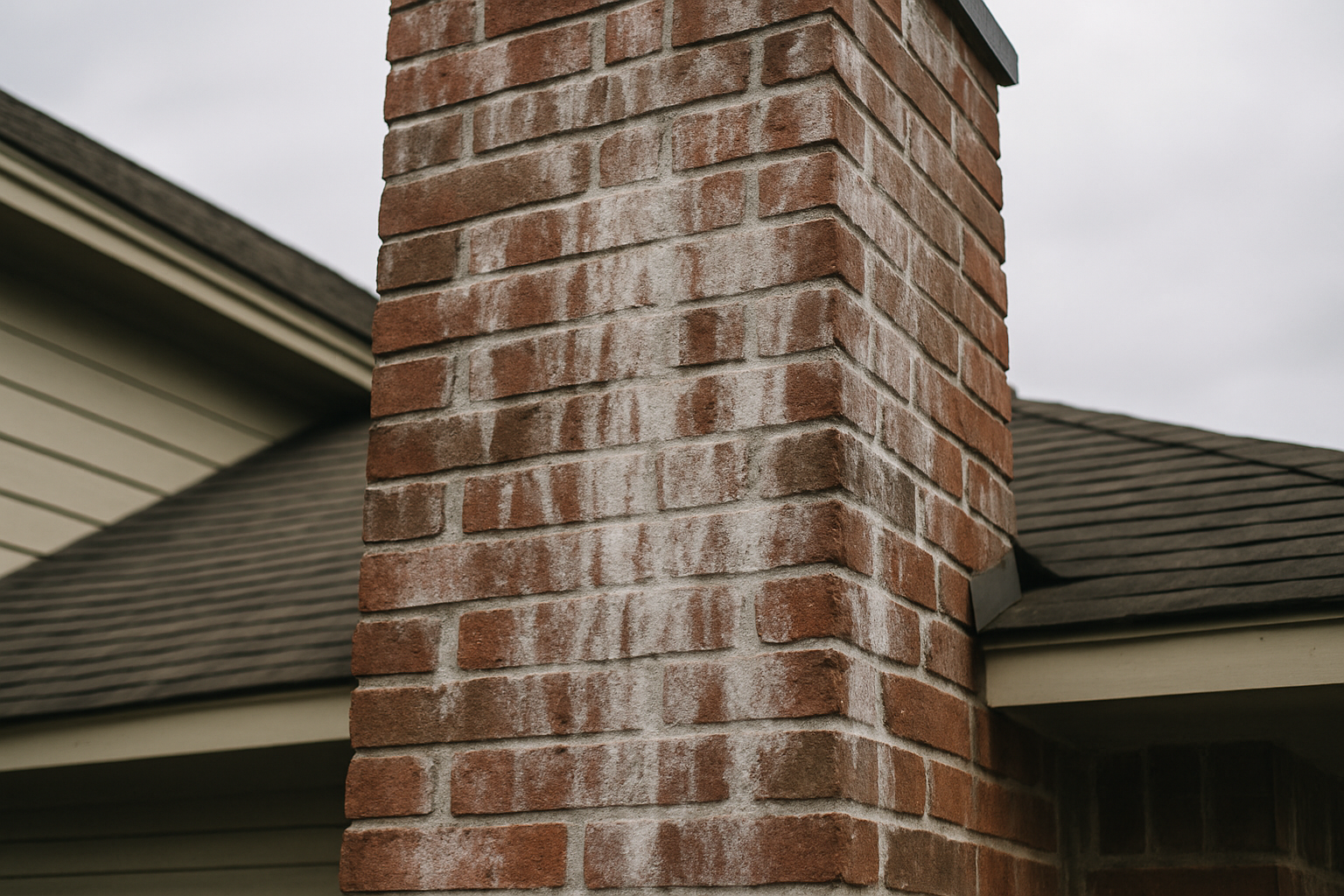
Find Out Why Your Chimney Keeps Producing White Stains After Every Rain
Zone-mapped moisture path report. Delivered after a single diagnostic assessment. Serving Houston, TX and the Greater Houston area.
Chimney Efflorescence Diagnostics Finds the Moisture Source, Not Just the Stain
Chimney efflorescence diagnostics traces white mineral deposits back to their moisture origin point, identifying which component is letting water in and which path it travels through the masonry before reaching the surface.
Cleaning white stains off a chimney removes what's visible. It doesn't touch what caused them. If the moisture source stays active, the deposits return. The same spot. After every significant rain.
This diagnostic service, efflorescence source investigation, is the step before any repair decision. It answers a specific question: where is the water entering, and what path does it take through the masonry before it shows up on the face?
Cleaning only removes what's visible on the surface. For lasting results, you need professional efflorescence removal from your chimney paired with a confirmed repair that addresses the moisture source driving the deposits back.
832 Home Service delivers the findings in a written moisture path report. Not a verbal summary at the end of the visit. A documented record you can reference, share with your contractor, or file for a future repair estimate.
Trace the Source
Identify where water enters the masonry.
Map the Path
Follow moisture through the masonry.
Document Findings
Deliver a written report you can keep.
Direct the Repair
Specify what stops the recurrence.
rain per year in Houston
Houston's Weather Pattern Creates Consistent Efflorescence Conditions
Houston's rainfall is concentrated, intense, and tied to Gulf moisture systems that saturate masonry in hours, making the pattern of white deposit recurrence straightforward to observe and important to investigate.
Houston averages around 50 inches of rain per year. It doesn't arrive gently. Tropical systems, Gulf moisture events, and intense afternoon thunderstorms dump several inches at a time. Masonry saturates quickly under those conditions. The Houston area precipitation data from the National Weather Service confirms just how frequently these saturation events occur across the region.
Here's what most homeowners don't realize about efflorescence in this climate. The salt deposits you see after a Houston rain event are a map. They tell you where water moved through the masonry. The chimney face moisture pattern, which face, which height, whether deposits follow joint lines or appear across the brick face, reflects what's happening inside the chimney during saturation.
In Houston's Bayou Bend and Memorial corridor, older brick chimneys sit in high-canopy lots. Shade slows evaporation after rain. Masonry stays wet longer. Salt migration rates are higher than chimneys in open-lot suburban developments because the moisture has more time to move through the brick before the surface dries. That retained moisture is exactly what feeds a persistent efflorescence pattern, and it's a key reason how Houston's humidity accelerates chimney deterioration compared to drier climates where masonry dries out between weather events.
The Full Picture: How Salt Migration Works and What the Diagnostic Uncovers
Efflorescence is the end result of a salt migration path, water enters the masonry somewhere, carries dissolved salts through the interior, and deposits them on the surface as it evaporates.
Understanding the path matters because the entry point determines the repair. Two chimneys can show deposits in the same location for entirely different reasons.
What Salt Migration Actually Is
Salt migration path describes the route water travels through chimney masonry. Water enters through a specific point, a cracked crown, an open mortar joint, degraded brick face, or failed flashing. As it moves inward and then back outward, it picks up soluble salts from the brick and mortar. When it reaches the surface and evaporates, those salts crystallize into the white powder or crust you can see.
The surface deposit is the last step. The entry point is the first. The diagnostic connects them.
Moisture Zone Mapping: The Core Method
Moisture zone mapping correlates where deposits appear on the chimney face with the most probable moisture entry points above or adjacent to those locations.
Height matters. Deposits concentrated near the top of the chimney stack usually point to crown or cap failures. Deposits at mid-stack, following horizontal joint lines, suggest mortar joint moisture transmission, water moving through deteriorated or open mortar rather than through the brick body itself. Deposits on a single face can indicate a wind-driven rain exposure pattern, or point to flashing failure on that side of the roofline.
Which face deposits appear on matters. Deposits concentrated on the north or east face can reflect prevailing wind direction during Gulf moisture events. That's not a guess, it narrows the investigation. Part of this process involves conducting a chimney leak inspection to confirm the entry point and verify which components are currently allowing water into the masonry system.
Crown-to-Flue Cavity Entry: A Non-Obvious Path
Crown-to-flue cavity water entry is one of the less obvious moisture paths diagnostics uncovers. When a chimney crown is cracked or improperly formed, water enters at the top and migrates downward, not through the flue itself, but through the space between the flue liner and the chimney masonry walls. It then emerges through mortar joints on the exterior face, sometimes several feet below the crown.
A homeowner looking at the deposit location wouldn't connect it to the crown. They're looking at mid-stack deposits. The crown appears to be a separate issue. The diagnostic reveals the path.
Mortar Joint Moisture Transmission
Mortar joint moisture transmission describes water movement through deteriorated mortar rather than through the brick. This produces a different deposit pattern: staining that follows the joint lines themselves rather than spreading across the brick face.
Houston's clay soils expand and contract seasonally. Chimneys on those foundations experience movement that opens mortar joints over time. Pre-1960 structures in Houston's inner neighborhoods, built with original soft brick and lime mortar, transmit moisture differently than modern hard-face brick construction. Lime mortar is more flexible but also more permeable. The diagnostic accounts for construction era when interpreting a deposit pattern. Where salt migration is shown to travel along joint lines, mortar joint repointing to close water migration paths is typically the repair direction those findings support.
What the Written Report Contains
The written moisture path report documents confirmed and probable moisture entry points, maps their relationship to the deposit locations observed on the chimney face, and specifies which repairs address the identified source. This isn't a generic recommendation list. It's a finding tied to a specific chimney, a specific deposit pattern, and a specific moisture path traced during the assessment. Assessments follow Chimney Safety Institute of America standards for masonry diagnostics to ensure the methodology and written findings meet recognized industry benchmarks.
Common Scenarios: Three Houston Chimneys, Three Different Sources
The same white deposit pattern on the surface can come from three completely different moisture sources, the diagnostic distinguishes between them.
The Post-Storm Repeat
A homeowner in Meyerland notices deposits reappearing on the south face of the chimney within 48 hours of any heavy rain. They've had the chimney cleaned twice. The deposits return within one season.
Zone-by-zone assessment reveals: deposits concentrated on the south face at mid-stack height, following horizontal joint lines. The probable source is mortar joint moisture transmission on the weather-facing side. The joints are open, not visually obvious, but confirmed during close assessment. Wind-driven Gulf rain enters directly through the joint gaps. Repair direction: deteriorating mortar joints that allow moisture in must be repointed on the south face to stop the recurring salt migration cycle.
The Slow Upper Stack Stain
A 1950s-era brick chimney in the Heights shows a persistent white bloom near the top of the stack. It grows slowly through the season rather than appearing immediately after rain.
The deposit pattern, diffuse, on multiple faces near the top, not following joint lines, points to crown-to-flue cavity water entry. The crown has hairline cracking that isn't visible from the ground. Water enters, migrates down through the cavity space, and emerges through mortar at several points near the top section. The written report directs the repair to the crown first.
The Whole-Face Efflorescence
A Pearland chimney shows diffuse white staining across the full brick face rather than at joints. The brick itself is the transmission medium.
This pattern indicates moisture moving through the brick body, not through joints. On a post-1980 hard-face brick chimney, this can indicate that the brick was installed before full cure, or that thermal cycling has opened micro-fractures in the face. Prolonged exposure to Houston's repeated wet-dry cycles also accelerates spalling brick damage caused by repeated moisture cycles, which can compound the transmission problem when masonry integrity has already begun to deteriorate. The diagnostic finding: masonry pore migration, sourced to an unprotected above-roofline section. Repair direction: waterproofing after confirming masonry moisture content.
832 Home Service
Serving Houston since 2010
Professional Perspective: What the Pattern Tells Me Before I Get Closer
The chimney face moisture pattern is a diagnostic tool, it tells me where to look before I confirm what I find.
I've been investigating efflorescence on Houston-area chimneys since 2010. What I've learned is that the deposit pattern almost always points in the right direction before I get on the ladder.
Height tells me whether to look at the crown, the mid-stack joints, or the roofline transition. Face distribution tells me whether I'm dealing with joint transmission or pore migration. Timing, whether deposits appear immediately after rain or develop slowly over weeks, tells me how fast the moisture is moving through the masonry.
Pre-1960 chimneys in Houston's inner neighborhoods are a different investigation than a post-1990 prefab chimney in Pearland or Sugar Land. The original soft brick and lime mortar in older structures transmit moisture in patterns that differ from modern hard-face construction. The lime mortar weathers differently. It opens at different points. The diagnostic reads the construction type first.
What I don't do is name a source from the ground. The pattern narrows the investigation. The component-level assessment confirms it. The written report documents both. For homeowners who want additional background on what proper moisture investigation should cover, the CSIA homeowner resources on chimney moisture problems provide a useful reference point for understanding industry-standard diagnostic practices.
When a Chimney Efflorescence Diagnostic Makes Sense
A chimney efflorescence diagnostic is the right next step when white deposits are recurring after cleaning, appearing in a consistent pattern, or when you need a documented finding before authorizing repairs.
Three situations point clearly toward a diagnostic assessment:
First, if white deposits return within one to two seasons of cleaning, the source is still active. Cleaning without source identification repeats the same cycle.
Second, if deposits appear in a consistent location, same face, same height, that pattern is diagnostic information. Having someone map it formally produces more actionable findings than treating the surface again.
Third, if you're preparing for a repair estimate or an insurance review, a written moisture path report gives the contractor or adjuster a documented finding to work from. A zone-mapped written report is more useful than a verbal description of where staining has appeared.
The assessment covers: surface pattern observation, height and face analysis, probable source narrowing based on deposit characteristics, and close component-level assessment at the identified zone. Findings are delivered in writing before any repair scope is discussed.
Areas We Serve
832 Home Service conducts chimney efflorescence diagnostics across the Greater Houston area.
We serve Houston, Pasadena, Bellaire, West University Place, Meyerland, the Heights, Montrose, Memorial, Bayou Bend, Sugar Land, Missouri City, Stafford, Pearland, Friendswood, Deer Park, La Porte, Humble, Katy, Baytown, League City, Spring, Cypress, Tomball, The Woodlands, Rosenberg, Richmond, Clear Lake City, Galveston, Texas City, Conroe, Beaumont, and surrounding communities.
Next Steps: Get a Written Moisture Path Report for Your Houston Chimney
A diagnostic assessment gives you a documented answer about why white deposits keep returning, along with a clear direction for the repair that will stop them.