Full-System Cleaning From Firebox Floor to Flue Collar. Zone by Zone. Smoke shelf, smoke chamber, damper surfaces, and flue collar. Each zone cleaned in sequence, written findings delivered.
A complete fireplace cleaning is a full-system service. Not a deeper version of routine annual maintenance.
A standard routine annual fireplace cleaning service is scoped for one season’s accumulation. It addresses the firebox floor, visible soot, and a brush pass through the flue. That scope is correct for a fireplace serviced every year.
A complete fireplace cleaning serves a different situation. It covers fireplaces that have accumulated multi-season fireplace buildup. The layered deposit of soot, creosote residue, debris, and condensate that builds across two or more unserviced burning seasons. The firebox floor, firebox walls, smoke shelf, smoke chamber surfaces, damper assembly, and flue collar are all addressed as separate zones. Each one is cleaned. Each one is documented.
This is the service for the fireplace that hasn’t been touched in three years. Not the one cleaned last November. Homeowners unsure of where to start can review whether your fireplace needs cleaning or inspection first before scheduling.
832 Home Service has cleaned fireplaces across Houston since 2010, and the buildup pattern here is different from what most homeowners expect. Houston fireplaces burn fewer than 20 times a year on average. That doesn’t mean less buildup. It means different buildup. Short, low-temperature fires in Houston’s brief winter season produce more incomplete combustion per session than a wood-burner operating in a colder climate.
The result: firebox wall soot layers. The carbon deposits that form on refractory brick walls compress into denser coatings per season than a frequently and fully burning fireplace produces. After two or three unserviced seasons, those layers aren’t soft ash. They’re compressed, slightly hardened, and distributed across every interior surface including the smoke shelf and damper. This is exactly the kind of multi-season creosote and deposit removal that a standard annual scope isn’t built to address.
The Galleria, River Oaks, and Memorial chimney buildup patterns are where we see this most often. Homes built between 1960 and 1990 in those inner-west neighborhoods have masonry fireplaces designed for regular use. Most now burn sporadically. Multi-season buildup in those fireplaces follows the exact pattern the complete cleaning scope was built to address.
Every zone in a fireplace accumulates a different type of deposit, and each one requires its own cleaning attention.
Walking through Houston fireplaces since 2010, the zone-by-zone picture tells you more than a single overall condition assessment ever could. Here’s what appears at each level when a homeowner calls after multiple seasons without service.
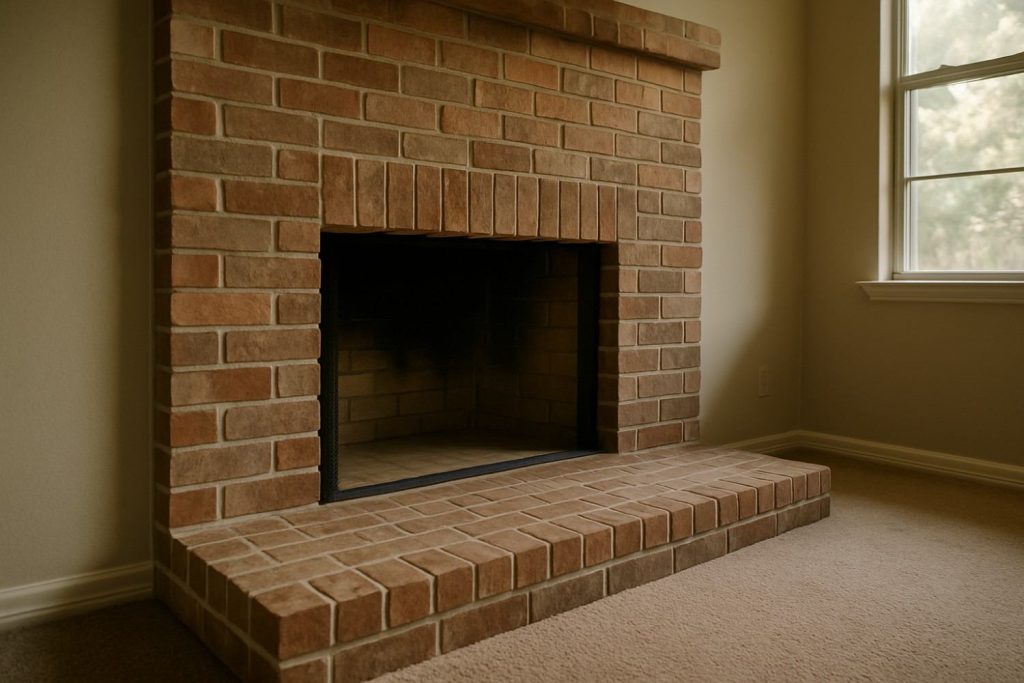
Ash, carbon debris, and fragments of loosened refractory material. In fireplaces that have gone three or more seasons, the ash layer can compact and harden against the floor brick. It takes more than a vacuum pass to clear it correctly.
The refractory firebox, the heat-resistant chamber of brick or panel material, shows soot buildup in horizontal bands. In Houston's low-burn pattern, those bands are often thicker near the upper firebox opening, where smoke velocity is highest during short fires. Three seasons of unaddressed buildup compresses into a surface that resists a standard brush.
Debris obstructions clear in a single visit. Structural failures, collapsed liner sections, separated joints, deteriorated masonry connections, require a different service. The pre-cleaning camera check is what determines which situation you are in.
The corbelled or parged surfaces between the smoke shelf and the flue collar collect creosote vapors that cool and condense as they rise. In a fireplace that burns cool and infrequently, this zone accumulates faster per fire than a hotter-burning system.
The damper surface deposit, tarry residue from condensation, creosote vapor, and rainwater, coats both the top and underside of the throat damper plate over time. After multiple seasons, this restricts movement and emits odor when the firebox is opened. The damper surface is cleaned as part of the complete scope. It is not a separate service call.
The flue collar zone, where the smoke chamber narrows to meet the bottom of the liner, concentrates creosote and debris at the transition point. Airflow velocity changes here, and deposits collect at the narrowing. This zone closes out the complete cleaning scope before flue work begins above it. After the full sequence is complete, homeowners receive written findings and inspection after cleaning covering each zone's condition in sequence.
Every complete fireplace cleaning at 832 Home Service follows the same documented sequence, regardless of how long service has been deferred.
Cleaning sequence determines whether a complete job stays complete, or recontaminates itself.
If the firebox floor is cleaned first and material is then dislodged from the smoke shelf, the newly cleaned floor catches everything that falls. The floor gets worked twice and fine particulates resuspend into the room air.
The zone-by-zone cleaning sequence at 832 Home Service runs from the smoke chamber and smoke shelf down through the damper and into the firebox. Material falls into a containment zone below surfaces that have not yet been cleaned. The floor is last. Nothing cleaned above it gets recontaminated by what comes down.
After the full sequence, every zone receives a written condition entry. What was found, what was removed, and what the surface condition showed after cleaning. Houston homeowners with fireplaces that have gone several seasons without service receive this written zone summary as a standard deliverable, not an add-on.
The full-system service runs in three stages: pre-cleaning assessment, zone sequence execution, and written documentation.
Every zone is inspected before cleaning begins. This confirms which zones carry the heaviest accumulation and whether any surface condition, cracked refractory panel, seized damper plate, smoke chamber parging damage, needs to be flagged before cleaning tools contact it. Assessment findings direct the cleaning approach.
The zone-by-zone cleaning sequence starts at the smoke chamber and moves downward through the smoke shelf, damper assembly, firebox walls, and firebox floor. Containment is set before the first brush enters any upper zone. The flue collar zone is addressed as the final upper-zone step, transitioning the scope from interior fireplace cleaning to flue entry confirmation.
Every zone receives a written condition entry after cleaning. The firebox walls are checked for refractory firebox surface integrity. The smoke shelf is confirmed clear. The damper plate movement is tested before and after damper surface deposit removal. If any finding requires follow-up, a cracked panel, a stiff damper, smoke chamber parging that needs attention, it is noted separately from the cleaning record.
Routine annual cleaning is scoped for one season of accumulation. A complete cleaning is a full-system service that addresses multi-season buildup across every zone, the firebox floor, walls, smoke shelf, smoke chamber, damper assembly, and flue collar, each cleaned and documented separately.
If your fireplace has gone two or more burning seasons without service, the complete cleaning scope is the right starting point. It’s built for compressed, hardened multi-season buildup that a standard annual brush pass isn’t designed to remove.
Yes. Every zone receives a written condition entry covering what was found, what was removed, and the surface condition after cleaning. The written zone summary is reviewed with you on-site before the crew leaves. It is a standard deliverable, not an add-on.
Yes. 832 Home Service completes full-system fireplace cleaning in a single visit, with the written zone summary included before we leave.
Cleaning top-down, from the smoke chamber and smoke shelf down through the damper and into the firebox, means material falls into a containment zone below surfaces not yet cleaned. The floor is last, so nothing cleaned above it gets recontaminated.
(832) 662-3437
832 Home Service performs complete fireplace cleaning across the Greater Houston area.
Contact our team today for a free consultation. Tell us when the fireplace was last serviced and we’ll confirm the right scope and get your appointment on the calendar.
Call 832 Home Service at (832) 662-3437 or email info@832chimneyservices.com to schedule your assessment.
WhatsApp us
Tell us what’s going on and we’ll get back to you, often the same day.
Prefer to talk? (832) 662-3437