We confirm the blockage cause before cleaning begins. Debris cleared and draft restored the same day. Structural failures identified before a dollar is spent on the wrong fix. When your furnace stops venting correctly, the cause matters more than the cleaning. We assess first, then act on exactly what we find, so the right fix happens the first time.
A blocked furnace flue and a collapsed furnace flue can look identical from the outside. Both restrict draft, trigger symptoms, and require immediate attention.
The difference is what fixes them. A debris obstruction, bird nest, wasp colony, or storm debris can be cleared with mechanical cleaning. A collapsed flue liner section or separated joint cannot. Cleaning a structural failure without identifying it first restores nothing and delays the repair that would actually work.
That is why every emergency furnace flue cleaning, the urgent assessment and removal of any material blocking the path combustion gases travel from your furnace to the exterior, starts with a flue condition check before any cleaning equipment is introduced.
We confirm the blockage category first. Then we act on what we find.
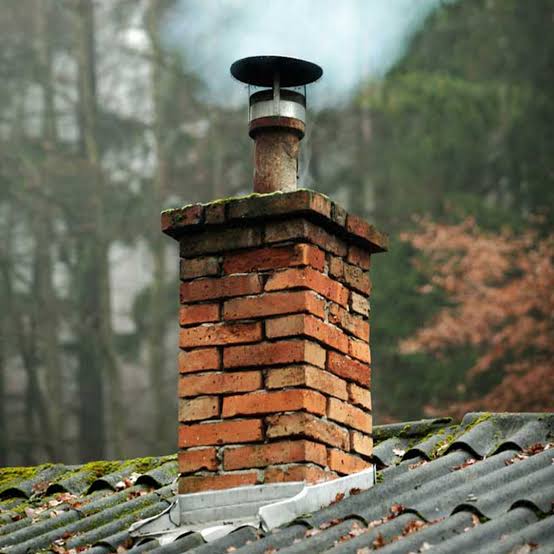
Houston’s heating season arrives fast, and furnace flues spend nine months sitting unused before the first cold snap demands they work. Here is what builds up during that nine-month flue dormancy, the period roughly from February through October when the furnace is off and the flue is open. Birds nest in uncapped openings. Mud daubers and paper wasps pack the flue interior with material. Summer storms push debris through gaps in deteriorating caps. None of it is visible from inside the home.
The furnace fires on the first 45-degree night. The flue is partially obstructed. Combustion gases back up instead of venting out. The homeowner notices short-cycling, a smell, or, in the worst case, a CO alarm activation.
832 Home Service has responded to this exact sequence in Houston since 2010. The inner-ring north neighborhoods, Garden Oaks, Oak Forest, Shepherd Park Plaza, are the most consistent source of these calls at the start of every heating season. The homes there were built mostly in the 1950s and 1960s. Most have original masonry flues. Many share a single chimney flue between the furnace and the fireplace system. When one path is blocked, both are affected.
That shared furnace-fireplace flue, a masonry chimney channel venting both a furnace appliance and a fireplace from a single structure, is the configuration we see most often on emergency furnace flue calls in Houston.
Three variables determine how a same-day furnace flue call resolves, and only one of them is the cleaning itself.
Debris obstructions clear in a single visit. Structural failures, collapsed liner sections, separated joints, deteriorated masonry connections, require a different service. The pre-cleaning camera check is what determines which situation you are in.
Older Houston homes often use shared masonry flues for both the furnace and fireplace. If the flue is blocked, both pathways can be affected, so both are assessed. Newer homes may use dedicated metal or PVC vents with different access and failure points.
A debris obstruction left for months can trap moisture, accelerate liner damage, and cause secondary problems. If the liner shows scaling or cracks after the obstruction is cleared, we document and address them immediately.
You do not need to know whether the problem is debris or structural. That is what the assessment is for.
Call with what you know: furnace short-cycling, a smell, a CO alarm, no heat, or something that sounds unusual when the system runs. That is enough.
We assess before we act. If it is a debris obstruction, we clean it and confirm that draft is restored before we leave. If it is a structural flue problem, such as a collapsed section, separated liner joint, or deteriorated connection, we document what we found, explain what repair is required, and give you a clear path forward.
Carbon monoxide alarm activation, the triggering of a CO detector caused by combustion gases spilling into living space from a blocked or restricted furnace flue, is the highest-urgency symptom we respond to. If your CO alarm has gone off and you have shut the furnace down, keep it off until the flue is confirmed clear and structurally sound.
That is the right call. We will handle the rest.
A homeowner in Oak Forest called us last January on the first cold night of the year. The furnace had been running for about an hour when the CO detector in the hallway went off. They shut the furnace down and called us.
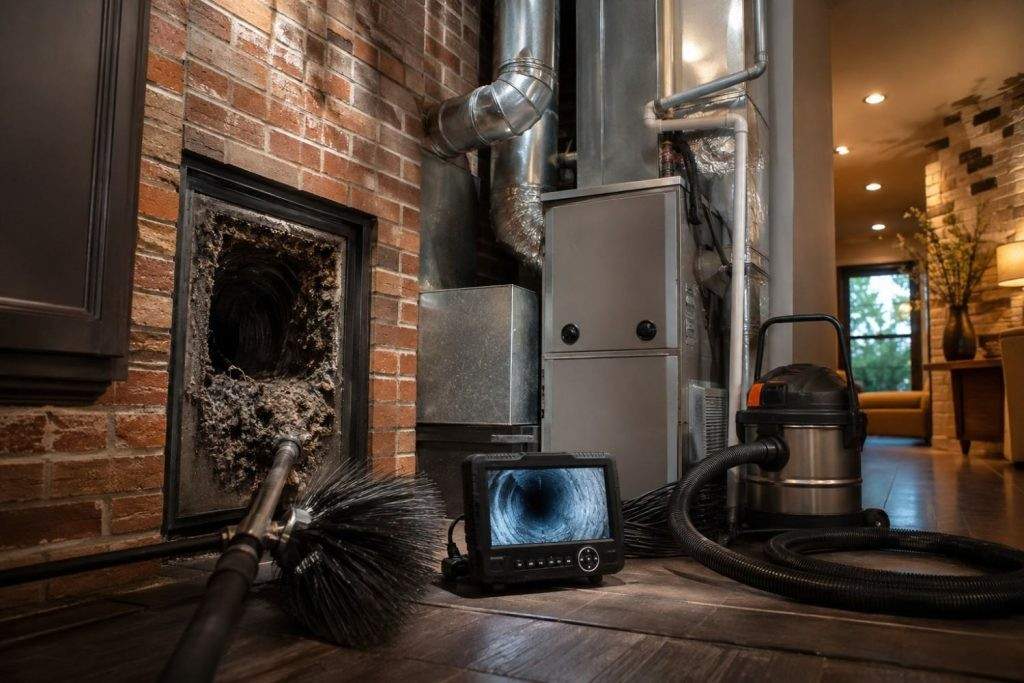
We started with a flue condition check, not a cleaning brush or vacuum. We inserted a camera through the firebox opening and found a mud dauber nest about 12 feet up the flue, roughly the size of a large grapefruit. It had reduced the effective flue diameter by more than half.
That restriction limited the flow of combustion gases and caused them to spill into the living space, triggering the CO alarm.
We mechanically cleared the debris and inspected the liner above and below the blockage. The masonry was intact, and the liner surfaces showed no damage. After clearing the obstruction, we performed a draft check and confirmed the furnace was venting properly.
The entire call was resolved in about two hours.
Now, the same symptoms, but a different finding. A few weeks earlier, we responded to a call in Shepherd Park Plaza for a short-cycling furnace and a smell in the house. The camera inspection showed no debris. Instead, we found a collapsed terra cotta liner section, a portion of the original clay liner that had fractured and fallen inward, creating a physical ledge that blocked the flue.
That is a collapsed flue liner section. It can produce the same symptoms as a debris obstruction, but mechanical cleaning will not fix it. You cannot brush out a fallen clay tile.
That call became a relining assessment, not a cleaning. The homeowner knew within 30 minutes of our arrival. No time was wasted, and there was no cleaning bill for work that would not have solved the problem.
The pre-cleaning assessment is what separates those two outcomes.
Other work Houston homeowners commonly pair with this service.
Scheduled cleaning that prevents blockages.
A blocked flue is a CO risk. Get it checked.
A damaged liner can't vent safely.
The certified baseline safety check.
Carbon monoxide alarm activation is the highest-urgency symptom we respond to. If your CO alarm has gone off and you have shut the furnace down, keep it off until the flue is confirmed clear and structurally sound. Then call us and we will assess it today.
No. That is what the assessment is for. Call with what you know: furnace short-cycling, a smell, a CO alarm, no heat, or something that sounds off when the system runs. That is enough. We assess before we act.
A blocked furnace flue and a collapsed furnace flue look identical from the outside. Cleaning a structural failure without identifying it first restores nothing and delays the repair that would actually work. The flue camera inspection confirms obstruction type and location, and rules out structural failure before any tools enter the flue.
Debris obstructions clear in a single visit. In one Oak Forest call, a mud dauber nest was cleared, the liner checked above and below, and draft confirmed, all resolved in about two hours. If the finding is structural, the visit shifts to documentation and repair scoping instead.
Inner-ring north neighborhoods like Garden Oaks, Oak Forest, and Shepherd Park Plaza were built mostly in the 1950s and 1960s with original masonry flues. Many share a single chimney flue between the furnace and the fireplace system. When one path is blocked, both are affected.
During the nine-month flue dormancy, roughly February through October, birds nest in uncapped openings, mud daubers and paper wasps pack the flue interior with material, and summer storms push debris through gaps in deteriorating caps. None of it is visible from inside the home until the furnace fires on the first cold night.
(832) 662-3437
832 Home Service responds to emergency furnace flue cleaning calls throughout the Greater Houston area.
Inner-ring Houston neighborhoods, particularly those with post-1950 shared masonry flue construction, are a primary focus for same-day emergency furnace flue calls at the start of heating season.
Furnace not venting correctly? Call 832 Home Service and get the flue assessed today.
We confirm the blockage cause before cleaning begins. We clear debris obstructions and restore draft the same day. We identify structural failures before a cleaning bill is spent on something that would not have solved it. Contact our team today for a free consultation.
Call us at (832) 662-3437 or email info@832chimneyservices.com. Tell us what you are seeing. We will tell you what we can do and get a crew moving.
WhatsApp us
Tell us what’s going on and we’ll get back to you, often the same day.
Prefer to talk? (832) 662-3437