Post-Fire Chimney Inspection in Houston, TX
Full post-fire assessment. Liner, crown, mortar, and masonry documented before any reuse.
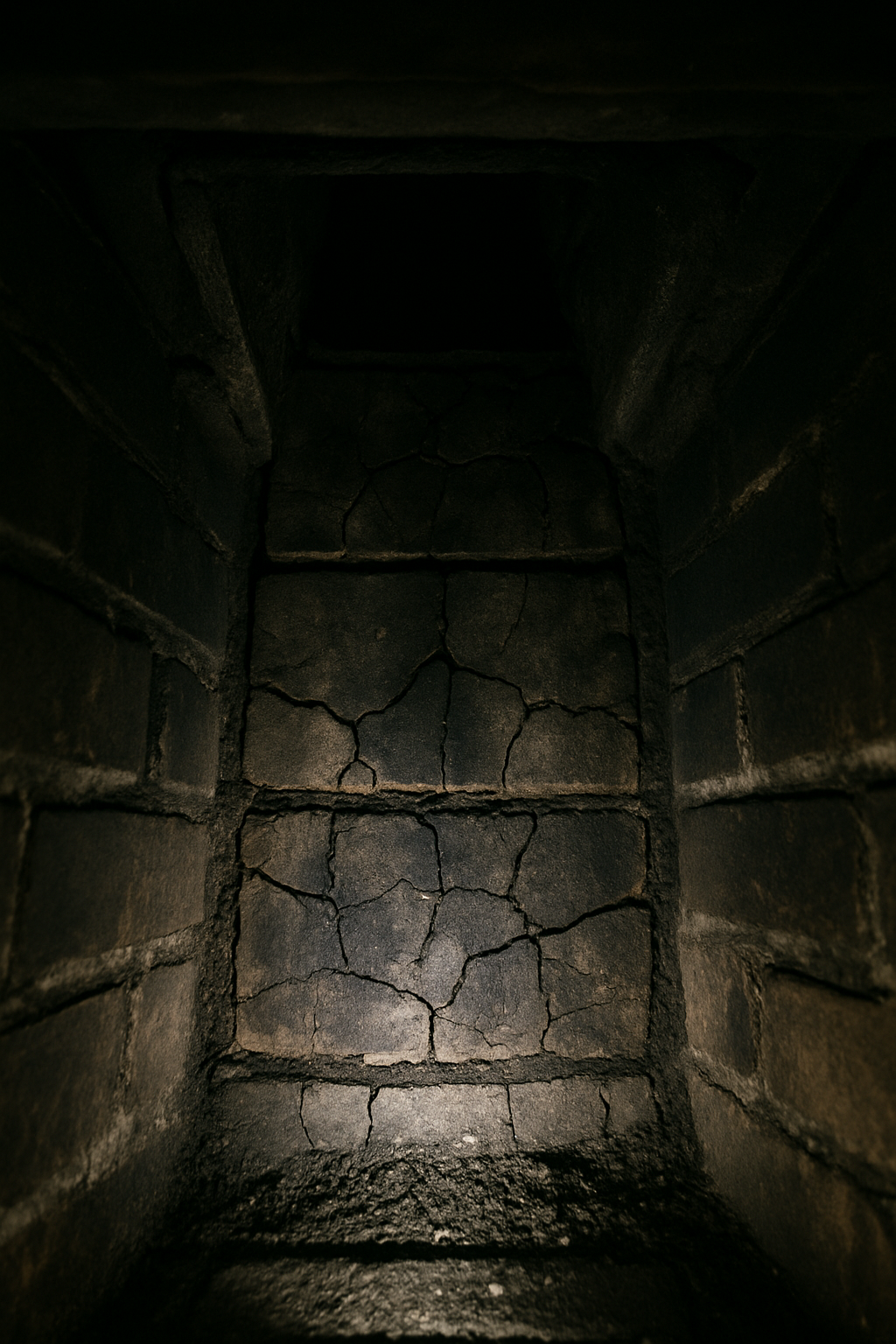
Post-Fire Chimney Inspection in Houston, TX
Full Post-Fire Assessment - Liner, Crown, Mortar, and Masonry Documented Before Any Reuse
A chimney fire changes every component it touches - not just the ones visible from the roofline.
A post-fire chimney inspection is a structured, documented assessment of every system the fire reached. That means the liner (the inner passage that contains flue gases), the crown (the concrete cap at the top of the chimney), the mortar joints, the masonry, and the firebox itself. At 832 Home Service, we complete the full assessment and deliver a written report in a single visit. Insurance carriers, contractors, and homeowners all receive the same document - specific findings, not a verbal summary.
A chimney can look untouched from the outside and still have a cracked liner. That crack is what makes reuse dangerous.
Confirm What the Chimney Fire Did Before You Decide Whether to Repair or Replace
Post-fire inspection turns an unknown situation into a documented decision.
Houston's Gulf Coast climate adds a layer to post-fire assessment that many homeowners don't expect. Thermal expansion cracks in masonry absorb moisture almost immediately in Houston's high-humidity air. A crack opened by a 2,000°F flue event on Monday can have active moisture migration by Thursday - before anyone has scheduled a look.
The Greater Houston area averages roughly 50 inches of rain annually. That moisture finds open masonry fast. Post-fire assessment in this climate isn't just about what the fire did. It's also about what the Houston weather cycle does to the damage in the days that follow. Scheduling your inspection quickly protects the assessment's accuracy and limits secondary damage from moisture infiltration.
We serve Greater Houston including Sugar Land, Pearland, The Woodlands, and communities as far as Galveston and Beaumont. Getting on the schedule matters.
Post-Fire Chimney Inspection Completed and Insurance Documentation Delivered After a Single Assessment
Insurance documentation starts with a field record - and field records require boots on the roof.
832 Home Service has been completing post-fire chimney inspections since 2010. The visits that go smoothest for the homeowner are the ones where we document everything before the adjuster arrives. When documentation is in place early, the insurance process moves on the homeowner's timeline rather than the adjuster's.
Here's what a typical post-fire visit looks like. We arrive and secure the site. Before anything gets touched, we photograph every component from the firebox up through the crown. That's the baseline. Then we run the internal inspection - camera through the liner to check for cracks, spalling (surface deterioration of brick or tile), and liner tile displacement. We note whether the damage indicates a slow-burn event or a rapid temperature spike. Those two events leave different signatures, and the liner tells the story.
After the liner, we work outward - crown, flashing, mortar joints, and exterior masonry. Everything gets a written condition rating. Not just "damaged" or "intact" - a specific finding. "Liner tile displaced at 14 feet from firebox floor." "Crown cracked along the centerline, moisture ingress visible." That level of detail is what your insurance carrier needs to process the claim and what your repair contractor needs to scope the work correctly.
The report goes home with you the same day. One visit. Complete documentation.
Coverage Area and Insurance Documentation - Handled Together
One post-fire inspection covers the assessment, the report, and your insurance submission.
A question we hear often: "Can I give this report directly to my insurance company?" Yes. The written findings from an 832 Home Service post-fire inspection are formatted to include the component-level detail that homeowner insurance carriers require for chimney-related fire claims. The document is structured to stand on its own.
We document component condition, the likely cause pattern based on physical evidence, and the scope of damage from liner to exterior masonry. We also note whether continued use of the chimney is supported by the findings. That notation matters. Some post-fire chimneys are safe to use after liner repair. Others require a full reline before reuse. The report tells you which situation you're in - clearly, in writing, without ambiguity.
Houston homeowners who've worked through the Harris County insurance process know that specific documentation moves claims faster than general assessments. That's the practical reason to get the inspection done correctly the first time.
Our Standards for Post-Fire Chimney Assessment
Every post-fire inspection follows the same structured protocol - nothing skipped, everything documented.
The 832 Home Service post-fire inspection standard covers:
Liner assessment via camera inspection
Continuous video pass from firebox to cap, flagging cracks, displaced tiles, or heat deformation.
Crown condition rating
Visual and tactile check for centerline cracking, edge separation, and moisture absorption indicators.
Mortar joint evaluation
Joint-by-joint check for heat-opened gaps in the top four courses, where thermal stress concentrates.
Exterior masonry review
Spalling check across all visible faces, with documentation of active versus historic damage.
Firebox floor and back wall inspection
Refractory brick (heat-resistant firebox lining) rated for crack depth and surface separation.
Flashing condition
Checked for seal failure and displacement at the roofline junction.
Written report with component-level findings
Delivered to the homeowner at inspection completion.
The crown, the liner, and the masonry are all assessed independently - not summarized together.
What Shapes the Outcome of a Post-Fire Inspection
Four variables determine the findings - and each one affects your next decision differently.
Understanding what drives the inspection outcome helps you plan. Here's what actually determines the findings:
Fire Type - Chimney Fire vs. Interior House Fire
A chimney fire (confined to the flue) concentrates thermal stress at the liner. An interior house fire that reaches the chimney adds structural and smoke-penetration damage to the exterior masonry. The inspection scope differs because the damage pattern differs.
Chimney Age and Construction Type
Pre-1980 Houston chimneys were frequently built with clay tile liners and soft-set mortar - both of which respond to thermal shock differently than modern stainless steel liners or hard-set refractory mortar. Older construction often shows more widespread mortar joint failure after a fire event, even when the liner appears intact. Houston's post-1970 building stock contains a significant number of these original clay-tile-lined chimneys.
Elapsed Time Since the Event
Houston's humidity means moisture enters open cracks quickly after a fire. An inspection performed within 48 hours documents primary fire damage. One performed two weeks later may find additional deterioration driven by moisture - which can complicate the insurance claim because separating fire-caused damage from weather-caused damage becomes harder over time.
Whether a Previous Chimney Fire Has Occurred
Some homeowners discover during a post-fire inspection that the liner shows evidence of two separate heat events. That finding changes both the repair scope and the insurance narrative. We note it if we find it.
Knowing these four variables before you schedule helps set realistic expectations for what the report will contain and what decisions follow.
Areas We Serve
832 Home Service completes post-fire chimney inspections across the Greater Houston area.
We serve Houston, Pasadena, Bellaire, West University Place, Stafford, Missouri City, Pearland, Friendswood, Deer Park, La Porte, Humble, Katy, Sugar Land, Baytown, League City, Spring, Cypress, Tomball, The Woodlands, Rosenberg, Richmond, Webster, Clear Lake City, Alvin, Channelview, Conroe, Manvel, Seabrook, Galveston, Texas City, Lake Jackson, Angleton, Clute, Freeport, Beaumont, Huntsville, and surrounding communities.
Conclusion & Next Steps
Get your post-fire chimney assessment scheduled before the next rain event reaches open masonry.
832 Home Service has been completing post-fire chimney inspections across Greater Houston since 2010. We deliver written, component-specific reports in a single visit - formatted for insurance submission and contractor use. Call us at (832) 662-3437, email in**@****************es.com, or submit through the contact form at 832chimneyservices.com. Let us know your address and when the fire event occurred - we'll confirm availability and get you on the schedule.
Before & After: What Post-Fire Inspection Reveals
A chimney can look untouched from the outside while the liner tells a different story. Here is what documentation captures.
Post-Fire Damage Documented
Liner tile displacement, centerline crown cracking, and heat-opened mortar joints captured with component-level findings.
Cleared for Reuse
Following documented repairs, the report confirms whether continued use is supported, clearly and in writing.
Frequently Asked Questions
Can I give the inspection report directly to my insurance company?
Yes. The written findings from an 832 Home Service post-fire inspection are formatted to include the component-level detail that homeowner insurance carriers require for chimney-related fire claims. The document is structured to stand on its own.
How quickly should I schedule after a chimney fire?
As quickly as possible. Houston's humidity means moisture enters open cracks fast. An inspection within 48 hours documents primary fire damage, while one performed two weeks later may find additional deterioration driven by moisture, which can complicate the insurance claim.
Is my chimney safe to use after a fire?
It depends on the findings. Some post-fire chimneys are safe to use after liner repair. Others require a full reline before reuse. The report tells you which situation you're in, clearly and in writing, without ambiguity.
What does the inspection actually cover?
The liner, crown, mortar joints, exterior masonry, firebox floor and back wall, and flashing. Each component is assessed independently with a written condition rating, and the report is delivered to the homeowner the same day.
Do you serve areas outside of central Houston?
Yes. We serve Greater Houston including Sugar Land, Pearland, The Woodlands, Katy, Spring, Cypress, League City, and communities as far as Galveston and Beaumont.
Related Services
Other work Houston homeowners commonly pair with this service.
Ready to Get Started?
Contact our team today for a free consultation. Let us know your address and when the fire event occurred, and we'll confirm availability.
© 2026 832 Home Service. Houston's Chimney & Fireplace Company Since 2010.