Annual inspection covering every accessible component. A written report delivered after each visit, so you leave knowing exactly where you stand.
A preventive chimney inspection is a scheduled, top-to-bottom assessment of your chimney system. It covers every accessible component, including the flue interior, firebox, crown, flashing, and exterior masonry.
832 Home Service performs these inspections year-round across Houston. Every inspection ends with a written report documenting exactly what was found and what, if anything, needs attention. Homeowners get clear answers without guesswork.
This service is designed for Houston households that use their fireplace seasonally and want to keep it in reliable working order. An annual inspection helps identify potential problems before they become unexpected issues when you need your fireplace most, consistent with CSIA chimney inspection guidance.
Serving Houston Since
Written Reports
Min to Inner Houston
Licensed & Insured
Every 832 Chimney Service preventive chimney inspection ends with a written report. No phone summaries. No verbal rundowns you have to remember later.
Our written report documents findings with photos and plain-language descriptions. Items are categorized clearly: what’s performing normally, what needs monitoring, and what needs repair. You decide what to do next. We don’t manufacture urgency around items that don’t warrant it.
In Houston, documented inspection reports also matter for homeowner’s insurance conversations. Some carriers want to see proof of annual maintenance on wood-burning systems. A written inspection report from a dated service visit is the right document to have. We’ve been providing them since 2010. That’s the preventive inspection doing exactly what it’s supposed to do. The defect was there. We found it before it progressed.
Field Technician
832 Home Service, Houston since 2010
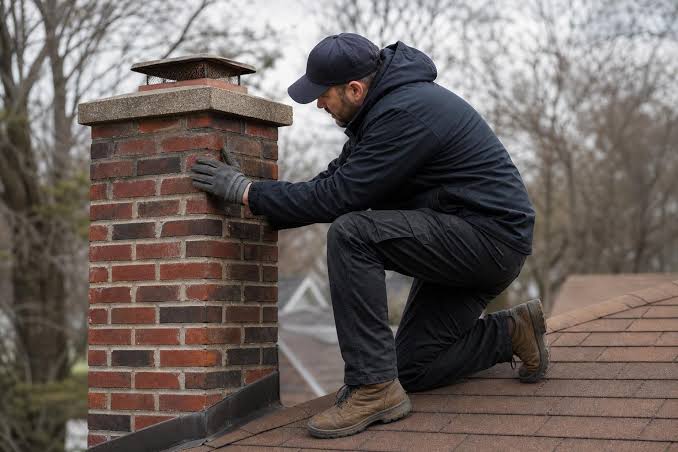
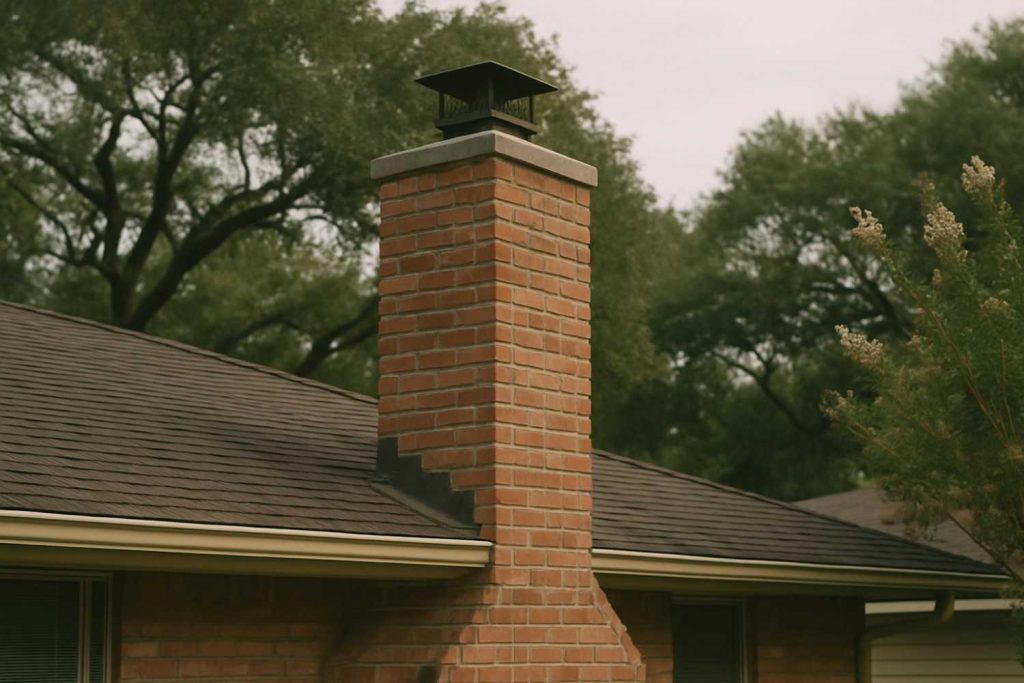
Every inspection touches every accessible component, top to bottom, exterior and interior. Our inspection standard includes:
Visual examination of liner condition, deposit buildup levels, and any cracking or separation in terra cotta or masonry liners.
Close inspection of the chimney crown, the concrete cap that seals the top of the chimney stack, for cracks or edge lifting; cap check for fit, rust, and screen integrity.
Assessment of the flashing seal at the roofline junction, where Houston's thermal movement frequently creates gap openings.
Open/close test and check for warping, corrosion, or seal failure.
Documentation of spalling brick, open mortar joints, efflorescence (white salt deposits that migrate to the exterior surface when water moves through masonry), or surface staining.
Inspection of the firebox floor, walls, and smoke shelf for deterioration, mortar joint condition, and any blockages. The smoke chamber is the funnel-shaped space above the firebox that directs combustion gases into the flue; the smoke shelf sits at the base of that transition zone and catches debris falling from above.
Delivered after every visit; documents all findings by component. Every item is photographed and noted before any repair conversation starts.
Every inspection touches every accessible component, top to bottom, exterior and interior. Our inspection standard includes:
Houston's heating season is short, roughly November through February. But the summer before it is demanding. Months of 90-plus-degree heat, Gulf humidity pushing into every porous surface, and at least one or two named storms rolling through between June and October. By the time a Houston homeowner wants to light their first fire of the season, the chimney has already been through a stress cycle that most other climates never see.
Our dispatches run from our 77074 location. We reach inner Houston neighborhoods, Meyerland, Braeswood, Westbury, and the Fondren area, in under 20 minutes without dealing with downtown corridors. That matters for early-morning pre-season bookings. Fall inspection windows fill fast in this market. Scheduling directly out of our dispatch keeps response times predictable.
832 Home Service field technician, Greater Houston area since 2010
I showed up to a house in Friendswood last October. The homeowner had the fireplace inspected two years before, nothing major found. She’d been traveling, the house sat vacant through one full summer. She wanted a pre-season check before the kids came home for the holidays.
On the surface, everything looked fine. The cap was in place. The crown looked intact from the ground. I went up on the roof first, and that’s where it changed. The crown had a hairline crack running across the back third, not visible from the yard, barely visible from the roofline if you didn’t know to look for it. Houston had gone through a particularly wet September that year. The crack had let water in during the storm events. Inside the flue, about four feet down from the top, there was a dark staining pattern on the terra cotta liner, the fired-clay pipe sections that line older chimney flues. Not a structural failure, but the beginning of one.
She would have used that fireplace in November without a second thought. No smoke backup. No smell. Nothing obvious. But water getting behind a liner is how liner failure starts, and liner failure in a wood-burning system is how a routine fire becomes a structural problem.
We documented everything in the written report. The crown got repaired before the first freeze. The liner got monitored and scheduled for assessment in the spring. She used the fireplace through December without any issue.
That’s the preventive inspection doing exactly what it’s supposed to do. The defect was there. We found it before it progressed.
The inspection starts with the exterior masonry and crown, followed by a roofline assessment for visible damage or wear. We then inspect the flue from crown to firebox, checking the liner, deposits, damper, smoke chamber, and firebox. Liner type and condition are documented, along with any issues that may require cleaning, repair, or further attention.
We move through each component in the same sequence every time. Roofline exterior first. Flue interior second. Firebox and smoke chamber third. Damper fourth. Exterior masonry fifth. Nothing gets skipped because of access difficulty or time pressure. If a component is inaccessible, a sealed cleanout, for instance, that is documented in the report along with the reason.
Before we leave, we walk through the written findings with the homeowner. Every repair item is explained in plain language. Monitoring items get a clear note on what to watch for before the next visit. You get the report the same day, in writing. No waiting for a follow-up call.
Once a year. Houston’s short heating season combined with a demanding summer of heat, Gulf humidity, and named storms means an annual inspection is the reliable way to catch defects before you light the first fire of the season.
Pre-season and post-storm are Houston’s two natural inspection windows. Fall slots fill quickly. If you plan to use your fireplace this winter, scheduling early keeps response times predictable.
A written report the same day, with photos and plain-language descriptions. Items are categorized as performing normally, needing monitoring, or needing repair. No verbal rundowns you have to remember later.
Yes. Some carriers want proof of annual maintenance on wood-burning systems. A written inspection report from a dated service visit is the right document to have, and we’ve been providing them since 2010.
Every accessible component: flue interior, firebox and smoke chamber, crown and cap, flashing, exterior masonry, and damper function, all documented with photos. See our Tier 1 inspection and Tier 2 inspection pages for related detail.
(832) 662-3437
Other work Houston homeowners commonly pair with this service.
The certified annual baseline check.
Camera survey when something looks off.
Inspection and sweeping go together.
Which one your home actually needs.
832 Home Service performs preventive chimney inspections across the Greater Houston area.
Annual inspections are how Houston homeowners stay ahead of chimney problems, not behind them. Call or email to book your inspection. Fall slots fill quickly. If you’re planning to use your fireplace this winter, schedule now. Our team dispatches from 77074 and serves the full Greater Houston area. Written report included with every visit. Email Us: info@832chimneyservices.com
WhatsApp us
Tell us what’s going on and we’ll get back to you, often the same day.
Prefer to talk? (832) 662-3437