Custom Copper Chimney Pots in Houston, TX
Copper Chimney Pot Fabricated to Your Exact Flue Interior Dimensions
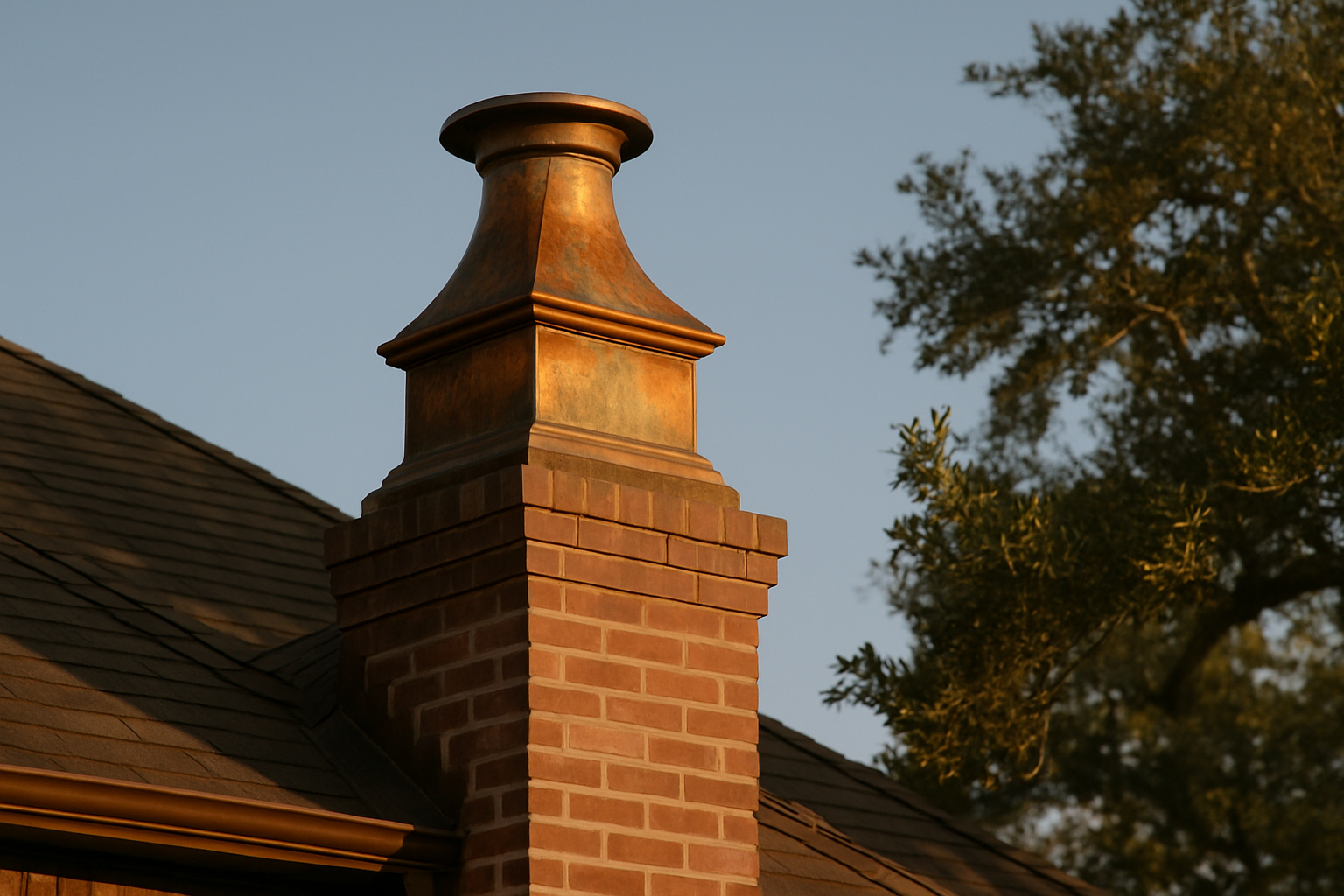
Copper Chimney Pot Fabricated to Your Exact Flue Interior Dimensions
A pot that doesn't match the flue opening gaps at the base. We fabricate to the actual measurement.
What a Copper Chimney Pot Actually Does for Your Houston Chimney
A chimney pot is a functional flue extension installed at the crown, not just a decorative top.
It raises the effective flue height, the total vertical distance from firebox to flue termination, without rebuilding the chimney structure. That added height changes the pressure differential that drives exhaust upward. When a chimney terminates too close to the roofline, nearby trees, or the adjacent structure, wind creates turbulence at the top. That turbulence can overpower the draft inside the flue. The result is wind-induced backdraft, a reversal of normal airflow that pushes smoke into the room instead of pulling it out.
A chimney pot solves that by lifting the termination point above the turbulence zone. It also excludes rain and wildlife from the flue opening, similar in function to the chimney cap installation options in Houston we offer for different flue configurations. And in Houston's traditional residential neighborhoods, it adds an architectural chimney detail, a decorative element, that complements the masonry exterior in the way original construction often intended. For homeowners wanting to understand flue termination height and draft principles in more depth, the Chimney Safety Institute of America homeowner resources offer a thorough reference.
Why Houston's Traditional Neighborhoods Make This a Common Request
River Oaks, Bellaire, and West University Place have Houston's highest concentration of pre-1970 brick chimneys.
These homes were built before modern HVAC systems changed how houses breathe. Many chimneys were designed with modest flue heights relative to the surrounding canopy. Houston's mature live oak and pecan trees, some topping 50 feet, have grown taller than the rooflines they were planted beside. That changes the wind behavior at the chimney top.
We install custom copper chimney pots in Houston, including these established neighborhoods, where the architecture supports the aesthetic and the lot conditions create the draft height requirement. Since 2010, we've worked on pre-1960 brick chimneys throughout these areas. Those older structures are also subject to the kind of environmental wear detailed in our guide on how Houston's climate accelerates chimney deterioration. Flue dimensions on older homes vary from house to house. No two openings are identical. That's the core reason catalog-size chimney pots consistently underperform here, the opening doesn't match the pot base, and the chimney pot base seal fails. Where wind-induced backdraft and pressure differential issues persist even after pot installation, we recommend scheduling a professional chimney draft analysis to identify underlying causes.
Serving Houston Since
Years Copper Lifespan
Fabricated To Flue
Communities Served
Copper Is the Right Material for Houston's Coastal Environment
Copper chimney pots perform reliably in Houston's salt-air environment for decades.
Here's what most homeowners don't realize about chimney pot materials in Houston: galvanized steel and aluminum oxidize differently than copper. Galvanized coatings develop white rust and surface pitting within five to seven years in coastal humidity. Painted steel requires recoating on a similar schedule. Copper patina, the green-gray oxidized surface that forms as copper weathers, is a protective layer, not a sign of deterioration. It makes the metal harder and more resistant to salt corrosion over time. A copper chimney pot installed today will still be sound in 30 years. That longevity is specific to the material and to Houston's environment.
A Field Scenario From River Oaks. Why Fit Matters More Than Style
I've measured chimney flue openings in River Oaks that span four different dimensions on the same street.
I've been fabricating and installing copper chimney pots on Houston-area chimneys since 832 Home Service opened in 2010. One call stays with me clearly.
A homeowner on a live-oak-shaded block in River Oaks had tried two off-the-shelf chimney pots before calling us. Both were close in diameter. Neither sealed correctly at the base. The first pot sat slightly proud of the flue opening, a quarter-inch gap all the way around. That gap let rain track down the flue interior on every storm, the kind of ongoing infiltration that makes chimney waterproofing to protect the masonry below a necessary companion service when the gap isn't addressed at the source. The second pot was slightly undersized on one axis. It rocked on the crown and was held in place with silicone caulk.
When I pulled the measurements, inside flue dimension, corner-to-corner on an out-of-square clay tile liner that had shifted over 60 years, the opening was 13.5 by 11.25 inches. Not a standard size. Not even close to one.
We fabricated a copper pot to those exact dimensions. The chimney pot base seal, the connection between pot and flue at crown level, fit the interior of the liner, not the exterior of the tile. That seal also depends on sound masonry beneath it; we always evaluate chimney crown repair before pot installation to ensure the new pot isn't sitting on a failing substrate. Rain entry stopped. Draft improved measurably on the first fire. The copper itself will develop copper patina, a green-gray oxidized surface, over the next few years and become more corrosion-resistant as it does. That oxidized surface protects the base metal in Houston's salt-air and high-humidity environment better than painted steel holds up over time.
That's the difference between a catalog pot and a fabricated one. The measurement comes first. Everything else follows.
Our Standards for Chimney Pot Fabrication and Installation
Every pot we install is measured, fabricated, and fitted to the interior dimensions of the specific flue it caps.
Interior flue measurement first, we measure the inside dimension of the flue opening at the crown level, accounting for out-of-square tile and settled liners.
Custom fabrication, each pot is built to those dimensions, not selected from catalog stock and adjusted on-site.
Chimney pot base seal, the pot seats against the interior flue dimension, not the exterior crown surface. This prevents rain entry at the gap and ensures the full exhaust stream passes through the pot.
Copper gauge selection, pot wall thickness matched to the chimney's exposure, height, and local wind loading.
Crown condition check, we inspect the crown surface before installation; a cracked or deteriorated crown is documented before the pot goes on, so the new installation isn't sitting on a failing substrate.
Single-visit completion, fabrication completed before the appointment; installation and base seal confirmation done the day we arrive.
How We Fabricate and Install Your Copper Chimney Pot
Fabrication to specification before installation day. That's the sequence we follow without exception.
Diagnostic: Flue Measurement and Crown Condition
We access the chimney top and record the interior flue dimensions at the crown opening. We check each dimension independently, length, width, and diagonal, because out-of-square openings are common in pre-1970 masonry chimneys in Houston. We also assess the crown surface condition and document any existing damage. If the crown needs repair before the pot is installed, we tell you before fabrication starts. This step determines the pot's base geometry entirely.
Implementation: Custom Fabrication and Installation
Fabrication happens at our shop using the recorded measurements. The pot base is shaped to the interior flue dimension, not the exterior opening, not an approximate catalog size. On installation day, the pot is set, the chimney pot base seal is confirmed across the full perimeter, and the pot is secured to the crown. No field cutting. No gap-filling with sealant as a primary method.
Post-Service Confirmation
After installation, we confirm the base seal visually from multiple angles and document the completed installation with photographs. Draft height requirement compliance, the two-foot clearance above any roof surface within ten feet, is noted in writing. The homeowner receives a summary of what was installed, the flue dimensions recorded, and the crown condition finding from the initial measurement visit.
Areas We Serve in Houston and Beyond
832 Home Service installs custom copper chimney pots across the greater Houston area.
We serve Houston, Bellaire, West University Place, Pasadena, Pearland, Sugar Land, Katy, The Woodlands, Friendswood, League City, Baytown, Galveston, Texas City, Seabrook, Clear Lake City, and surrounding communities. River Oaks and the Heights are among our most frequent service areas for chimney pot installation on pre-1970 brick chimneys.
Frequently Asked Questions
Why can't I just buy a catalog-size chimney pot?
Flue openings on older Houston homes vary from house to house, and no two are identical. Catalog pots consistently underperform because the opening doesn't match the pot base, and the base seal fails, letting rain and turbulence in. We fabricate to your actual interior flue measurement so the seal fits the liner, not the exterior tile.
Does the green color mean the copper is corroding?
No. Copper patina, the green-gray oxidized surface that forms as copper weathers, is a protective layer, not a sign of deterioration. It makes the metal harder and more resistant to salt corrosion over time, which is exactly why copper outperforms galvanized and painted steel in Houston's coastal humidity.
Will a chimney pot fix my smoke and draft problems?
Often, yes. A pot raises the effective flue height above the turbulence zone created by nearby trees, rooflines, or structures, which reduces wind-induced backdraft. If draft issues persist after installation, we recommend a professional chimney draft analysis to identify underlying causes.
How long does the whole process take?
Fabrication is completed at our shop before the appointment, so installation and base seal confirmation are done the day we arrive. It begins with a measurement visit to record your interior flue dimensions and check the crown condition.
What if my crown is damaged?
We inspect the crown surface before installation. A cracked or deteriorated crown is documented before the pot goes on, so the new installation isn't sitting on a failing substrate. If repair is needed, we evaluate chimney crown repair before pot installation and tell you before fabrication starts.
How long will a copper chimney pot last?
A copper chimney pot installed today will still be sound in 30 years. That longevity is specific to the material and to Houston's salt-air environment, where copper significantly outlasts galvanized steel and aluminum.
Ready to Get Started?
Contact our team today for a free consultation. Chimney pots are measured, fabricated, and installed in a single scheduled project. One call starts the process.
Contact 832 Home Service at (832) 662-3437 or email in**@****************es.com to schedule your measurement visit. We serve River Oaks, Bellaire, West University Place, and neighborhoods across the greater Houston area. Tell us your chimney type and any draft concerns you've noticed, we'll take it from there.
© 2026 832 Home Service. Houston's Chimney & Fireplace Company Since 2010.