Chimney Fire Inspection & Creosote Assessment in Houston, TX
After a flue fire, damage is often hidden. We assess creosote stage and liner condition before the fireplace is used again.
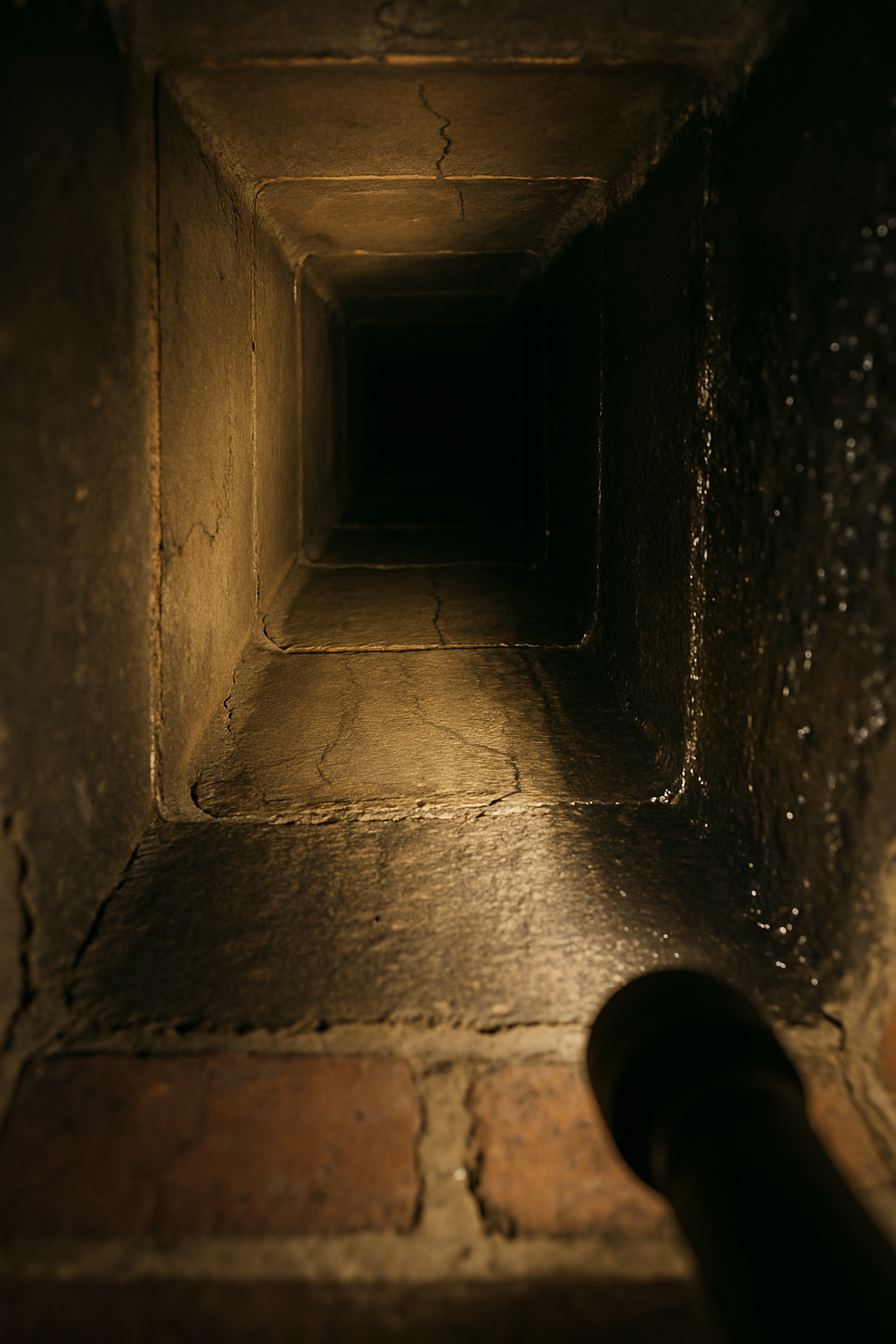
Chimney Fire Inspection & Creosote Assessment - Houston, TX
Creosote stage and thermal stress indicators assessed together. One inspection, one combined report delivered before our crew leaves. Know exactly what your flue can safely do next.
How the Inspection Is Conducted
Every chimney fire inspection follows a defined protocol. Both assessments are completed before any recommendation is made.
Diagnostics
The visit begins with a full exterior review, cap, crown, and visible masonry, for any thermal stress indicators visible from the roofline. Discoloration, crown fracture patterns, and spalling inconsistent with normal weathering are all noted before entry. Inside, the firebox mortar joints and smoke shelf are assessed for signs of heat stress. The liner is assessed under inspection lighting, looking for the liner tile honeycomb pattern, tile discoloration, and any tile displacement.
Implementation
Creosote staging follows the liner assessment. Deposit thickness and stage are measured at multiple points in the flue. Volume is assessed relative to flue cross-section. Stage, volume, and location of the heaviest concentration are all documented. The creosote removal requirement is then determined: whether standard mechanical removal handles the deposit, whether chemical pre-treatment is needed first, or whether Stage 3 glazed creosote conversion is required before mechanical work begins.
Post-Service Testing and Report Delivery
Once both assessments are complete, the combined report is prepared. It documents the creosote stage finding, the thermal stress indicator status, and the specific action pathway the combination requires. If thermal stress indicators are confirmed alongside a low-ignition creosote load, the report specifies whether the chimney requires cleaning only, cleaning plus liner re-evaluation, or cleaning plus full relining before the fireplace is used again.
What the Creosote Assessment Covers
- ✓Deposit stage classification - Stage 1 (light, brushable), Stage 2 (sticky, condensed), Stage 3 (hardened glaze)
- ✓Volume measurement - deposit thickness relative to flue cross-section at multiple points
- ✓Location mapping - where in the flue the heaviest concentration sits
- ✓Low-ignition threshold determination - whether the volume and stage combination presents a current ignition risk
What the Thermal Stress Assessment Covers
- ✓Liner tile surface examination - checking for the liner tile honeycomb pattern under inspection lighting
- ✓Tile discoloration - heat-induced color shifts inconsistent with normal combustion soot patterns
- ✓Crown assessment - spalling not consistent with weathering; fracture patterns consistent with thermal expansion
- ✓Firebox mortar joint examination - internal mortar expansion cracking associated with thermal events
- ✓Cap and top-of-flue inspection - signs of heat discharge beyond normal exhaust patterns
Creosote Stage and Thermal Stress Indicators Assessed Together
Single Inspection, Combined Report
A low roar inside the flue. A fire that burns unusually bright for a few minutes, then settles. Smoke rising from the cap when the fire isn't particularly large. These are the sounds and signs of a minor chimney fire, a brief combustion event inside the flue that burns itself out before producing visible flames, and many Houston homeowners never recognize them for what they are.
The question this inspection answers is direct: has a minor chimney fire already occurred inside your flue, and what is the current creosote fire risk level?
Assess Your Creosote Load and Fire Risk Before a Small Chimney Fire Becomes a Large One
Houston's cool-burning fireplaces accumulate creosote faster per season than most homeowners expect, and Stage 2 deposits can ignite.
A chimney fire inspection in Houston isn't only about checking for damage. It's about identifying whether the conditions for one already exist, or whether one has already occurred without being recognized.
Houston's burning pattern works against the homeowner in a specific way. Fireplaces here run at lower temperatures than wood-burning systems in colder regions. Shorter burns. Smaller loads. Cooler flue temperatures. That combination produces more creosote per fire, specifically the sticky, partially condensed Stage 2 deposits that accumulate faster and ignite at lower temperatures than fully dried Stage 3 glaze.
A low-ignition creosote load, a flue condition where the volume and stage of creosote present is sufficient to sustain a minor chimney fire if ignition conditions arise, is a direct consequence of this cool-burning pattern. Stage 2 deposits are the most common finding in Houston residential flues. They are also the most frequently underestimated.
A creosote fire risk level is the combined output of this inspection, a classification that links the creosote deposit stage and volume to evidence of any prior thermal events, producing a single finding that tells you what the flue can safely do next.
Creosote and Thermal Stress Assessment Completed in One Visit
Baytown, La Porte, and Deer Park hold some of eastern Harris County's highest concentrations of unassessed post-1970 wood-burning flues.
832 Home Service has been conducting chimney fire inspections and creosote assessments across the Houston area since 2010. That includes the eastern bay-area communities, Baytown, La Porte, and Deer Park, where post-1970 ranch homes were built with wood-burning fireplaces that have accumulated multi-season creosote loads in flues never assessed for thermal stress indicators (visible signs in a liner, crown, or masonry that suggest a past heat event beyond normal combustion temperatures).
In that corridor, it's common to find fireplaces that have received periodic cleaning without any concurrent liner evaluation. Cleaning removes the deposit. It doesn't reveal whether a thermal event already stressed the tile beneath it.
A creosote assessment without a concurrent pre-fire structural assessment, the evaluation of a chimney's liner, crown, and masonry for signs of prior heat damage when a fire is suspected but not confirmed, misses whether the existing deposit has already produced an unrecognized event. That's the gap this inspection closes.
What We Found When the Flue Looked Fine From the Outside
I was on a call in La Porte a few years back, a homeowner who'd been having the chimney cleaned every couple of years and noticed nothing alarming. No dramatic fire event. No smoke rollout. Just a night earlier in the season where the fire burned hotter than usual and there was a low-frequency vibration sound for about five minutes before it settled down.
That's a minor chimney fire. Brief, contained, self-extinguishing. The homeowner didn't know what it was.
When we ran the inspection, we found Stage 2 creosote with a volume consistent with two-plus seasons of cool, incomplete combustion. That's a low-ignition creosote load, enough to sustain exactly the kind of brief event he described. What made it more than a cleaning call was what the liner showed. The terra cotta tiles had developed a liner tile honeycomb pattern, a characteristic surface breakdown where the clay begins to pit and pock after exposure to chimney fire temperatures. That texture is only visible under inspection lighting. It doesn't appear on a brush sweep.
The finding was Stage 2 creosote plus confirmed thermal stress to the liner. The recommended action wasn't cleaning alone, it was chemical pre-treatment to convert the Stage 2 deposits to a removable form, followed by liner assessment to confirm whether tile integrity was sufficient for continued use or whether relining was needed.
That's why both assessments happen on the same visit. A creosote stage finding alone doesn't tell you what already happened. A liner check alone doesn't tell you what's about to.
- 832 Home Service Field Team
One Report, One Visit - Here's How the Two Assessments Connect
A creosote removal requirement determined without a thermal stress check leaves the most important question unanswered.
Some inspection visits return a creosote stage finding and stop there. Stage 2, needs cleaning. But that finding doesn't answer whether the Stage 2 deposit has already produced a low-temperature ignition event that stressed the liner beneath it.
A visual liner check without creosote staging doesn't produce a creosote removal requirement, the specific stage and volume finding that determines whether standard mechanical removal, chemical pre-treatment, or glazed creosote conversion is needed. Liner status without deposit staging leaves the action pathway incomplete.
The combined report links both findings to a single recommended action pathway. Creosote stage. Thermal stress indicator status. What the combination requires. That's the output. No verbal summary at the door. Written report with both findings and the action that follows from them.
Areas We Serve
832 Home Service conducts chimney fire inspections and creosote assessments across the Greater Houston area.
We serve Houston, Baytown, La Porte, Deer Park, Pasadena, Pearland, Friendswood, League City, Clear Lake City, Webster, Sugar Land, Missouri City, Stafford, Katy, Cypress, The Woodlands, Spring, Tomball, Conroe, Humble, Galveston, Texas City, Beaumont, and surrounding communities throughout the region.
Frequently Asked Questions
What is a minor chimney fire?
A brief combustion event inside the flue that burns itself out before producing visible flames. Homeowners often notice a low roar, a fire that burns unusually bright, or smoke rising from the cap, without realizing what occurred.
I already have my chimney cleaned - isn't that enough?
Cleaning removes the deposit, but it doesn't reveal whether a thermal event already stressed the liner beneath it. This combined inspection assesses both the creosote load and thermal stress indicators in a single visit.
Why do Houston chimneys accumulate creosote faster?
Fireplaces here run at lower temperatures than colder-region systems. Shorter burns, smaller loads, and cooler flue temperatures produce more Stage 2 creosote per fire, which accumulates faster and ignites at lower temperatures.
What does the combined report include?
A written report documenting the creosote stage finding, the thermal stress indicator status, and the specific action pathway the combination requires. You receive it before our crew leaves. No verbal summary at the door.
Related Services
Other work Houston homeowners commonly pair with this service.
Ready to Get Started?
Contact our team today for a free consultation.