
Wasp Nest Located, Removed, and Entry Point Capped in a Single Service Visit.
Houston’s year-round warmth keeps chimneys potential nesting sites throughout the year – not just summer.
In much of the country, wasp activity drops by late October. Houston’s mild winters can allow paper wasps and other species to remain active longer. A chimney left uncapped after an October nest removal can become vulnerable to re-entry by February – or sooner.
Humidity also matters in coastal Texas. An uncapped masonry flue can provide a sheltered environment protected from changing outdoor conditions. Mud daubers, for example, build individual clay tubes along flue walls and liner seams, creating another potential source of chimney blockage.
Average Houston January high - warm enough to keep wasps active.
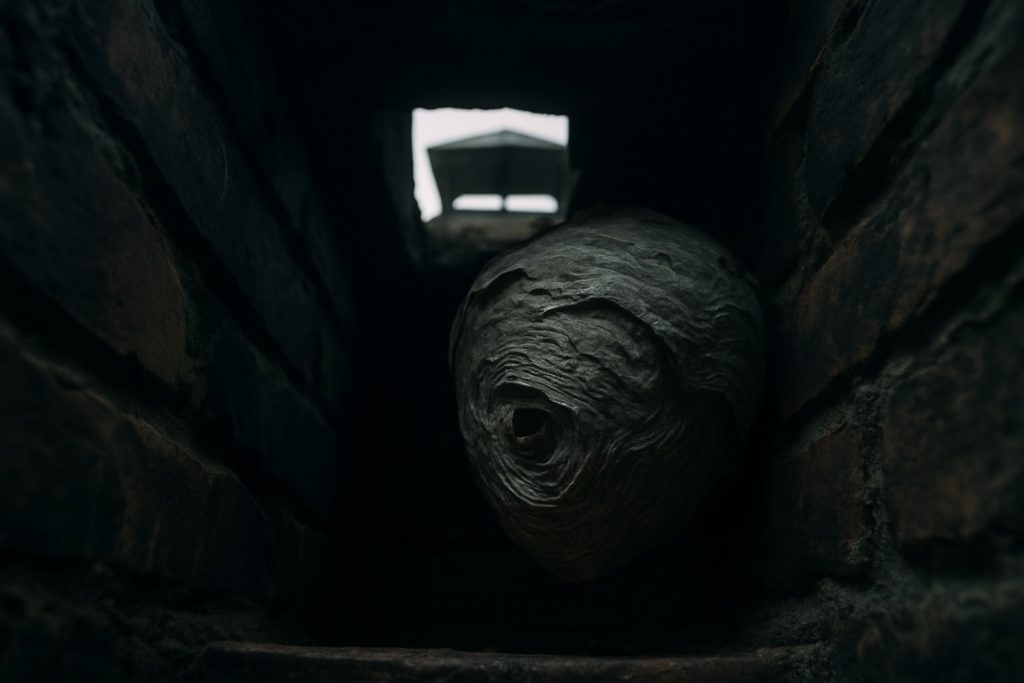
I took a call last spring from a homeowner in Pearland. She reported wasps entering near the top of her chimney and buzzing inside the firebox. Her first guess was yellow jackets.
When we inspected the chimney, we found a large paper wasp colony attached to the underside of the existing chimney cap. The cap had a two- to three-inch gap where the mesh had separated from the frame – enough space for wasps to enter.
Species identification mattered. Paper wasps and yellow jackets behave differently during removal, so the treatment method, application, and approach timing depend on the species present. Treating one like the other can create unnecessary risk and may leave the nest uncleared.
We treated the colony, confirmed full knockdown, removed the nest and debris from the smoke shelf, and replaced the damaged cap with a properly sized stainless steel cap with welded mesh. The entire visit took under two hours.
She received documentation of the species identified, work completed, and cap installed. That documentation mattered because her HOA required a written repair record. We had it ready before we left.
Colony size, nest location, and cap condition are the three variables that affect how your removal goes.
Not every chimney wasp call is the same. Here’s what actually determines how the service plays out:
A new queen in early spring is very different from an established late-summer colony with hundreds of workers. Colony size determines the treatment method, approach timing, and knockdown wait before debris removal. We assess the colony first so the service can be planned accordingly.
A paper wasp nest visible under a cap frame is accessible in minutes. A mud dauber colony that has built tubes along the liner over multiple seasons requires a camera pass to locate the full extent of the buildup. Location determines access method and total service time.
A missing or damaged cap is typically why a colony established in the first place. Cap replacement is part of the permanent solution - not an optional add-on. The cap type that works for your chimney depends on flue dimensions, chase material, and whether you have a single or multi-flue system. We measure before we order.
Masonry chimneys with standard round or rectangular flues accept standard cap sizing. Prefab metal chimneys with factory-specific terminations sometimes require model-matched caps. We confirm construction type on arrival and carry both configurations.
Nest material inside the flue gets removed before the cap goes on – we don’t seal debris inside the chimney.
Mud dauber tubes can leave dense clay deposits along liner seams, while paper wasp nests can leave comb material and other debris. We remove accessible nest material as part of the same service.
If a camera inspection finds debris deeper in the flue, we document it and explain the options before any additional work begins. No surprises.
The cap goes on only after the flue is confirmed clear. We don’t seal live nest material or debris inside the chimney.
Chimney wasp removal done right means the nest is gone and the entry point is sealed in the same visit.
Paper wasps, yellow jackets, and mud daubers all use Houston chimneys for nesting. Each species behaves differently and responds to different removal methods. A paper wasp colony attached to the smoke shelf needs a different approach than a mud dauber tube built along the liner or a yellow jacket colony established behind the damper plate. We identify the species first. The removal method follows from that - not the other way around. this
Nest removal without a cap installation is a temporary fix. Houston's climate means wasp activity in chimneys doesn't pause for a cold season. A clear, uncapped flue opening is an open invitation to the next colony. We remove the nest and cap the chimney in the same service visit so re-entry isn't possible.
Species confirmed. Nest cleared. Cap installed. Written record delivered. That’s the complete service.
Every chimney wasp removal at 832 Home Service follows the same sequence. We carry stainless steel chimney caps in multiple sizes on every removal call. If your existing cap is beyond repair, we replace it during the same visit – no second appointment for the component that helps prevent re-entry.
before any treatment begins - method selection follows from this
from the smoke shelf and accessible flue surfaces
existing caps assessed for gap size, mesh integrity, and fit; damaged caps replaced with correctly-sized stainless steel units
where wasps were entering and how that entry point is now sealed
species, removal method, cap type installed, and condition of the chimney at time of service
Yes. Chimney wasp removal done right means the nest is gone and the entry point is sealed in the same visit. We carry stainless steel chimney caps in multiple sizing configurations on every wasp removal call, so if your cap is beyond repair we replace it the same day.
Paper wasps, yellow jackets, and mud daubers each behave differently and respond to different removal methods. Product selection, application method, and the timing of when we approach the nest all change based on what we’re dealing with. We identify the species first, then the removal method follows from that.
We clear accessible debris as part of the same service. Mud dauber tubes leave dense clay deposits, and paper wasp nests leave comb material. None of that stays in the flue when we leave. The cap installation happens after the flue is confirmed clear, not before.
Houston’s average January high sits around 62°F, and paper wasps stay active well into what the rest of the country calls winter. An uncapped flue stays warmer and more sheltered than the surrounding air, which makes it attractive year-round. We serve the Greater Houston area every month of the year.
Yes. Written service documentation is included with every visit, covering the species present, removal method, cap type installed, and the condition of the chimney at time of service. This is often what HOAs require as a written record of the repair.
(832) 662-3437
Other work Houston homeowners commonly pair with this service.
Safe removal of animals nesting in your flue.
Nests block the flue and push smoke inside.
The permanent fix that keeps pests out.
Same-day help when something is stuck inside.
832 Home Service handles all three in one visit species confirmed, nest cleared, cap installed. Call 832 Home Service at (832) 662-3437 or email info@832chimneyservices.com to schedule your Chimney Leak Repair assessment.
WhatsApp us
Tell us what’s going on and we’ll get back to you, often the same day.
Prefer to talk? (832) 662-3437