Seal Exposed Chimney Surfaces in Houston, TX
Above-Roofline Masonry Sealed Only After a Moisture Reading Confirms It Is Dry
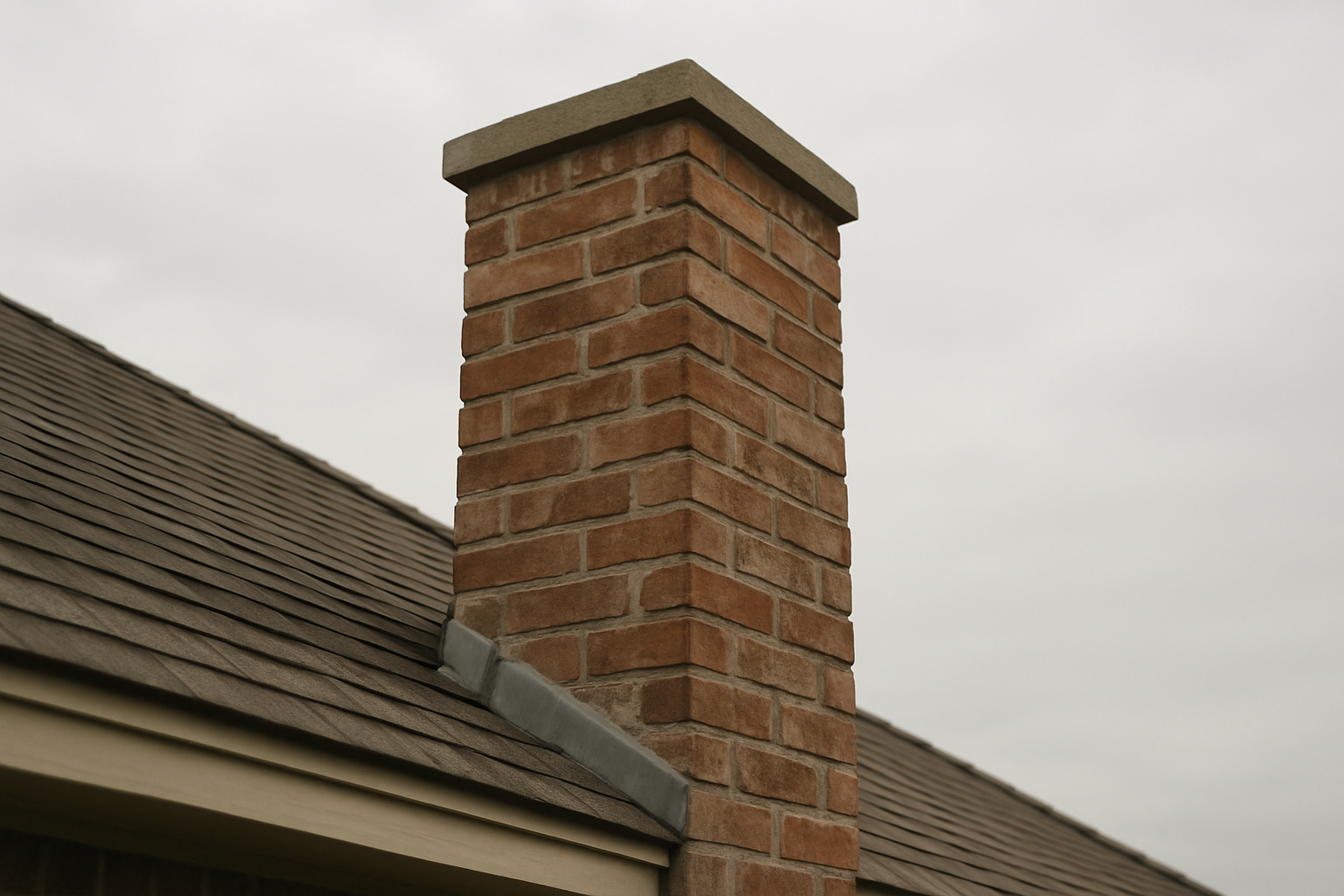
Above-Roofline Masonry Sealed Only After a Moisture Reading Confirms It Is Dry
Wet masonry gets rescheduled. Not sealed over. That single principle separates a seal that lasts from a seal that traps moisture and fails.
Seal Chimney Surfaces Houston: What This Service Is and Who Needs It
Targeted chimney surface sealing protects the above-roofline masonry that takes direct Houston sun and rain every single day.
This is not a full waterproofing scope. It is a focused application of water repellent to the exposed brick or mortar surfaces of the chimney that extend above the roofline - the section that receives no shade, no shelter from surrounding roofing materials, and full UV radiation from every angle. Homeowners who need the complete exterior treatment should review our full chimney waterproofing and sealing service, which covers crown, cap, flashing, and all masonry surfaces as a coordinated scope.
Above-roofline chimney exposure - the zone of a chimney that sits fully above the roof surface, unprotected by surrounding shingles, overhang, or siding - degrades faster than any other section of the masonry. In Houston, where the UV index stays in the extreme range for most of the year, that degradation is not gradual. It is measurable season to season.
Targeted surface treatment applies water repellent to specific masonry sections - such as the exposed chimney face above the roofline - rather than the full chimney system. This is the right scope when lower sections are protected by roof overhang or have already been sealed as part of a prior repair.
We check masonry moisture content - the percentage of water held within the brick or mortar at the time of application - before any product goes on. Following CSIA homeowner chimney maintenance guidance, confirming that moisture levels are within the product's specified tolerance is a non-negotiable step before application. If moisture levels are above the product's specified tolerance, the job is rescheduled. Wet masonry gets rescheduled. Not sealed over.
How We Execute a Chimney Surface Sealing Job in Houston
From moisture reading to post-application review - here is the full sequence.
Surface Condition Check and Moisture Verification
We start at the masonry itself. Before any equipment is staged, the above-roofline section is examined for surface condition: current degradation stage, mortar joint recession depth, any visible fractures, and the presence of efflorescence. Each of these findings affects whether sealing is appropriate now or whether a preparatory repair step needs to happen first. Chimneys showing receding mortar joints at the surface will need mortar joint repair before sealing surfaces to ensure the treated surface is structurally sound and ready to bond.
Chimney masonry drying rate - how quickly the exposed surface releases absorbed moisture, based on sun exposure, wind, and surface area - is factored into the assessment. A chimney on a shaded north face dries at a different rate than one on an open south wall in Cypress. The moisture reading is taken after this surface assessment, not before it.
If moisture content is within the product's specified tolerance, we proceed. If it is not, the application is rescheduled and the homeowner receives a written explanation of the reading and the reschedule window.
Product Selection and Application
Product selection happens at the assessment stage, not on the day of application. Brick age, surface porosity, and current degradation level determine which sealer formulation is appropriate and what the correct application rate is.
For older, softer brick typical of inner Houston masonry - the kind found in Heights and Montrose chimneys built between 1930 and 1970 - penetrating sealers need a longer dwell time and a lower application pressure. For denser post-2000 brick in Cypress, Tomball, and Spring, the application rate is adjusted to ensure adequate penetration without surface runoff.
Coverage is applied uniformly across the full above-roofline section. Every exposed course. Not just the top. Not just the visible face from the street.
Confirmation and Documentation
After the sealer has cured to the specified window, a water bead test is performed on multiple points across the treated surface. This confirms that the surface sealer bond has formed correctly and that water is being repelled rather than absorbed.
The application record includes: masonry moisture reading at the time of treatment, product used and application rate, coverage area by course, post-cure bead test results, and scheduled re-application window based on product lifespan. The homeowner receives this in writing before the crew leaves.
Houston's Above-Roofline Chimneys Take More UV Punishment Than Most Homeowners Realize
Houston's UV index is among the highest in the continental United States - and exposed chimney masonry absorbs all of it.
Cypress, Tomball, and Spring sit in open-lot suburban developments with minimal tree coverage. Chimneys in these neighborhoods have fully exposed above-roofline sections with no canopy buffer and no shade at any time of day. That changes how fast the outer face of the brick breaks down.
Here is what the above-roofline exposure zone does in Houston's climate: the problem is not UV radiation alone. It is the combination of UV heat loading during the day and rapid surface cooling at night. That daily thermal surface swing - the temperature differential between peak afternoon heat and nighttime cooldown - opens micro-fractures at the brick face over time. Each fracture is microscopic at first. Then rain finds it. Understanding how Houston's climate accelerates masonry damage makes clear why this thermal cycling compounds UV degradation faster here than in most other regions.
UV masonry degradation - the breakdown of brick surface facing and mortar joint binder caused by prolonged ultraviolet exposure - accelerates in Houston because the above-roofline section never gets a break. No shade. No overhang. No seasonal reprieve. Houston area climate and UV conditions consistently register in the highest tiers of the EPA UV Index scale and exposure levels, which puts exposed masonry under sustained radiation loads that other climates simply do not replicate.
Unsealed surfaces in this zone begin to show powdering at the outer face. Then the face pits. Then mortar joints start to recede at the surface while still holding depth. By the time it is visible from the ground, the degradation has been building for two or three seasons. Surface powdering and face pitting that have progressed beyond early-stage may require spalling brick repair on exposed chimney faces before sealing is appropriate.
832 Home Service has sealed exposed chimney surfaces across the Houston metro since 2010. That includes softer, older brick in inner Houston neighborhoods like Montrose and the Heights, and the harder modern brick in post-2000 suburban construction in Cypress and Tomball. Each requires different product selection and a different application rate to achieve correct penetration.
2010
Serving Houston metro since
2-3
Seasons of hidden degradation before it's visible
A Job That Almost Went Wrong Before It Started
Applying sealer to masonry that is still wet from the previous night's rain traps moisture inside the brick.
We took a call in Tomball - new construction home, about eight years old, fully exposed above-roofline chimney on a south-facing rear wall. The homeowner had watched the brick face powder slightly along the top courses for two seasons. He called early, before it had progressed into visible joint recession.
We scheduled the job for a Thursday. Tuesday night, Tomball got almost an inch of rain from a fast-moving thunderstorm band. Nothing dramatic, but enough to load the masonry.
When our crew arrived Thursday morning, the chimney looked dry to the eye. Surface color had returned to normal. We pulled a moisture reading on the brick before staging equipment. The reading came in above the product's specified tolerance. Not by a dramatic margin. But above it.
We rescheduled to the following Monday.
Here is why that matters. A sealer applied to masonry above its moisture threshold does not bond correctly to the substrate. The surface sealer bond - the adhesion between the water repellent and the masonry - is compromised by residual moisture inside the brick. The product cures, but the seal is incomplete. Water finds its way in at micro-level gaps in the bonding layer.
The homeowner understood immediately. We came back Monday, ran the moisture check again, confirmed the reading was within spec, and applied the treatment correctly.
That is the only way to do this job. It takes longer to schedule around Houston's weather. A reapplication costs more than waiting.
Is This the Right Service for Your Chimney?
Targeted surface sealing is the correct scope for some chimneys - and the wrong one for others.
Here is a plain-language way to self-qualify before you call:
Surface sealing is likely the right service if:
- ✓Your chimney's lower sections are protected by roof overhang or have been sealed as part of a prior repair
- ✓The above-roofline section shows early-stage UV masonry degradation - surface powdering, slight pitting, or minor mortar face recession - but no active water entry into the firebox
- ✓The masonry is structurally sound with no active spalling, no open cracks, and no efflorescence - the white mineral deposit that signals moisture is already moving through the brick. Active efflorescence on exposed above-roofline masonry should be addressed before any sealer is applied
- ✓You want targeted surface protection before damage advances, not after
Full waterproofing is a better scope if:
- ◆The full chimney exterior - crown, cap, flashing, and masonry - has not been sealed and all sections are exposed
- ◆Active water entry has already been diagnosed through the crown, joints, or flashing
- ◆Multiple surfaces show different levels of deterioration and need a sequenced repair-then-seal approach
Not sure which one applies to your chimney? That is exactly the kind of question we answer at assessment. You do not need to know the scope before you call.
Our Standards for Exposed Chimney Surface Sealing
Every chimney masonry sealing job we do in Houston follows the same quality baseline.
Moisture reading before every application
Masonry moisture content is checked at multiple points on the above-roofline section - not just the top course, but midpoint and lower exposed courses too.
Product selected for brick type
Older soft-face Houston brick absorbs at a different rate than post-2000 harder brick. Application rate and product viscosity are matched to what is actually on the chimney.
Vapor-permeable sealer only
The product must allow the masonry to breathe while repelling surface water. Film-forming sealers that lock moisture in are not part of our application.
Scheduling around dry weather windows
Houston's weather can shift in a day. We track forecast conditions and confirm surface dryness before any job begins.
Uniform coverage documented
Application rate and coverage area are recorded so future applications can be matched to the same specification.
Targeted scope honored
If the exposed section is the scope, that is what we treat.
Areas We Serve in the Houston Area
832 Home Service provides chimney surface sealing across the Greater Houston area - including northwest suburbs and coastal communities.
We serve Houston, Cypress, Tomball, Spring, The Woodlands, Katy, Sugar Land, Pearland, Friendswood, League City, Galveston, Texas City, Baytown, Pasadena, La Porte, Deer Park, Humble, Conroe, Rosenberg, Richmond, Beaumont, and all surrounding communities. Call (832) 662-3437 to confirm service availability at your address.
Frequently Asked Questions
Why do you take a moisture reading before sealing?
A sealer applied to masonry above its moisture threshold does not bond correctly to the substrate. Residual moisture inside the brick compromises the surface sealer bond, and water finds its way in at micro-level gaps. If moisture levels are above the product's specified tolerance, we reschedule rather than seal over wet masonry.
How is surface sealing different from full chimney waterproofing?
Surface sealing is a focused application of water repellent to the exposed masonry above the roofline only. Full waterproofing covers the crown, cap, flashing, and all masonry surfaces as a coordinated scope. If your entire chimney exterior is exposed or water entry has been diagnosed, review our full chimney waterproofing and sealing service.
Why does above-roofline masonry degrade faster in Houston?
The above-roofline section receives no shade, no overhang, and full UV radiation. Houston's UV index is among the highest in the continental U.S., and the daily swing between UV heat loading and nighttime cooling opens micro-fractures at the brick face over time. That thermal cycling compounds UV degradation faster here than in most other regions.
What if my chimney has spalling or efflorescence?
Surface sealing requires structurally sound masonry. Powdering and pitting that have progressed beyond early-stage may require spalling brick repair first, and active efflorescence should be removed before any sealer is applied. Receding mortar joints will need mortar joint repair to bond correctly.
What kind of sealer do you use?
We use vapor-permeable sealers only. The product must allow the masonry to breathe while repelling surface water. Film-forming sealers that lock moisture in are not part of our application. Product selection and application rate are matched to the specific brick type on your chimney.
Do I need to know the correct scope before I call?
No. Whether targeted surface sealing or full waterproofing is right for your chimney is exactly the kind of question we answer at assessment. Call (832) 662-3437 and we will determine the correct scope for your masonry.
Ready to Get Started?
Seal chimney surfaces in Houston with a moisture-verified application - the only way to confirm the job was done correctly. Contact our team today for a free consultation.
832 Home Service schedules chimney surface sealing around Houston's dry weather windows and confirms masonry moisture content before any product is applied. If your above-roofline masonry is showing early UV degradation or you want surface protection before damage advances, call us at (832) 662-3437 or email in**@****************es.com to schedule your assessment.
© 2026 832 Home Service. Chimney and Fireplace Company Serving Houston Since 2010.