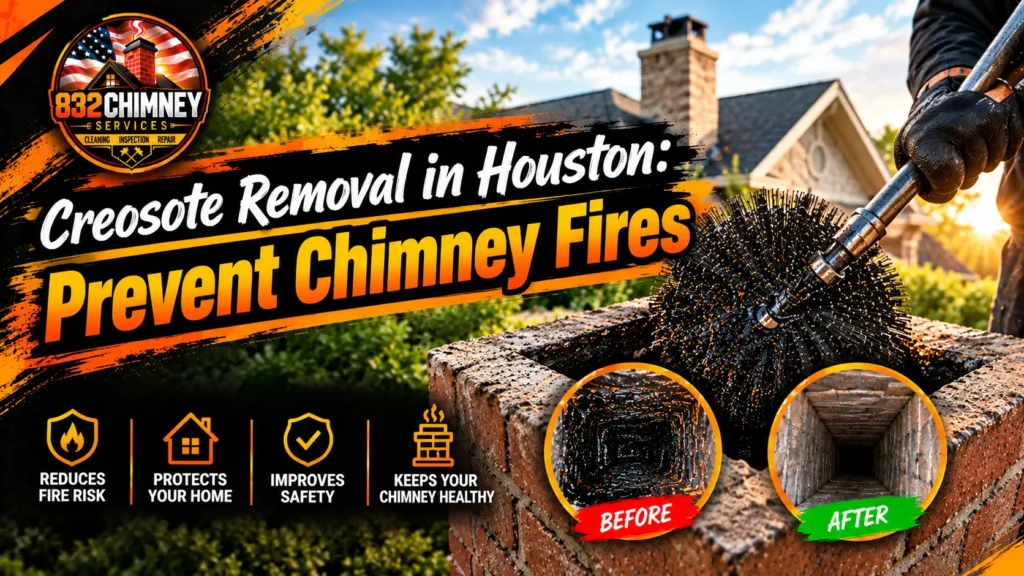
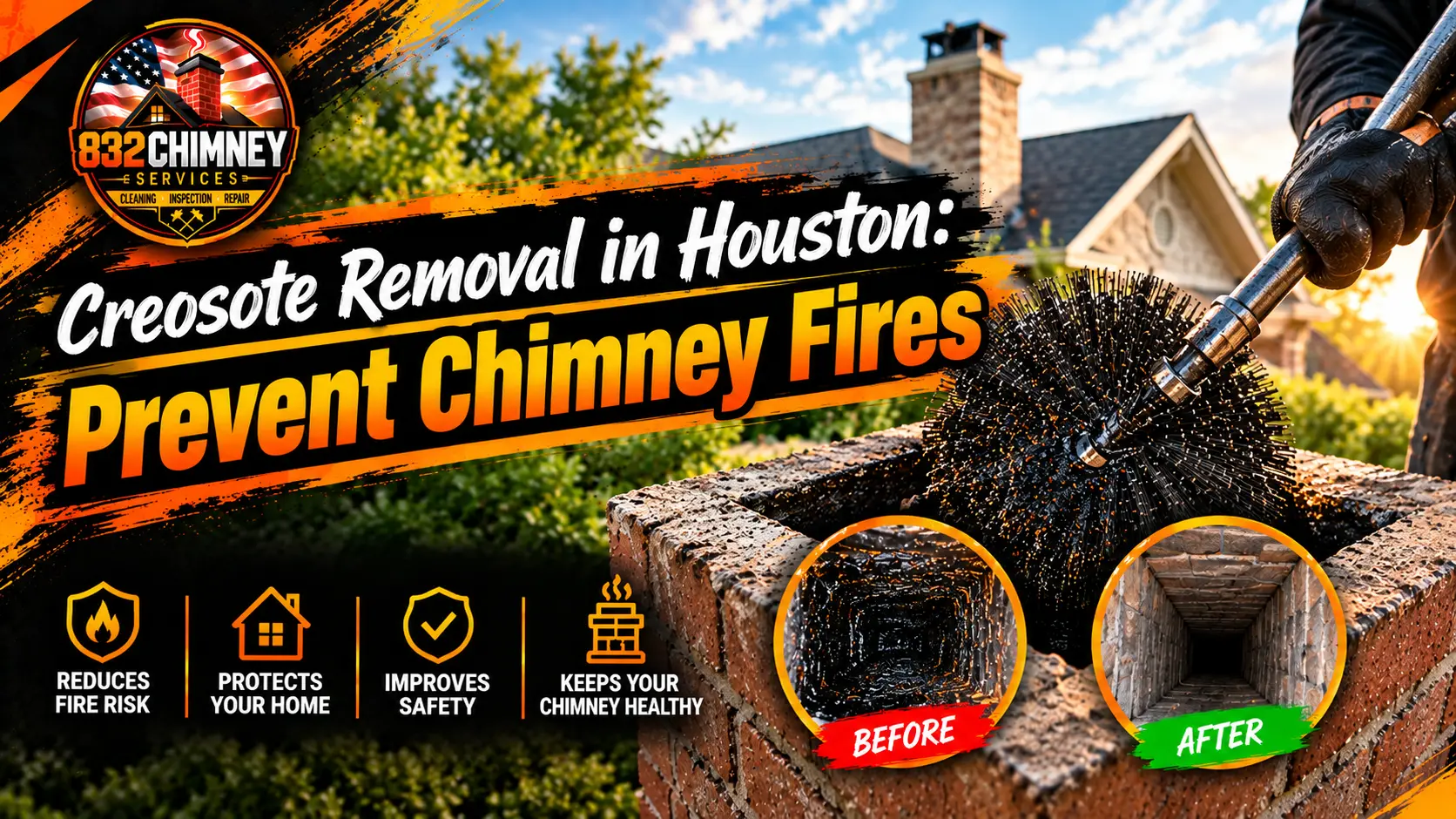
Fast and Convenient Creosote Removal in Houston, TX
Creosote buildup in your chimney is a major fire hazard and can also cause your chimney to work inefficiently in Houston homes. At 832 Chimney Services, we offer fast and reliable creosote removal all across Greater Houston, including Sugar Land, Katy, Cypress, Spring, The Woodlands, Pasadena, Pearland, League City, and the surrounding areas in Harris, Fort Bend, Montgomery, Galveston, and Brazoria counties.
Whether you have a wood-burning fireplace, wood stove, or wood furnace connector, our expert team of chimney sweeps will safely remove creosote deposits and get your chimney working like new again. Here’s what you can expect with every service:
- Lower your risk of having a chimney fire and smoke-related hazards
- Get rid of those nasty tar-like creosote odors in your home
- Get your chimney back to running at its best and being more efficient
- Extend the life of your chimney liner with safe and thorough cleaning
Get in touch with our 832 area code phone number or send an online estimate to arrange for a chimney inspection and creosote removal today.
What Creosote Is and How It’s a Bigger Problem in Houston’s Climate
Creosote is a flammable substance that builds up when wood smoke condenses on the cooler surfaces inside your chimney flue and smoke shelf. And if you’re burning wood without addressing the issue, it just keeps getting worse.
But in Houston’s climate, it’s an even bigger problem than in drier places. Here’s why:
- Houston’s got a lot of humidity. We’re talking 90% or more in the mornings – which keeps your masonry and flue surfaces damp. And that cooler, wetter air in the flue causes smoke to condense and creosote to form even faster.
- 50 inches of rain every year. And that’s just driving water into your chimney – especially if the cap is damaged, the crown is cracked, or the flashing is failing. And when that happens, it makes the creosote deposits stick around even longer.
- And then there’s the flue temperature. Anything below 250°F and you’re basically cooking up a perfect creosote recipe. And in the cooler months, when you’re burning fires that don’t roar too loudly, that’s exactly what can happen.
- Let’s talk about the wood you’re burning. If the wood you’re using is above 20% moisture, you’re basically guaranteed to end up with more smoke and tar. And in Houston’s humid climate, that’s a pretty likely scenario.
- And the way you’re burning it doesn’t help either. Lots of people burn fires low and slow – which is bad news for your chimney. That cooler smoke just gets cold again when it hits the damp brick and liner surfaces – and that’s when the creosote really starts to build up.
And the worst part? Creosote can even get into the wood framing around the chimney system, which makes it so much harder to remove.
The 3 Stages of Creosote Buildup in Houston Chimneys
Chimney creosote comes in three stages, and knowing what to look for can help you figure out whether you can just use a brush and some elbow grease, or if it’s time to call in the pros.
You can use a flashlight and mirror to take a look inside the firebox and see which stage you’re dealing with:
- Stage 1 – fluffy soot. Stage 1 is the easy one – just some fluffy grey-black soot that brushes off with a standard chimney brush. And it’s usually a sign that you’re burning slightly damp wood or you’re just getting started with the burning season. But even though the risk level is low, it’s still worth cleaning out.
- Stage 2 – flaky tar. Stage 2 is a bit more serious. This is when the creosote starts to get a bit more sticky and dark. You can usually tell the difference because it’s a bit flaky and crunchy – and it’s not just a matter of brushing it away. At this stage, you’ll usually need to use a chemical creosote remover before you can try to clean it out.
- Stage 3 – a hard, shiny glaze. Stage 3 is when things get really bad. This is when the creosote has turned into a hard, shiny glaze that’s basically just a ticking time bomb for a chimney fire. And if you see any of this in your flue, you need to stop using the fireplace right away and get a professional in here ASAP.
The National Fire Protection Association says that if your creosote deposits are over 1/8 inch thick, you need to get them removed. And that’s especially true if you see any of that glazed material in your flue.
Professional Creosote Removal Services in Houston
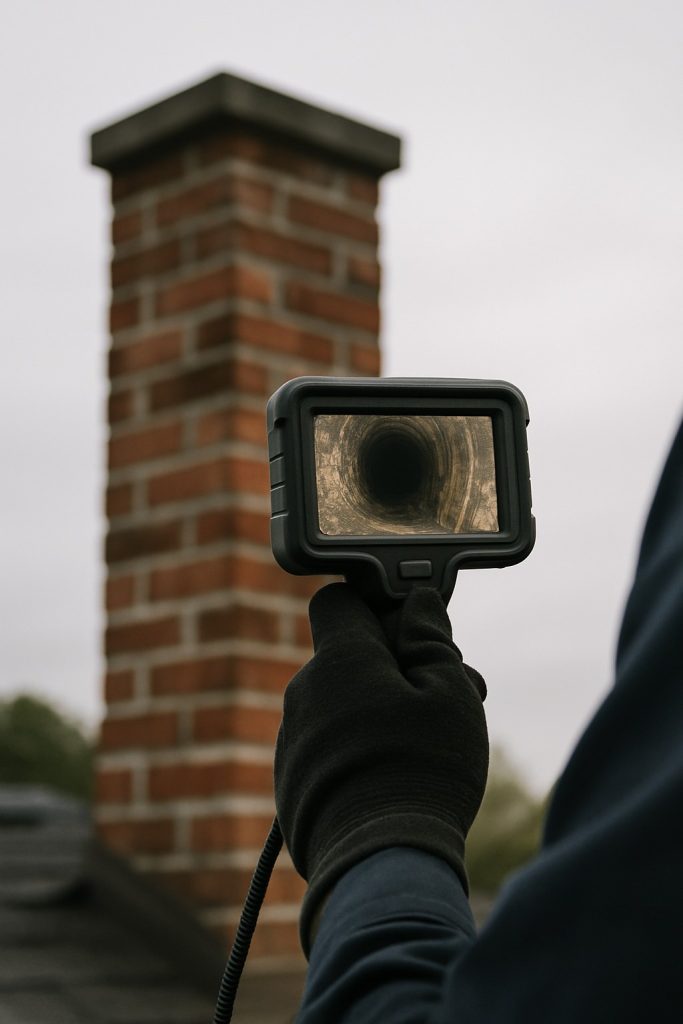
At 832 Chimney Services, we offer a full-service creosote removal that covers everything from the firebox and smoke shelf right through the chimney flue to the cap area. Every appointment starts with a thorough inspection: a visual check, a camera or light inspection inside the flue, a look at the creosote stage, and a check for any liner cracks or signs of water damage. Effective creosote removal strategies depend on where the buildup is. Here’s what we do by stage:
- Stage 1 removal – for Stage 1 creosote, a simple chimney brush and rods can do the trick. We use a mechanical brush to clean off loose soot and flaky creosote, but we use brushes that are the right fit for your liner type – poly for metal, or wire for clay tile – so we don’t cause any damage in the process.
- Stage 2 removal – Stage 2 requires a bit more elbow grease. First, we use a chemical treatment to soften up that stubborn creosote. Then, we use a rotary tool to gently dislodge it without cracking the liner. We use professional-grade cleaning solutions that are up to the job.
- Stage 3 removal – if you’ve got Stage 3 creosote, we’re talking a much bigger job. This is where it’s really important to call in the professionals, because it can be a safety hazard if not done right. We use chemical treatments to help loosen the creosote, and then use the right equipment to scrape it away without causing any damage. Sometimes, it’s even necessary to replace some of the wood surrounding the chimney, rather than trying to clean it.
Our team is always looking out for you when we come to work. We set up a drop cloth around the firebox, close off the opening, and use a HEPA vacuum to catch all the soot and debris before it has a chance to spread. We know chimney systems inside and out – from masonry chimneys to prefabricated metal systems and wood stove connectors – and we’ve got the experience to show for it.
Creosote removal is key to keeping your chimney running smoothly and safely.
DIY vs Pro Creosote Removal
Now, we know some homeowners might think they can save themselves a few bucks by taking on a DIY chimney cleaning job. And yeah, if you’ve got really light soot in a short, straight flue, and the fireplace has cooled down completely, then a good sweep with the right brush and some common sense safety precautions can get the job done.
But let’s be real, DIY creosote removal is no picnic. For one thing, creosote contains some pretty nasty carcinogenic compounds – and if you’re not wearing a respirator, gloves, and eye protection, you’re putting yourself at risk. And then there’s the issue of hidden deposits – creosote can build up in all sorts of hard-to-reach places, like behind offsets or in the smoke shelf.
And don’t even get us started on that myth that a really hot fire will burn away creosote safely. Newsflash: it won’t. It can actually ignite existing deposits and trigger a chimney fire that’s a real scorcher – we’re talking temperatures over 2,000°F.
And then there’s the problem of home remedies. Yeah, a paste of baking soda or vinegar can help clean up some surface stains, but it’s not a substitute for a proper flue cleaning. And don’t try to seal contaminated wood with an encapsulating primer – that just locks the odors and residue in place, rather than fixing the problem.
Chimney cleaning logs might be able to help with Stage 1 and early Stage 2 deposits, but they’re no replacement for a proper cleaning. And if you’ve got creosote-treated wood, you need to be extra careful with it – it’s not something you can just throw away or burn.
Schedule a Pro Inspection
So what’s the deal with creosote buildup? It’s a serious issue that can lead to chimney fires if left unchecked. So here’s what you can do to prevent it:
- Burn only seasoned wood. That means using dry hardwood with a moisture content below 20% – or the lower, the better. And in Houston’s climate, store your firewood off the ground, under cover, and away from direct rain.
- Build hotter fires with good airflow. Open up that damper, use some decent kindling, and avoid smoldering fires. A strong fire will keep the flue warm and reduce condensation, which is when tar builds up.
- Warm the flue first. Before you load up the fire, burn some newspaper or kindling to get the flue temperature up and reduce initial condensation.
- Maintain your chimney cap and crown. A properly fitted cap keeps rain, leaves, and animals out – which can all contribute to faster creosote buildup. After a big Gulf Coast storm season, inspect the cap, flashing, and crown to make sure they’re still in good shape.
- Schedule annual inspections. The Chimney Safety Institute of America recommends annual chimney inspections – and we agree. It’s the best way to catch any potential problems before they become major headaches. Be stingy with chemical creosote removers – they’re a last resort. Maybe you can get away with occasional use of creosote remover logs or sprays between visits from the pros, but don’t even think about using them as a replacement for a thorough mechanical sweep and inspection.
In Houston’s ridiculously humid climate, moisture management is a big deal after cleaning to stop issues like mold, efflorescence, or new deposits sticking to damp surfaces.
Why You Should Trust 832 Chimney Services for Creosote Removal in Houston
We are a team of local experts who have been watching chimney wear and tear accelerate pretty much everywhere across the Gulf Coast region since around 2010 – all thanks to non-stop humidity, lots of tropical storms, and clay soil doing its thing. That local experience translates into us being able to figure out what’s going on with your chimney system way faster and more accurately.
Here are some things that set us apart for creosote removal – things Houston homeowners have come to rely on us for:
- Deep down, we really know the area. We’ve been inspecting and sweeping thousands of chimneys all over Greater Houston for years – brick masonry, prefab metal systems, townhomes, and two-story suburban homes. We know exactly what the Houston climate does to individual chimney components.
- Safety is #1. Every job we do starts with a thorough inspection to check for chimney fire risk, liner damage, and water getting in. If a liner replacement is safer than trying to remove that nasty Stage 3 creosote glaze, we’ll tell you straight out.
- We’re upfront about pricing. We give you free estimates and give you a clear rundown on what affects the cost – chimney height, roof pitch, how easy or hard it is to get to, how bad the creosote is, and whether or not you’ve got a bad case of that nasty Stage 3 glazed stuff.
- We invest in top-notch gear and training. Professional chimney sweeps use specialized equipment for creosote removal – stuff like precision-sized brushes, rotary systems, and chemical conditioners that match the type of liner in your chimney.
Get in touch with 832 Chimney Services on the phone or through our website to schedule chimney flue creosote cleaning before your next burning season starts up.
Sometimes You’ve Just Got to Know – Frequently Asked Questions About Creosote Removal in Houston
We get a lot of questions from Houston homeowners about when to have their chimney maintained, warning signs to look out for, and what really works. We’ve got some answers here:
- When should Houston chimneys be looked at? At least once a year – ideally after summer storm season and before you light up the fireplace for the first time in fall. If you use your woodstove all the time, every six months is a safer bet.
- What are the signs that there’s a creosote problem? It’s pretty obvious: strong smoky or tar smells near the fireplace, dark staining on the firebox or mantel, reduced draft, visible flaky or shiny deposits in the flue, or if you notice chimney fires burning out of control – like that popping sound or a roaring noise- or when you can smell hot metal during a fire.
- Do gas fireplaces need creosote removal? No – gas produces way less creosote, but venting systems still need a check for soot, moisture damage, and proper draft. Annual inspection remains really important for safety.
- Can I use baking soda, vinegar, or household degreasers to remove creosote? Yeah, those things can help a bit with surface cleaning on masonry in the firebox, but they’re a disaster for internal flue creosote buildup. Only mechanical and professional-grade chemical methods can safely clean a chimney flue.
- How long does a typical appointment take? Around 45-90 minutes for light to moderate buildup. If you’ve got a bad case of Stage 2 or Stage 3 glazed systems, it can take a couple of hours or even require a follow-up visit.
- What if I see Stage 3 glazed creosote? Don’t burn anything – stop using the fireplace or stove right away. Stage 3 creosote is a serious fire hazard and needs professional removal. Call 832 Chimney Services right away – it’s not something you can just put off.
Don’t wait for the first cold front. Contact 832 Chimney Services today to schedule your creosote removal and keep your Houston home safe all season long.