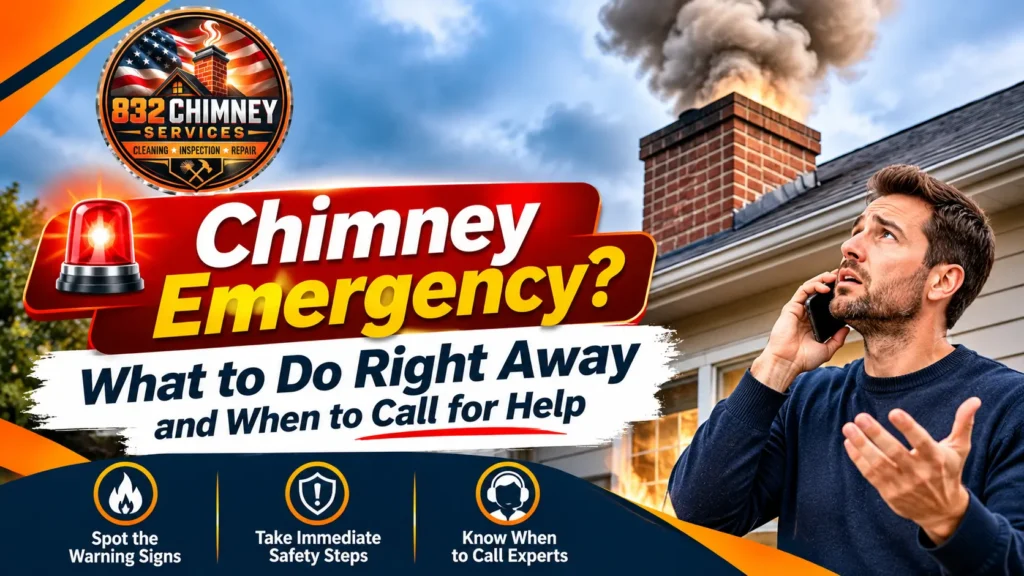
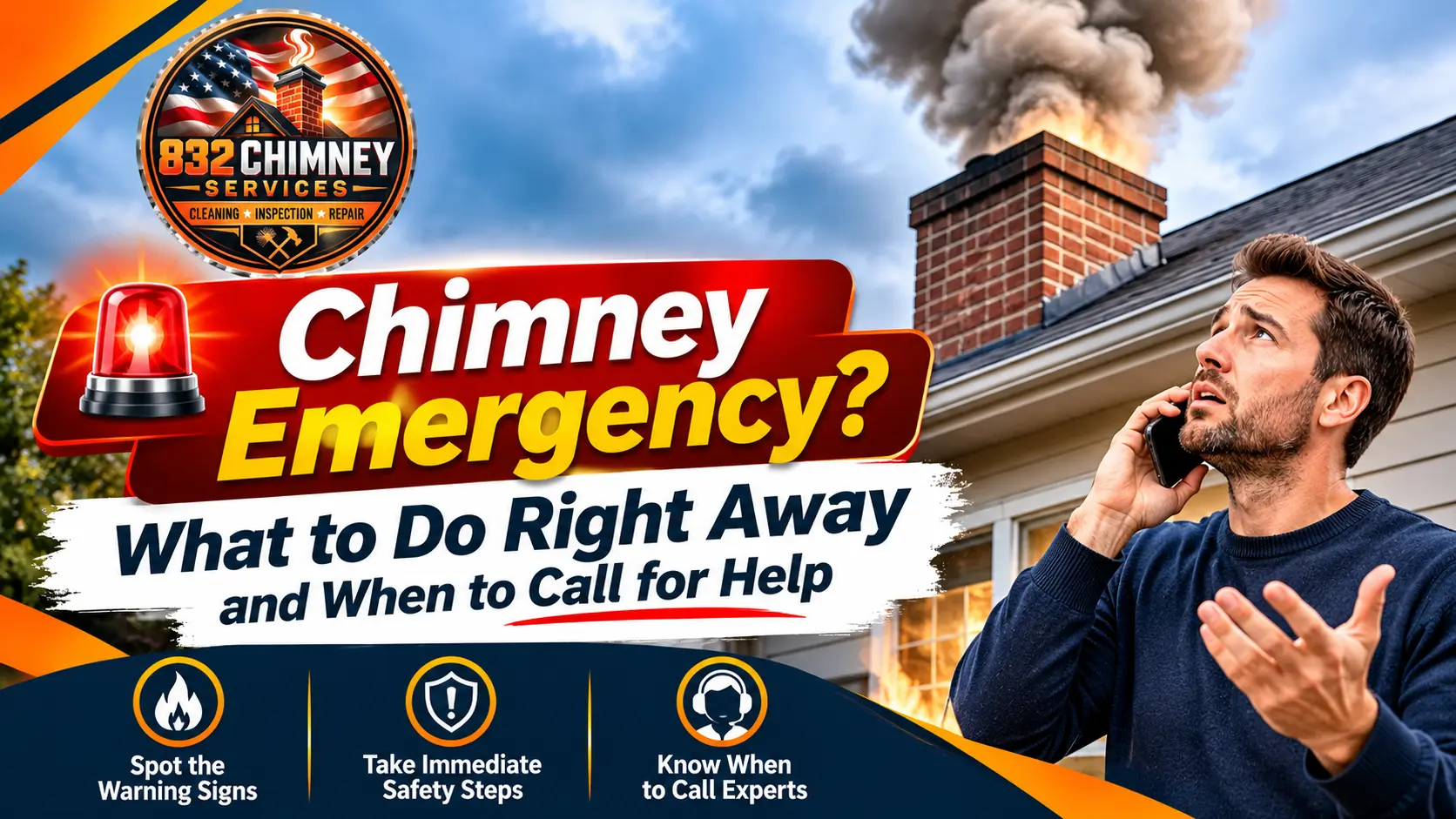
A chimney emergency rarely gives you a warning. One minute the fire is burning normally, and the next you hear a roar in the flue, smell smoke in the hallway, or hear the carbon monoxide alarm go off. After a Gulf storm, it can be a chimney cap lying in the yard and water running down the inside of the fireplace.
Knowing what to do in the first few minutes keeps your family safe and limits the damage. This guide explains what counts as a chimney emergency, the steps to take right away, and what happens once a professional arrives.
What Counts as a Chimney Emergency
Some chimney problems can wait for a regular appointment. These cannot. Treat any of the following as a chimney emergency and stop using the fireplace immediately.
- Flames or sparks coming out of the top of the chimney
- A loud roaring or rumbling sound from the flue, like a train or a jet
- Thick smoke pouring into the room instead of going up the chimney
- A carbon monoxide alarm going off while the fireplace or gas logs are on
- A gas smell near a gas fireplace
- Bricks falling from the chimney, or a chimney that has started to lean after a storm
- A missing chimney cap with rain or animals getting into the flue
- Water pouring into the firebox or staining the ceiling around the chimney during a storm
Problems That Usually Are Not an Emergency
Not every chimney issue needs a midnight phone call. A faint smoky smell on humid summer days, a hairline crack in one firebrick, light white staining on the outside brick, or a damper that sticks are all worth fixing, but they can wait for a normal appointment. If you are not sure, stop using the fireplace and call us during the day.
7 Proven Safety Steps During a Chimney Emergency
Follow these steps in order. They apply to most chimney emergencies, from a chimney fire to a storm-damaged cap.
1. Call 911 if there is fire or smoke you cannot control
If you see flames from the chimney top, hear roaring in the flue, or smoke is filling the house, get everyone outside and call 911. The fire department comes first. A chimney company can inspect the damage once the fire is out.
2. Stop feeding the fire
Do not add more wood. If it is safe to do so, close the fireplace glass doors to cut off air to the fire. Never throw water into a hot firebox or up the flue. The sudden steam can crack the flue liner and the masonry.
3. Turn off gas logs at the valve
For a gas fireplace, turn the unit off at the switch or remote, then close the gas key or shut-off valve near the fireplace. Leave the pilot off until the system has been checked.
4. Get out if the carbon monoxide alarm sounds
Carbon monoxide has no smell or color, and symptoms like headache, dizziness and nausea are easy to mistake for the flu. If your alarm goes off, open windows on your way out, leave the house, and call 911. Learn more about the warning signs of carbon monoxide poisoning.
5. Leave right away if you smell gas
Do not flip light switches, light a match or use the fireplace. Go outside and call your gas company’s emergency line from there. In most of Houston that is CenterPoint Energy.
6. Limit water damage from a storm
If rain is coming in through the chimney, close the damper, put a bucket or towels in the firebox, and move rugs and furniture away from the fireplace. Do not climb onto a wet roof to cover the chimney yourself.
7. Take photos and call a chimney professional
Once everyone is safe, photograph the damage inside and outside. Your insurance company will ask for it. Then contact 832 Chimney Services so a technician can inspect the chimney before anyone lights another fire.
Why Chimney Emergencies Happen in Houston
Houston’s weather causes chimney problems that homeowners in drier states rarely see. Most of the calls we get fall into one of these groups.
Storms and hurricanes
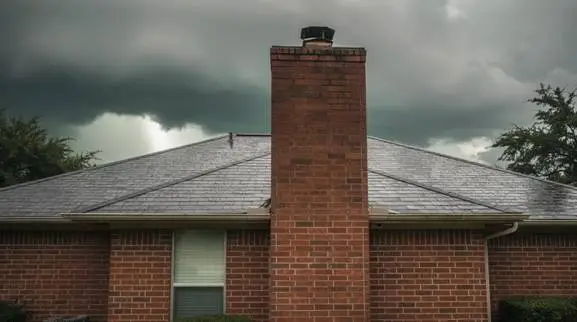
High winds rip off chimney caps, crack crowns and loosen bricks. Hurricane season and spring storms bring the most calls for storm damage repair, and older chimneys in neighborhoods like the Heights and River Oaks tend to suffer the most.
Creosote buildup
Creosote is the tar-like residue that wood smoke leaves inside the flue. It is highly flammable, and it is the main cause of chimney fires. Houston homeowners who only burn a few times a year often skip cleaning, which lets creosote build up over several seasons. Our creosote removal service clears it before it becomes a fire risk.
Animals and nests
Birds, squirrels and raccoons move into uncapped chimneys, especially in spring. A nest can block the flue completely and push smoke and carbon monoxide back into the house. For trapped or nesting animals, see our emergency animal removal service.
Leaks that suddenly get worse
A small leak can turn into a chimney emergency during a heavy storm, with water running into the firebox, attic or walls. Our emergency chimney leak repair team can stop active water entry and plan a permanent fix.
Venting problems in newer homes
Newer Houston homes are built tight to save energy. That is good for your power bill, but a blocked flue or a gas fireplace that is not drafting well has fewer places for fumes to escape. A carbon monoxide safety inspection confirms your system is venting the way it should.
What a Professional Does After a Chimney Emergency
Once the immediate danger has passed, the next step is finding out what was damaged. A visible crack outside is often only part of the story.
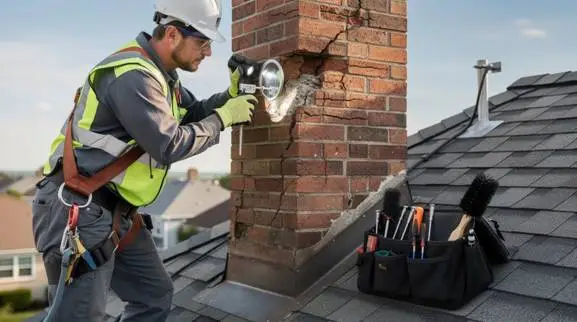
After a chimney fire, a storm or a lightning strike, we recommend a Level 2 chimney inspection. This includes a camera scan of the inside of the flue to look for cracked liner tiles, gaps in the mortar and heat damage you cannot see from the fireplace. Our post-fire chimney inspection is built for exactly this situation.
Every visit ends with photos and a written report, so you know what we found, what has to be fixed now, and what can wait. If the chimney is not safe to use, we will tell you plainly and can often make temporary repairs the same day, such as covering an open flue or sealing an active leak.
Is It Safe to Use Your Fireplace Again?
Not until someone has checked it. A chimney fire can crack the flue liner without leaving any sign in the room, and the next fire could reach the wood framing around the chimney. The national chimney safety standard, NFPA 211, calls for a Level 2 inspection after any event that may have damaged the chimney, including a chimney fire, an earthquake or severe weather.
Wait for the inspection report before lighting another fire or turning the gas logs back on. If you need repairs, ask your technician how long any new mortar needs to cure before the first fire.
How to Prevent a Chimney Emergency
Most chimney emergencies can be avoided with a little routine care.
- Book a yearly chimney inspection before burning season. Our preventive chimney inspections cover the chimney and fireplace in one visit.
- Have the chimney swept when creosote builds up, and at least once a year if you burn often. See our chimney sweeping
- Keep a stainless steel cap on the chimney to stop rain and animals. Ask about chimney cap installation.
- Burn dry, seasoned hardwood, never trash, cardboard or wrapping paper.
- Install carbon monoxide alarms on every floor and near bedrooms, and test them monthly.
- Walk around the house after every major storm and look at the chimney for missing caps, loose bricks or cracks.
Frequently Asked Questions
Should I call 911 or a chimney company first?
Call 911 first for any active fire, heavy smoke, a carbon monoxide alarm or a gas smell. Call a chimney company once everyone is safe and the immediate danger is over.
Can a chimney fire go out on its own?
Sometimes, but that does not mean the danger is gone. A chimney fire can smolder inside cracks and damage the liner even after the flames stop. Always have the chimney inspected before using it again.
Does homeowners insurance cover chimney storm damage?
Many policies cover sudden damage from wind, lightning or a falling tree, but not damage from wear and tear. Photos, an inspection report and a written repair estimate make the claim much easier.
How can I tell if I had a chimney fire without noticing?
Look for flaky or puffy creosote in the firebox, cracked flue tiles, warped metal on the damper or cap, or creosote flakes on the roof or in the yard. If you see any of these, schedule an inspection.
Save Our Number Before You Need It
A chimney emergency is stressful enough without searching for a phone number in the middle of the night. Save (832) 662-3437 in your phone now. 832 Chimney Services provides emergency chimney help across Greater Houston, including Katy, The Woodlands, Sugar Land, Pasadena and Conroe, and you can always reach us through our contact page.