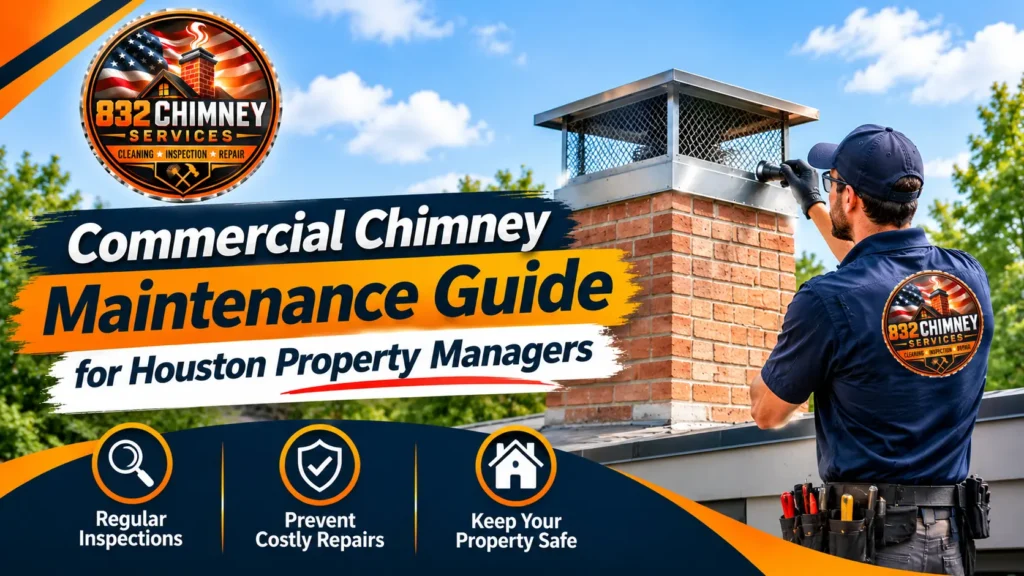
Commercial chimney maintenance is easy to push down the list. The chimney is on the roof, out of sight, and it seems to work fine until a tenant complains about smoke, an insurance adjuster asks for records, or a fire inspector writes up the building.
This guide is for the people responsible for those buildings in Houston: property managers, HOA boards, restaurant owners, hotel engineers, and facility directors at schools, churches and senior living communities. It covers why commercial chimney maintenance matters here, how often different systems need attention, the warning signs to watch for, and what a good service visit should include.
Why Commercial Chimney Maintenance Matters in Houston
Fire risk grows quietly
Every wood fire, gas burner and boiler leaves residue in the flue. In wood-burning systems, that residue is creosote, which is highly flammable and the main cause of chimney fires. In restaurant exhaust systems, it is grease. A commercial chimney or exhaust duct that runs for long hours every day builds up deposits far faster than a home fireplace that gets used a few weekends a year.
Codes and insurance expect records
The National Fire Protection Association publishes the standards most fire officials follow. NFPA 211 calls for chimneys, fireplaces and vents to be inspected at least once a year, and NFPA 96 sets cleaning schedules for commercial kitchen exhaust. Insurance carriers often ask for proof of this work after a fire or smoke claim. Without dated service records, a claim can get much harder.
Houston’s climate speeds up wear
Humidity, heavy rain and Gulf storms are hard on chimneys. Moisture soaks into masonry, rusts metal flues and caps, and helps creosote harden into a glazed layer that is difficult to remove. Flat commercial roofs add another weak point, because water tends to pool around the base of the chimney where the flashing meets the roof.
Common Commercial Chimney and Venting Systems
Different buildings use very different systems, and each one needs its own approach to commercial chimney maintenance.
- Masonry chimneys made of brick or block with clay tile or metal liners, common on older churches, schools and office buildings
- Factory-built metal chimneys with double or triple walls, found in many apartment communities and newer hotels
- Boiler flues and breeching that vent heating equipment in offices, hospitals and large residential buildings. These are covered by our commercial boiler flue cleaning service.
- Commercial kitchen exhaust connected to hoods over fryers, grills and wood-fired ovens
- Decorative fireplaces in hotel lobbies, apartment clubhouses and restaurant dining rooms
How Often Commercial Chimneys Need Attention
The core of commercial chimney maintenance is a yearly inspection for every chimney. How often it needs cleaning depends on the fuel, the equipment and how many hours it runs. These are the general timelines we follow for Houston properties.
- Restaurants with solid-fuel cooking, such as wood-fired ovens or charcoal grills, need exhaust cleaning every month under NFPA 96
- High-volume kitchens with 24-hour cooking, charbroiling or wok cooking need cleaning every three months
- Moderate-volume restaurants need cleaning every six months
- Low-volume kitchens in churches, schools and seasonal operations need cleaning once a year
- Apartment and condo fireplaces should be inspected every year and cleaned when buildup requires it
- Office and retail gas boilers should be inspected every year and cleaned every one to two years
- Industrial or heavy-use boilers often need service twice a year, depending on run hours
Restaurant hoods and ducts follow a stricter schedule than chimneys. Our commercial exhaust cleaning service is set up around those NFPA 96 timelines.
Warning Signs Between Service Visits
Between commercial chimney maintenance visits, staff and tenants are often the first to notice a problem. Ask them to report any of these right away.
- Smoke or exhaust smell inside the building, especially in lobbies, dining rooms or hallways
- Fires that are hard to start or burn poorly, or boilers that keep shutting down
- Black streaks on the outside of the chimney or soot falling into the firebox
- Rust stains, loose bricks or chunks of mortar on the roof
- Water stains on ceilings or walls near the chimney after rain
- Birds, animals or nesting material around the chimney top
- Carbon monoxide alarms going off anywhere in the building
5 Proven Commercial Chimney Maintenance Tips
1. Keep a written maintenance log
Record every inspection, cleaning and repair with the date, the contractor and a copy of the report. When a fire marshal, insurer or buyer asks for records, you can hand them over in minutes.
2. Schedule work around your business hours
Restaurants usually do best with early morning or late night appointments. Hotels and offices often prefer midweek mornings. Booking in late summer or early fall, before Houston’s burning season starts in late October, avoids the busy season and gives you time to finish any repairs.
3. Check the roof after every major storm
High winds can tear off caps, crack crowns and loosen bricks. A quick look from the roof after a storm, or a call for a professional check, catches damage before the next rain gets inside.
4. Keep caps, crowns and flashing in good shape
A properly sized cap keeps rain, birds and debris out of the flue. The crown sheds water away from the masonry, and the flashing seals the gap at the roof line. When any of these fail, water reaches the inside of the chimney and damage spreads quickly. Cracked crowns can be fixed through chimney crown repair.
5. Never ignore a smoke or odor complaint
A tenant mentioning a smoky smell is often the earliest warning of a blocked flue, a failing damper or poor draft. Shut down the appliance and have it checked before it turns into a carbon monoxide or fire problem.

What a Professional Service Visit Should Include
A good commercial chimney maintenance visit covers more than a sweep. Here is what to expect from a qualified contractor.
Inspection first. The technician checks the firebox or appliance connection, smoke chamber, flue liner, damper, cap, crown and roof flashing. A Level 1 inspection covers the parts you can see. A Level 2 inspection adds a camera scan of the flue and is the right choice after a fire, a storm, or a change in fuel or equipment.
Cleaning matched to the system. Rotary brushes clear masonry and metal flues, and HEPA vacuums keep soot out of the occupied space. Glazed creosote may need a chemical treatment or specialized tools. Our commercial chimney cleaning service covers masonry chimneys, metal flues and decorative fireplaces.
Proof of work. After cleaning, the technician confirms the draft is working, the damper opens and closes properly, and clearances to combustible materials are safe. You should receive a written report with photos, findings and recommendations for your records.
Common Repairs Found During Maintenance
Regular commercial chimney maintenance often turns up damage that would have stayed hidden until it became an emergency. In Houston commercial buildings, the most common findings include the following.
- Cracked or missing mortar joints in brick chimneys
- Spalling brick, where moisture and heat cycles cause the brick face to flake off
- Rusted or warped metal flue sections and caps
- Crowns cracked by storms and years of sun and rain
- Failed flashing where the chimney passes through a flat roof
- Stuck or warped dampers in lobby and clubhouse fireplaces that leak cooled air and let in animals
Fixing these early is almost always less disruptive and less expensive than waiting until a leak or fire forces the building to shut down part of its operation.
How to Choose a Commercial Chimney Contractor
Commercial work is different from residential work, so ask a few questions before hiring anyone.
- Are your technicians CSIA certified?
- Can you provide a certificate of insurance before work starts?
- Do you give written reports with photos after every visit?
- Can you schedule early mornings, evenings or weekends?
- Have you worked on buildings like ours, such as restaurants, hotels or apartment communities?
A contractor who can answer yes to all five will make your commercial chimney maintenance program much easier to manage.
Frequently Asked Questions
Is a yearly chimney inspection required for commercial buildings?
NFPA 211 recommends an inspection at least once a year for all chimneys, fireplaces and vents. Many fire officials and insurers use this standard, so a yearly inspection with a written report is the safest practice.
Who is responsible for chimney maintenance in a rental property?
In most cases the property owner or management company is responsible for chimneys and shared venting systems. Lease terms can vary, so check your agreements, but keeping records in the owner’s file protects everyone.
Can chimney maintenance be done without closing the business?
Usually, yes. Most cleaning and inspection work can be scheduled outside business hours, and HEPA vacuums and drop cloths keep the work area clean so normal operations can continue.
Plan Your Next Maintenance Visit
A simple commercial chimney maintenance plan protects your tenants, your guests and your building, and it keeps you ready for any inspection or insurance question. 832 Chimney Services works with restaurants, hotels, apartment communities, churches, schools and offices across Greater Houston. Contact us or call (832) 662-3437 to set up a service schedule that fits your property.