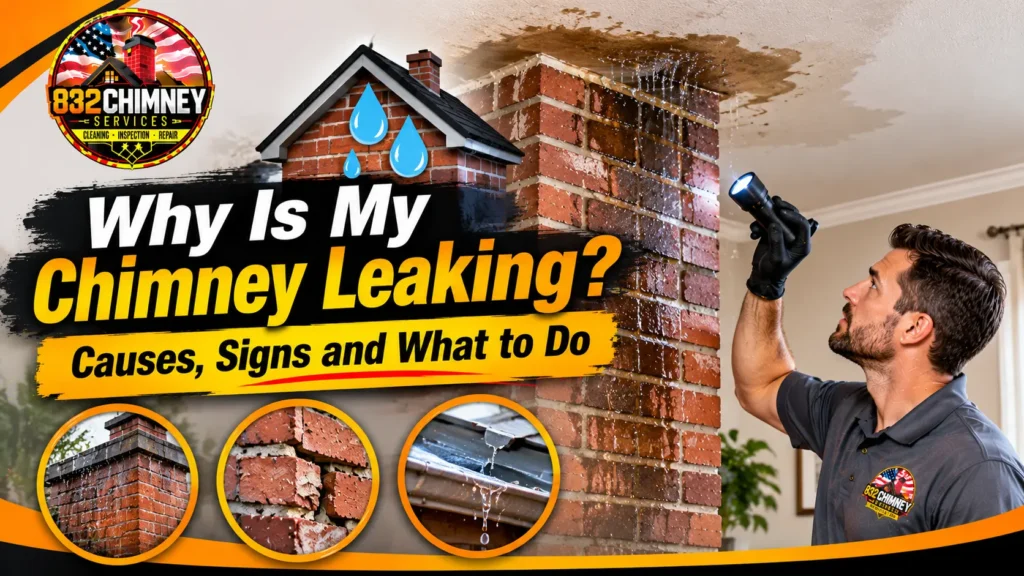
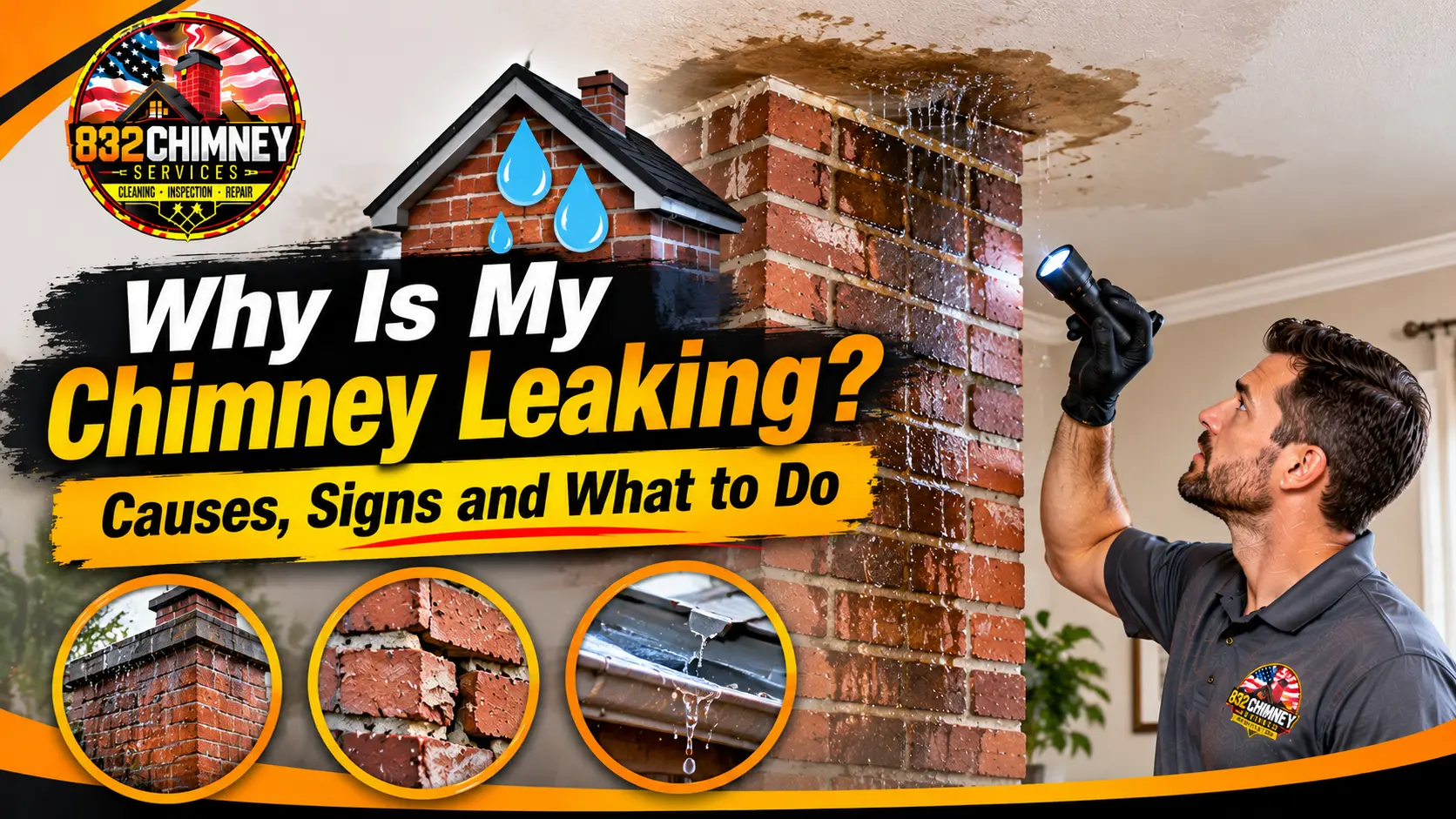
You hear dripping in the fireplace during a storm, or a brown stain shows up on the ceiling next to the chimney. The first question most homeowners ask is simple. Why is my chimney leaking?
The answer is usually one of a handful of common problems, and most of them can be found and fixed before they cause serious damage. This guide explains the signs of a chimney leak, the most common causes in Houston homes, how to tell rain from condensation, and what to do as soon as you notice water.
Signs of a Leaking Chimney
When homeowners ask why is my chimney leaking, the first step is to look for the signs. Chimney leaks often start small. You may see clues inside or outside the house long before water is dripping into the room.
Inside the house
- Brown or yellow water stains on the ceiling or wall near the chimney
- Peeling paint or bubbling wallpaper above the mantel
- Soft or swollen drywall around the fireplace
- A musty smell from the fireplace after it rains
- Water or wet ash in the firebox
- Rust on the damper, firebox doors or fireplace insert
Outside the house
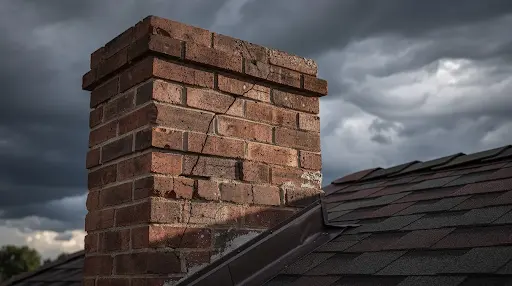
- Cracks or missing pieces in the chimney crown
- Crumbling or missing mortar between bricks
- A rusted, loose or missing chimney cap
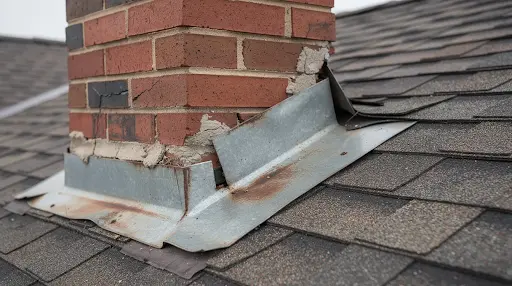
- Flashing that is bent, rusted or pulling away from the brick
- White powdery stains on the brick, known as efflorescence, which show that water is moving through the masonry
- Moss, algae or dark streaks running down the chimney
Why the Water Shows Up Far From the Chimney
Water rarely drips straight down from where it gets in. It can run along rafters, roof decking or the inside of the brick before it finds a place to drip. That is why a stain can appear a few feet away from the chimney, or even in a room that does not have a fireplace. If you are asking why is my chimney leaking when the stain is nowhere near the fireplace, this is usually the reason.
5 Proven Causes of a Leaking Chimney
Houston gets heavy rain, wind-driven storms and long stretches of humid weather. Every weak point on a chimney gets tested. When someone calls asking why is my chimney leaking, the answer is usually one of these five causes.
1. Damaged or failing flashing
Flashing is the metal that seals the gap where the chimney meets the roof. It is the most common source of chimney leaks. Over time the sealant dries out in the Texas sun, nails rust, and the metal pulls away from the brick or the shingles. Chimneys wider than about 30 inches also need a cricket on the uphill side, a small peaked section that sends water around the chimney. Without one, water pools behind the chimney and works its way under the flashing.
2. A cracked chimney crown
The crown is the concrete slab that covers the top of the chimney around the flue. It should slope away from the flue and hang past the brick so water drips clear of the chimney. Many crowns were built from thin mortar instead of proper concrete, and they crack after a few years of heat and rain. Water then soaks straight down into the brick. Cracks like these are fixed through chimney crown repair.
3. A missing chimney cap or rusted chase cover
Without a cap, rain falls straight down the flue and lands on the smoke shelf and firebox. A stainless steel cap with mesh sides keeps out rain, leaves and animals. If your house has a framed chimney with siding rather than brick, the metal chase cover on top can rust through and leak in the same way. A properly sized cap is one of the cheapest ways to stop a leak, and we cover it through our chimney cap installation service.
4. Porous brick and worn mortar
Brick and mortar soak up water like a sponge. In Houston’s humidity, older chimneys can stay damp for weeks after a storm. As mortar joints wear down, they open small channels that let water reach the inside of the chimney and the framing around it.
5. Condensation inside the flue
Not every leak comes from rain. When warm, moist exhaust from a gas appliance or a smoldering fire meets a cold flue, it can condense into water that runs down the inside of the chimney. This is common in chimneys that are too large for the appliance or that have no proper liner.
Is It Rain or Condensation? How to Tell
Before you can answer why is my chimney leaking, you need to know whether the water is rain or condensation. If the water only appears during or right after a storm, rain is getting in from the outside. If you see moisture, dark staining or a sour smell when the fireplace or gas appliance is running, and the weather is dry, condensation is more likely. Condensation often leaves brown or black streaks on the outside of the chimney near the top as well.
What to Do When You Find a Chimney Leak
A small leak is not usually an emergency, but water damage spreads quickly. These steps limit the damage until the chimney can be checked.
- Close the damper and place a bucket or towels in the firebox
- Move rugs, furniture and electronics away from the fireplace
- Take photos of stains and wet areas, and note when the leak happens
- Stop using the fireplace until the source is found
- Do not climb onto a wet roof or cover the chimney with tarps yourself
- Avoid sealing every gap with caulk or roofing tar, which can trap water and hide the real problem
How Professionals Find the Source of a Leak
A professional inspection gives you a real answer to why is my chimney leaking. Many homeowners pay for one repair, only to find water coming in again after the next storm. That happens when the repair treats the stain instead of the cause. A proper chimney leak inspection checks every possible entry point, from the cap and crown down to the flashing, masonry and attic framing.
A technician may run water over one section of the chimney at a time to see where it comes through, use a camera to look inside the flue, and check the attic for wet wood and stains. You should get photos and a clear explanation of what is causing the leak before any repair work starts.
How Chimney Leaks Are Usually Fixed
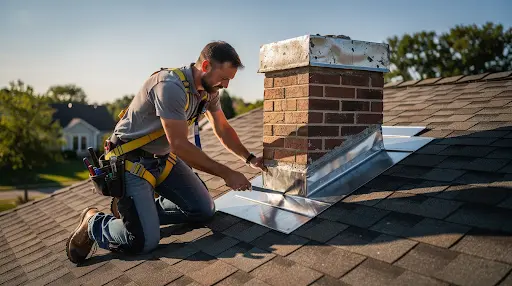
The fix depends on the cause. Failed flashing is removed and replaced with new step flashing and counter flashing that is cut into the mortar joints. Cracked crowns are sealed if the damage is minor or rebuilt with a proper slope and drip edge if it is not. Missing caps are replaced, worn mortar is repointed, and condensation problems are usually solved by installing the right size liner.
Once the brick is repaired, a breathable water repellent helps keep rain out without trapping moisture inside. Ordinary paint or sealers can do the opposite and make the damage worse. Our chimney waterproofing uses vapor-permeable products made for masonry. For the repair work itself, see our chimney leak repair service.
Preventing Chimney Leaks in Houston
Houston’s rainy months and hurricane season are hard on chimneys, and the National Weather Service regularly issues flood and severe storm warnings for the area. Most homeowners who ask why is my chimney leaking could have caught the problem early. A few simple habits keep small problems from turning into big leaks.
- Look at your chimney from the ground after every major storm
- Have the chimney inspected once a year, ideally before hurricane season
- Keep a stainless steel cap on the chimney
- Fix small crown cracks and loose flashing as soon as you see them
- Keep gutters and the roof around the chimney clear of leaves
Frequently Asked Questions
Why is my chimney leaking only during heavy storms?
Light rain may run off, but heavy, wind-driven rain pushes water sideways into small gaps in the flashing, crown and mortar. A leak that only appears in big storms usually means a small opening that needs to be sealed before it grows.
Can I still use my fireplace if the chimney is leaking?
It is best to wait. Water can damage the firebox, damper and flue liner, and a wet flue does not draft well. Have the leak checked before lighting a fire.
Does homeowners insurance cover chimney leaks?
Sudden damage from a storm or falling tree is often covered. Leaks caused by age and wear usually are not. Photos and an inspection report help either way.
Can I fix a chimney leak with caulk?
Caulk can be a short-term patch on a small gap, but it rarely lasts on a chimney. It also tends to hide the real problem while water keeps getting in behind it.
Get Answers Before the Next Storm
If you have been wondering why is my chimney leaking, the cause is almost always something that can be found and fixed. Call 832 Chimney Services at (832) 662-3437. We will find the source, show you what we found, and explain your options before the next round of Houston storms.