Chimney Removal Services in Houston, TX
Chimney removed, roof patched, interior closed. One contractor, complete project, from teardown to finished surface.
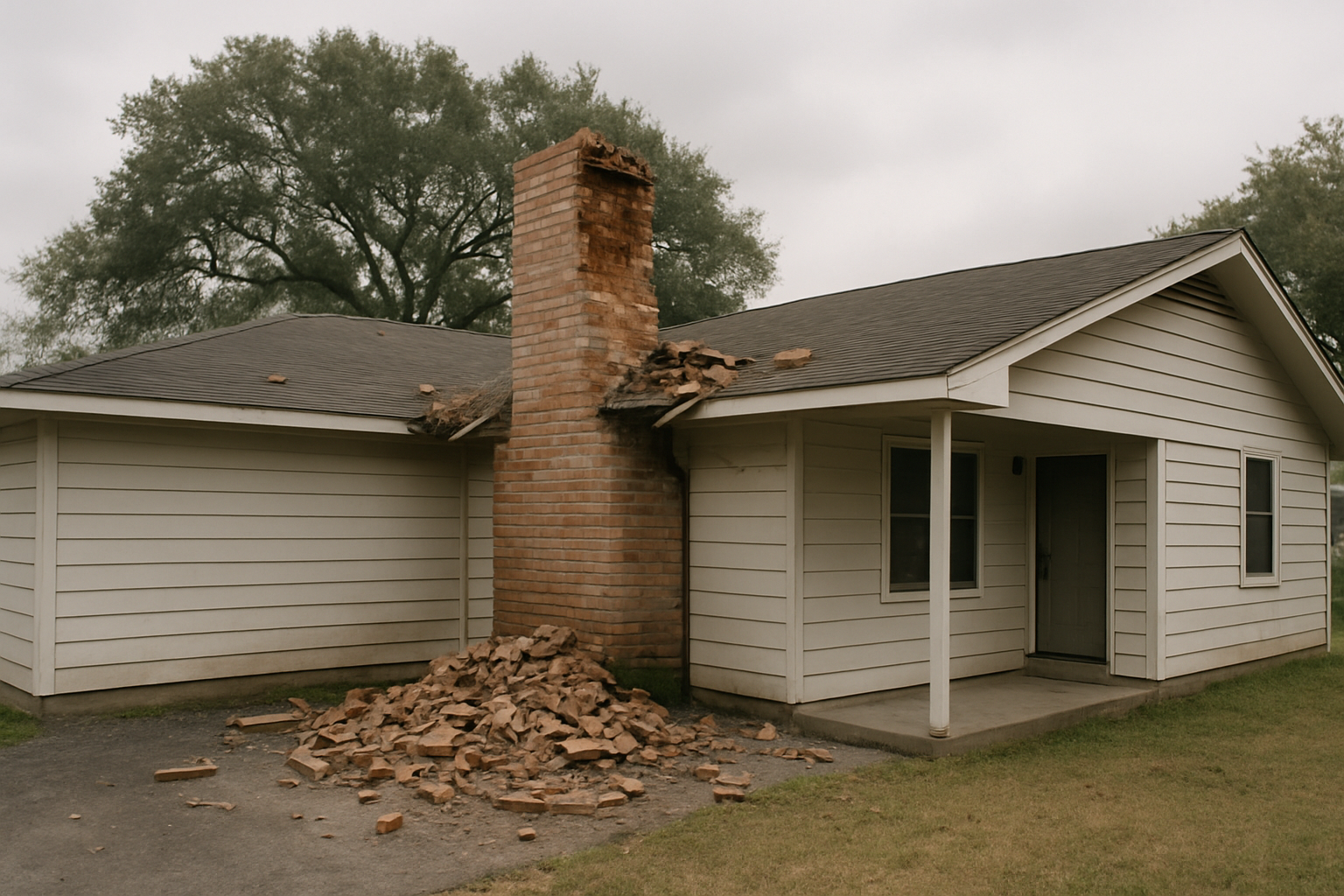
Chimney Removal Services in Houston, TX
A chimney removal is more than a teardown. It is a full project that begins with a plan and ends with a finished surface. At 832 Home Service, we handle the demolition, debris hauling, roofline patching, and interior wall and floor closure under one contractor and one scope.
"The demolition is usually the fastest part. The roofline patch and interior closure are where the quality of a finished result shows."
Years completing chimney projects across the Houston metro since 2010.
Point of contact from first call through the final inspection.
Communities served across the full Greater Houston metro.
Houston's Mid-Century Homes and the Chimney Removal Pattern
Chimney removal in Houston follows a predictable pattern, and most of it traces back to one construction period.
Homes built across the Houston metro between 1950 and 1985 came standard with masonry chimneys. Gas conversions happened in the decades that followed. The original wood-burning fireplace became a gas log set or was sealed off entirely. But the full masonry chimney, firebox, chase, crown, and all, stayed in place.
That's the situation we walk into most often in Sugar Land, Richmond, Rosenberg, and Fulshear. Post-1970 ranch-style homes throughout western Fort Bend County still carry their original masonry structures. The chimneys are sound, but unused. They take up square footage. They need crown maintenance every few years. They're a roof penetration that requires monitoring after every major storm.
For homeowners remodeling these spaces or listing the property, chimney removal Houston TX becomes a practical answer to a question that's been sitting there for decades. As a Houston chimney contractor with over a decade of experience, 832 Home Service has been completing these projects across the Houston metro since 2010, including in Sugar Land and Missouri City where mid-century ranch home remodels frequently involve removing original masonry chimneys to open floor plans and update rooflines.
How a Chimney Removal Actually Played Out in Missouri City
Here's what a real chimney removal project looked like, from first call to finished surface.
A Missouri City homeowner contacted us about a ranch-style home built in 1973. The property had a full masonry chimney attached to a living room that hadn't seen a fire since the gas conversion in the late 1990s. She was renovating the living room, new floors, extended wall space, recessed lighting, and the chimney was the last piece to resolve.
The first question we needed to answer: partial or full removal?
Partial chimney removal
Means taking down the above-roofline section only. The below-roof structure stays in place. This works when the interior square footage isn't being reclaimed, or when the firebox and hearth are staying. The roofline gets patched and weatherproofed. Fewer materials, shorter project window.
Full chimney removal
Goes further. Demolition runs from the firebox level up, through the roof, pulling the interior chase structure, the firebox surround, and the hearth slab. Then interior chase closure begins: walls patched, floors refinished to match, ceiling closed. This is what reclaims the square footage.
In this case, she wanted the full interior back. Full chimney removal it was.
Before any demolition, we completed a structural chimney inspection before removal to assess condition and determine scope, an evaluation of whether the chimney contributes to the structural load of the home and what the full demolition sequence needs to account for. In most ranch-era Houston builds, the chimney doesn't carry structural load. This one didn't. That determination gets documented before anything is touched.
Demolition ran two days. Debris was hauled off the same week. Roofline patching, closing and weatherproofing the roof penetration left after pulling the chimney, was completed with materials matched to her existing architectural shingles. Then interior chase closure: drywall, subfloor patch, and texture matched to the existing walls.
One point of contact from the first call through the final inspection. That's the model we follow on every remove chimney Houston TX project.
One Question That Comes Up on Almost Every Removal Project
Homeowners ask about permits, here's the straightforward answer.
Chimney demolition in Houston and Harris County typically falls under permit requirements for structural work and roofline modification. Permit requirements for chimney demolition aren't universal, they depend on the scope of the project and the specific jurisdiction. The greater Houston metro spans multiple municipalities and unincorporated Harris County areas, each with its own requirements.
Before scoping your project, we confirm the permit requirement for your address. If a permit is required, we pull it as part of the project. The homeowner doesn't navigate that separately.
This matters for one practical reason: roofline patches and structural modifications on permitted work are documented. That documentation has value at resale. It shows the work was done to code and inspected. For a homeowner selling a property, that paper trail is worth having.
If you've weighed the permit process and the project scope and you'd rather keep the chimney in place, ongoing chimney maintenance and waterproofing is a practical alternative that extends the life of the structure without full demolition.
Our Standards on Every Chimney Removal Project
Every removal follows the same documented sequence, regardless of scope. Every project follows the same documented removal sequence, from the first load-bearing assessment through the final interior finish.
✓ Load-bearing assessment completed first
We confirm whether the chimney contributes to the home's structural load before any demolition planning begins.
✓ Roofline patching matched to existing materials
Shingle type, color, and underlayment are matched to the surrounding roof, not approximated.
✓ Interior chase closure finished to living-space standards
Walls, ceilings, and floors are finished to match the existing interior. Not roughed in. Finished.
✓ Debris removed from the site
Masonry demolition generates significant volume. Hauling is included, not a separate line item.
✓ Permit documentation filed
Where required, permits are pulled before work begins and closed after inspection.
Our workmanship aligns with Chimney Safety Institute of America standards for chimney demolition and structural closure, the same benchmarks used to evaluate quality across the industry.
Three coats of texture where the chimney wall was. Not two.
What Shapes the Scope and Timeline of a Chimney Removal
Several factors determine whether your removal is a two-day or five-day project.
Partial vs. full removal
Is the first and biggest variable. A partial above-roofline tear down chimney Houston project is shorter than a full removal with interior closure. Know which you need before you call. Homeowners who want to understand the cost side of that decision before committing to a scope can compare chimney repair and removal costs to see how the numbers typically stack up.
Chimney size and construction type
Standard single-flue masonry chimneys in Houston's ranch-era homes are the most straightforward. Double-flue chimneys, chimneys with added fireplace inserts, or chimneys built into exterior walls with complex framing take longer and require more material for closure. When the decision point is removal versus keeping the structure, exterior restoration as an alternative option is worth reviewing, particularly for chimneys that are cosmetically deteriorated but structurally intact.
Interior finish matching
If the space where the chimney stood has hardwood floors, tile hearth slabs, or older plaster walls, matching the finish takes more time than a standard drywall-and-carpet interior. We identify this at scope, not mid-project.
Roof pitch and access
Higher-pitch roofs or two-story chimney structures require additional access equipment. This is assessed at estimate and factored into the timeline upfront.
Here's what most homeowners don't realize about chimney demolition Houston TX: the demolition itself is usually the fastest part. The roofline patch and interior closure are where the project time actually lives, and where the quality of a finished result shows.
Timing matters too. Houston's wet season runs from May through October, with peak tropical weather in August and September. We schedule roofline patching to close the roof penetration before extended forecasted rain. When weather windows are tight, a temporary barrier goes in the same day as demolition to protect the opening.
Chimney Removed, Roof Patched, Interior Closed. One Contractor, Complete Project
Chimney removal is the planned demolition of an unused or structurally compromised chimney, and the project doesn't end at the roofline. At 832 Home Service, a chimney removal includes the teardown, debris hauling, roofline patching, and interior wall and floor closure. One contractor. One project scope. No separate crews needed for the patching work after we leave. For chimneys that are structurally compromised but not beyond saving, it's also worth considering a full chimney repair before deciding on removal, we can help you evaluate which direction makes more sense for your situation.
Whether you're opening a floor plan, preparing a property for sale, or eliminating a maintenance liability, we scope the full project before the first brick comes down.
Frequently Asked Questions
Where does 832 Home Service complete chimney removal projects?
832 Home Service completes chimney removal projects across the full Greater Houston metro. We serve Sugar Land, Richmond, Rosenberg, Fulshear, Missouri City, Stafford, Katy, Pearland, Friendswood, League City, Pasadena, Deer Park, La Porte, Baytown, Spring, The Woodlands, Conroe, Humble, Tomball, Cypress, Bellaire, West University Place, Galveston, and all surrounding communities. If you're in the metro, we cover it.
What is the difference between partial and full chimney removal?
Partial chimney removal takes down the above-roofline section only, leaving the below-roof structure in place, then patches and weatherproofs the roofline. Full chimney removal runs from the firebox level up, pulling the interior chase structure, firebox surround, and hearth slab, followed by interior chase closure to reclaim the square footage.
Do I need a permit to remove my chimney in Houston?
Permit requirements for chimney demolition aren't universal. They depend on the scope of the project and the specific jurisdiction across the Houston metro's municipalities and unincorporated Harris County areas. Before scoping your project, we confirm the permit requirement for your address and pull it as part of the project if one is required.
How long does a chimney removal project take?
Timelines range from a two-day partial removal to a five-day full removal with interior closure, depending on partial vs. full scope, chimney size and construction type, interior finish matching, and roof pitch and access. The demolition itself is usually the fastest part, the roofline patch and interior closure is where the project time actually lives.
Ready to Scope Your Chimney Removal?
Contact our team today for a free consultation. Call (832) 662-3437 or email in**@****************es.com to schedule your removal assessment.