Chimney Liner Installation in Houston, TX
Install the Right Chimney Liner for Your Fuel Type. Sized and Documented.
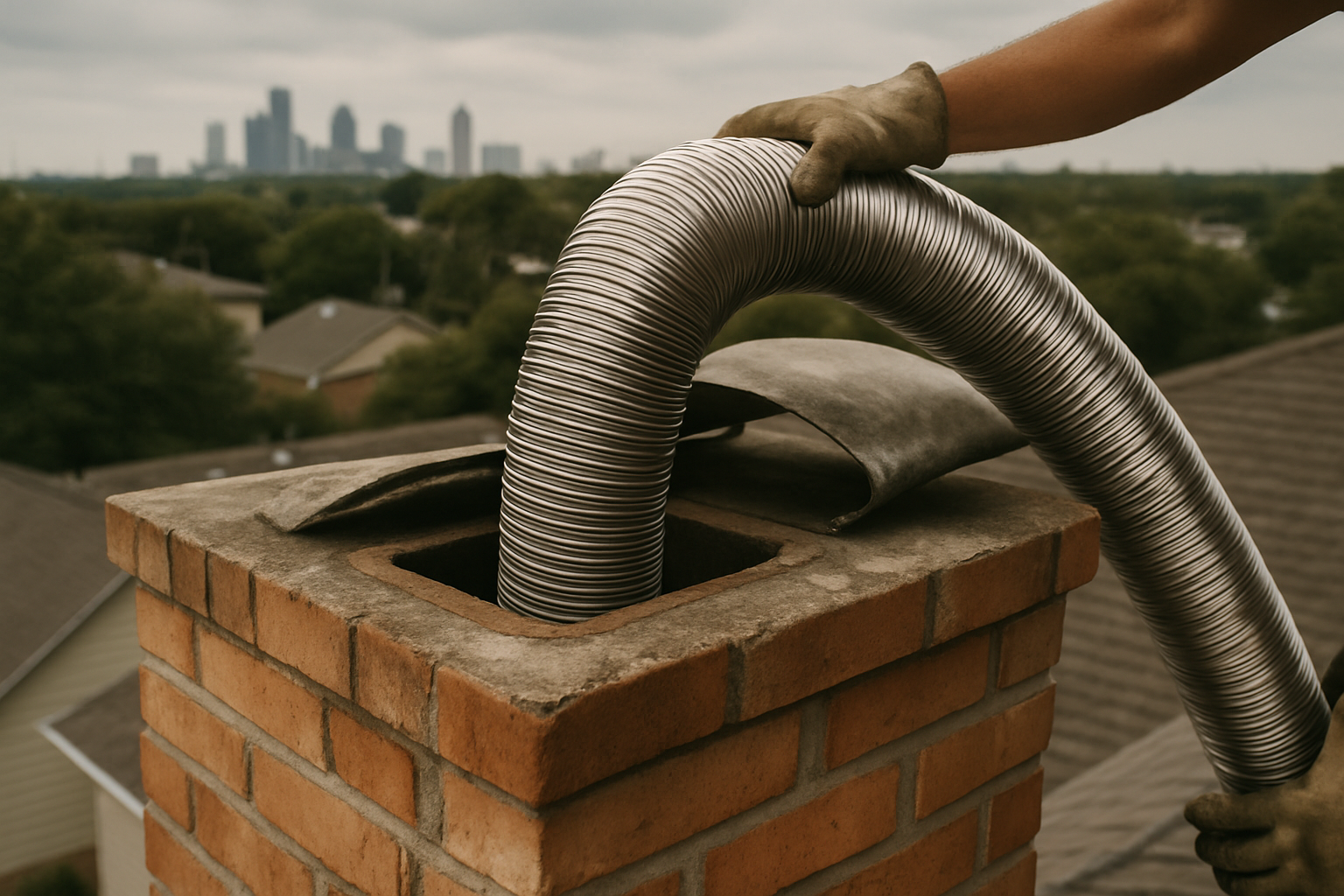
Install the Right Chimney Liner for Your Fuel Type. Sized and Documented.
Every liner we install is matched to your appliance and your flue, then documented in writing. No guesswork, no assumptions, no shortcuts on a chimney that has to move exhaust safely out of your home.
What This Offer Covers
Every new chimney liner installation at 832 Home Service begins with appliance-matched sizing, before any material is ordered.
Houston's housing stock has shifted heavily toward gas appliances. Many fuel-conversion projects treat the existing chimney as a ready-made shortcut. It is not. Gas appliances produce exhaust at lower temperatures and with higher moisture content than wood fires. A liner oversized for a gas appliance allows moisture-laden exhaust to cool and condense before it exits the flue, leaving acidic condensate (the corrosive liquid produced when cooled gas exhaust meets a liner wall) against masonry every time the appliance runs. Understanding how Houston's humidity accelerates liner deterioration helps explain why a properly sized liner is not optional in this climate.
This offer covers the full installation: sizing calculation, liner type selection, installation, and documented project record. Homeowners with existing chimneys undergoing fuel conversion should also review our chimney relining services in Houston to determine which scope applies to their project.
Who Qualifies for This Installation
This installation is for Houston-area homeowners with an active fuel-conversion project or a new appliance requiring a dedicated liner.
You qualify if you are:
Converting a wood-burning chimney to a gas insert, gas log set, or gas furnace
Installing a new wood-burning stove that requires a properly sized stainless steel flexible liner or rigid stainless liner section
Adding an appliance to a currently unlined masonry chimney
Working with a structurally compromised older flue that requires a cast-in-place liner, a liner formed by pouring refractory material into an inflated form inside the existing flue, creating a seamless, custom-shaped result
All liner installations require a Tier 2 chimney inspection before liner work begins to confirm the flue's condition and verify that the selected liner type is appropriate for the existing structure. For additional guidance on when a liner is required, the Chimney Safety Institute of America homeowner resources provide authoritative reference material. Homes across the Inner Loop, West University Place, Bellaire, and Meyerland are the most active market for this work. Older 1950s and 1960s wood-burning chimneys in those neighborhoods are being converted to gas appliances at a steady rate as kitchen and living room remodels continue.
How It Works
Liner sizing comes first. The liner type and diameter are calculated from your appliance's BTU output and your flue's total height before any material is selected. Here is the sequence:
Appliance and Flue Assessment
We confirm your appliance's BTU input rating, fuel type, and your chimney's total flue height. Our chimney draft analysis and sizing verification ensures the correct interior diameter is calculated so exhaust gases travel fast enough to exit before condensing, a result that depends on all three variables together, not just one.
Liner Type Selection
Three liner types cover the full range of Houston installations. Stainless steel flexible liner, a corrugated or smooth-wall stainless tube, handles chimney offsets common in older Houston construction and resists the acidic condensate produced by gas exhaust. It is the most common selection for gas appliance conversions. Rigid stainless liner sections apply to newer, straight-path flues with no offsets. Cast-in-place liner applies to structurally compromised older chimneys where a flexible tube cannot provide the structural reinforcement the masonry requires.
Installation and Liner Termination
The liner is installed and secured. Liner termination, the cap or fitting at the top where the liner exits at the chimney crown, is sized and configured to the liner diameter and appliance type to maintain draft and exclude rain and debris.
Project Record Delivered
The liner diameter, material, and appliance specifications that determined both are documented in writing. A carbon monoxide safety inspection after liner installation is performed to verify proper exhaust containment and confirm the completed system is operating within safe parameters. You receive the full project record at completion.
Terms at a Glance
This installation is quoted after the on-site sizing assessment, not before.
Liner material and diameter cannot be confirmed without the appliance BTU rating and flue height measurement. Quotes delivered before that assessment reflect assumptions, not specifications. We confirm those numbers at the first visit and provide the installation quote based on what we find.
Fuel-type conversion, the installation requirement triggered when a chimney shifts from wood to gas, oil to gas, or any other fuel change, requires a liner sized to the new appliance, not the previous one. This assessment is included in the project scope.
Contact 832 Home Service directly for current offer details.
Areas We Serve
832 Home Service installs chimney liners across Greater Houston.
Service includes Houston, Sugar Land, Katy, The Woodlands, Pearland, Bellaire, West University Place, Meyerland, Baytown, League City, Pasadena, Friendswood, Missouri City, Stafford, Clear Lake City, Galveston, and surrounding communities.
Frequently Asked Questions
◆ Why does liner sizing have to come before selecting material?
The correct interior diameter is calculated from your appliance's BTU output and your flue's total height together. A liner oversized for a gas appliance lets moisture-laden exhaust cool and condense before it exits, leaving acidic condensate against the masonry. We confirm the numbers first, then order the right liner.
◆ Which liner type is right for my chimney?
Stainless steel flexible liner is the most common for gas conversions and handles offsets in older Houston construction. Rigid stainless liner sections apply to newer, straight-path flues. Cast-in-place liner applies to structurally compromised older chimneys that need structural reinforcement. We select the type after the on-site assessment.
◆ Do I need an inspection before installation?
Yes. All liner installations require a Tier 2 chimney inspection before liner work to confirm the flue's condition and verify the selected liner type is appropriate for the existing structure.
◆ Can you give me a quote over the phone?
This installation is quoted after the on-site sizing assessment, not before. Liner material and diameter cannot be confirmed without the appliance BTU rating and flue height measurement. Quotes delivered before that assessment reflect assumptions, not specifications.
◆ What do I get when the job is complete?
You receive a full written project record documenting the liner diameter, material, and the appliance specifications that determined both. A carbon monoxide safety inspection is performed to verify proper exhaust containment before we consider the system complete.
Ready to Get Started?
Contact our team today for a free consultation.