A rotary-brush sweep that reaches every section of your flue. Documented, measurably cleaner, and built for Houston’s climate.
Professional chimney sweeping is a specific mechanical procedure, not a general cleaning term.
It uses wire brushes, rotary rod systems, and sealed vacuum containment to strip deposited material from flue walls. Every accessible section gets worked: firebox collar, flue tiles, smoke shelf, and smoke chamber. The goal is a documented, measurably cleaner system, not just a visually tidy firebox floor.
Chimney sweep service in Houston covers more ground than most homeowners expect. A trained chimney sweep (a technician who performs mechanical cleaning of chimney systems using professional equipment, a specific trade role) doesn’t just run a brush through the lower flue and call it done. The upper sections, the smoke chamber, and the smoke shelf all require separate attention. That’s what distinguishes a professional chimney sweep Houston TX appointment from a hardware-store brush kit. If you’re weighing what that distinction means in practice, see our breakdown of the difference between a sweep and a full cleaning.
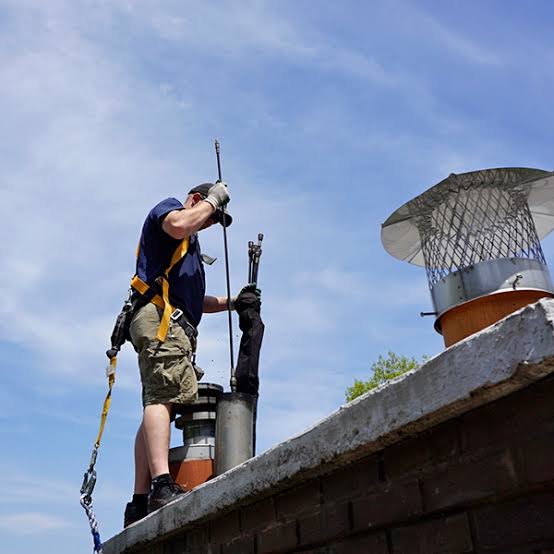
The chimneys that get full-access sweeps are the ones that go longest between problems.
The 832 Home Service team has been running sweeps in the Houston metro since 2010. Twelve crews, every construction type, every zip code from Galveston to Conroe.
Here’s what the field actually shows: Houston homeowners frequently underestimate their creosote load because their fires are short. Six weeks of burning at lower temperatures deposits material differently than two weeks of sustained cold-weather fire. The deposits are softer, more distributed, and easier to miss if the brush only reaches the lower flue.
The smoke chamber piece is where the biggest gap appears in incomplete sweeps. That corbeled space above the firebox collects condensed creosote that drips down from the flue during a low-temperature burn. It’s not on the flue walls, it’s on the chamber walls. A flue brush doesn’t touch it.
We access the smoke chamber on every job. We document what we find. If a Stage 2 condition exists, the homeowner knows before the crew leaves, not three months later when the odor comes back. That’s what professional chimney sweeping in Houston should mean. Tool access to every zone. Written record of what was found. A status report that covers the full system, not just the section the brush reached.
A professional chimney sweep Houston TX uses four distinct tool categories, each one handles a zone the others can’t reach.
Here’s how a complete sweeping procedure actually works, from the bottom of the firebox to the flue cap. After mechanical cleaning is complete, we also recommend scheduling a Tier 1 chimney inspection after sweeping to confirm system status across every component.
A wire chimney brush (a stiff-bristled brush, round or rectangular to match the flue shape, that scrubs deposited material from interior flue walls) is the primary tool. But the brush is only as effective as the rod system behind it.
Manual rod-and-push methods work in short, straight flues. They lose cleaning consistency in longer flues or those with offsets, which are common in Houston’s older masonry construction. A rotary rod system (a flexible rod-and-motor combination that spins the brush at consistent speed for even cleaning coverage, particularly in longer or offset flues) maintains consistent brush pressure throughout the full flue height.
That matters. The upper third of a flue accumulates as much creosote as the lower two-thirds combined in low-temperature burning conditions, exactly the burning pattern Houston’s climate produces. A brush that only gets pushed and pulled removes material unevenly. The rotary system spins through it.
Three rod lengths. Not one. Not a single push-and-pull.
Debris dislodged during sweeping has to go somewhere. Without vacuum containment, it settles on the smoke shelf, drops into the firebox, and circulates into the living space.
HEPA vacuum containment (a sealed vacuum system with HEPA filtration that captures dislodged soot and debris before it enters the living space) is connected to the firebox opening before the brush enters the flue. The negative pressure system pulls dislodged material down and captures it before it can redistribute.
Standard shop vacuums don’t qualify. HEPA-rated units filter particles down to 0.3 microns, the particle size range where creosote dust and fine soot live. Any system without HEPA filtration redistributes fine particulate into the room air rather than capturing it. Professional sweep standards and certifications for these procedures are outlined in the CSIA homeowner chimney safety guidelines. For a broader scope of service beyond a standard sweep appointment, see our full chimney cleaning service in Houston.
The smoke chamber (the tapered space above the firebox and below the flue that funnels combustion gases into the liner) is the section most frequently missed in partial cleaning approaches.
It’s also where some of the most stubborn deposits accumulate. The corbeled or sloped walls of a smoke chamber don’t get direct rotary brush contact from a flue sweep alone. The smoke chamber requires separate hand-tool access through the firebox opening, a step that adds time but covers the zone that matters most for draft quality. Sweeping sometimes surfaces smoke chamber damage found during sweeping that require follow-up repair beyond what cleaning alone can address.
On every chimney sweeping service call, 832 Home Service includes smoke chamber access as part of the standard scope. Not an add-on. Standard.
After mechanical cleaning, what was found gets recorded. Deposit documentation (the practice of noting the type, stage, and distribution of creosote or other deposits found during sweeping, used to determine whether follow-up treatment is needed) gives the homeowner a factual status report.
Stage 1 deposits are dry and brushable, standard sweep removes them completely. Stage 2 is tar-like and requires chemical pre-treatment before mechanical removal is effective. Stage 3 is glazed and hardened, it requires a separate two-visit chemical conversion protocol. When advanced buildup reaches that point, it typically involves hardened glaze-stage creosote deposits that go beyond what a standard sweep can address.
Knowing which stage you have after a sweep is what separates a documented professional chimney sweep service from a visit that only confirms the brush went in and came out.
Houston’s heat, humidity, and short burning season create a chimney environment unlike most of Texas. Homes here typically burn wood for six to ten weeks each year. That sounds light, but Houston’s cool, intermittent fires are less efficient than sustained cold-weather burns. Incomplete combustion deposits creosote (a combustion byproduct that builds on flue walls in progressively hardening stages) faster per hour of burn time than a fireplace running at full temperature. When staging advances quickly under these conditions, it often points to the need for professional creosote removal from flue walls.
Here’s what most homeowners don’t realize about Houston chimneys: the clay flue tile (terra cotta) used in most pre-1990 construction absorbs moisture during the nine months the system isn’t in use. When the season starts, that moisture and the deposited material from last season interact. A wire chimney brush that only reaches the lower flue misses where most of the problem lives. For a deeper look at what that off-season moisture exposure does over time, see our resource on how Houston humidity accelerates chimney deterioration.
Along the US-59 and I-610 corridors, Stafford, Missouri City, Bellaire, our southwest Houston dispatch location means crews arrive with equipment already loaded for the construction era most common in those neighborhoods.
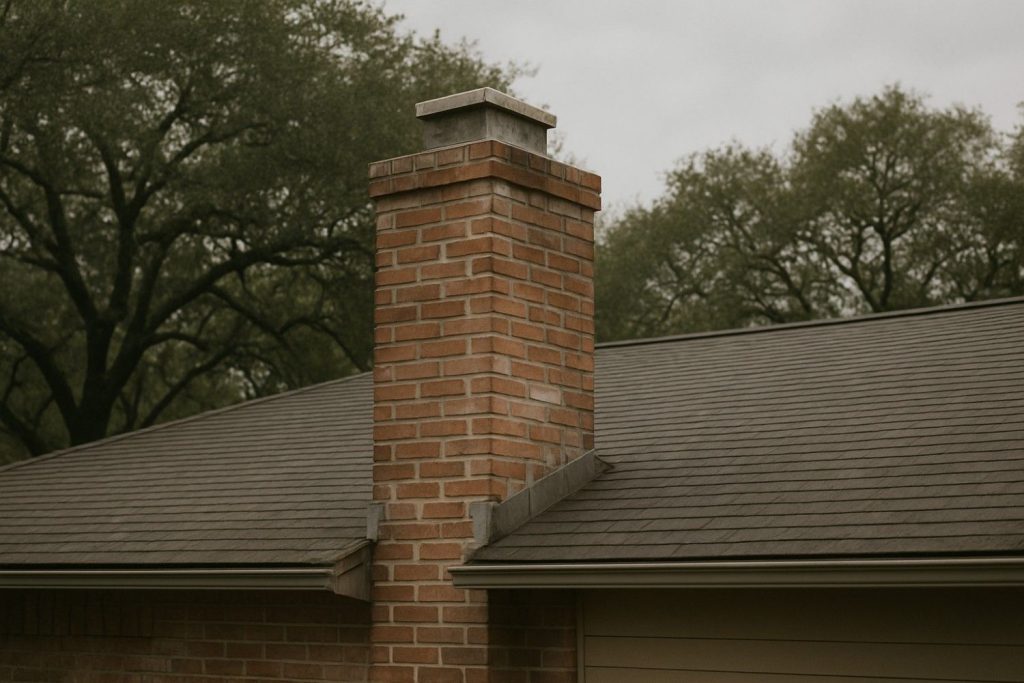
832 Home Service has swept chimneys in the Houston metro since 2010. Twelve crews cover everything from 1920s Heights bungalows with hand-laid terra cotta flue tiles to post-2000 Katy-area prefab chase systems. Those are not the same sweep. The method adjusts to the construction type, the flue geometry, and what the previous season left behind.
Three chimney sweeping situations from the Houston metro, each one different in cause and result.
A homeowner in Katy had used a consumer brush kit for two seasons before calling. From the firebox floor, things looked reasonably clean. Above the damper shelf, a section the short consumer rod couldn't reach, there was a full season of Stage 2 deposit sitting undisturbed. The rotary rod system reached it. The HEPA vacuum captured it on the way down. What looked done from below had not been touched. This is the pattern that shows up most often in Houston: partial attempts that address visible accumulation without reaching the upper flue.
A 1940s Montrose home had a hand-laid terra cotta flue tile system, the type where individual tile sections sit in mortar joints that shift with Houston's clay soil movement. During the sweep, deposit documentation flagged two offset tile joints where creosote had migrated into the mortar gap. That's not a cleaning finding. That's a liner condition finding. A sweep without documentation wouldn't have noted it. The homeowner got a written status report that separated what the sweep removed from what the inspection found, two different things, handled in the appropriate sequence.
A post-2000 prefab system in The Woodlands had a galvanized steel liner rather than terra cotta tile. The sweeping method for a round steel liner differs from a rectangular clay tile flue, brush shape, rotation speed, and rod flexibility all adjust. The sweep completed without debris redistribution into the living space. HEPA containment sealed the firebox opening before the brush went in. The Woodlands system required a different brush profile than a standard rectangular masonry flue. One brush fits no flue.
Schedule a professional chimney sweep before the season opens and after any extended dormancy.
Houston’s burning window runs roughly October through February. The best time to schedule a sweep is September, before the first cold night when appointment availability is high and the work can be done in moderate outdoor temperatures.
A professional chimney sweep is the right call when:
Houston’s nine-month humid off-season changes what builds up in a dormant flue. A hire chimney sweep Houston appointment at the start of the season is the most efficient way to confirm system status before the first fire.
Service neighborhoods include Houston, Bellaire, West University Place, Stafford, Missouri City, Pearland, Friendswood, Pasadena, Deer Park, Baytown, Katy, Sugar Land, League City, The Woodlands, Spring, Cypress, Tomball, Conroe, Galveston, Texas City, and all surrounding communities from Beaumont to Lake Jackson.
Houston homes typically burn wood for six to ten weeks a year at lower temperatures. That intermittent, cool burning deposits creosote faster per hour of burn time and leaves softer, more distributed deposits. The nine-month humid off-season also lets terra cotta flue tile absorb moisture, which interacts with last season’s deposits. The method adjusts to construction type, flue geometry, and what the previous season left behind.
(832) 662-3437
Contact our team today for a free consultation. 832 Home Service has swept chimneys across the Houston metro since 2010, 12 crews, full flue access, written condition report after every visit.
Appointments fill quickly ahead of the October-November season. Reaching out in September is the most reliable way to secure your preferred date before the burning window opens.
WhatsApp us
Tell us what’s going on and we’ll get back to you, often the same day.
Prefer to talk? (832) 662-3437