If you’re a homeowner in Houston, your chimney takes a real pounding that most chimneys across America can hardly imagine. Houston’s climate is brutal – it’s got high humidity and some pretty heavy rainfall – averaging a whopping 49 inches per year. And let me tell you, that relentless moisture finds every little weakness in your chimney system. This chimney leak repair guide for Houston Texas is a step-by-step guide to help you identify a leak, figure out what causes it, and show you what professionals do to fix it & protect your home from the next Gulf Coast storm.
Houston Homeowner Quick Guide: How to Tell if Your Chimney Is Leaking
Leaks in Houston can go from zero to catastrophic in a single rainy week. Heavy storms blow in, and that water finds its way into tiny little breaches. And before you know it the humidity has your masonry all soggy and not even close to drying out by the time the next storm rolls in. So if you think you might have a problem, start with this checklist:
Check for these after the next big storm:
- Water stains on the ceiling nearby the fireplace – or on the wall right next to the chimney
- Damp carpet or flooring around the hearth after a rain shower
- Peeling or bubbling paint on the chimney chase cover or on the walls nearby
- A rusty old damper or a discoloured firebox when you open the flue to take a look
- Musty, moldy smell when you turn on the AC – that tells you there’s moisture trapped behind walls somewhere
- White mineral staining (efflorescence) on the brick outside
- Cracks in the crown or gaps in the flashing that you can see from ground level
The thing is, these leaks can show up anywhere, not just where you think they should. A stain on a second floor bedroom wall could still be coming from the chimney or flashing a few floors down, because water does travel through framing and insulation before it starts dripping.
Anytime you spot a drip, stain or what looks like bubbling paint around the chimney area right after a thunderstorm, you need to schedule a chimney inspection pronto. It’s a good idea to get the chimney components inspected on a regular basis, especially after a really bad storm. Keep an eye on caps and crowns for cracks or missing parts before they become a much bigger and more expensive problem.
Why Houston Chimneys Leak: 4 Common Places Water Finds Its Way In
Houston’s combination of wind-driven rain, hurricanes like Harvey (2017) and who-knows-what-else, plus all that humid weather we get makes chimney leaks super common. Downpours can drive water right into chimneys sideways, and high temps during the day cause metals and mortar to expand really fast. Then when it cools down at night those gaps open right back up.
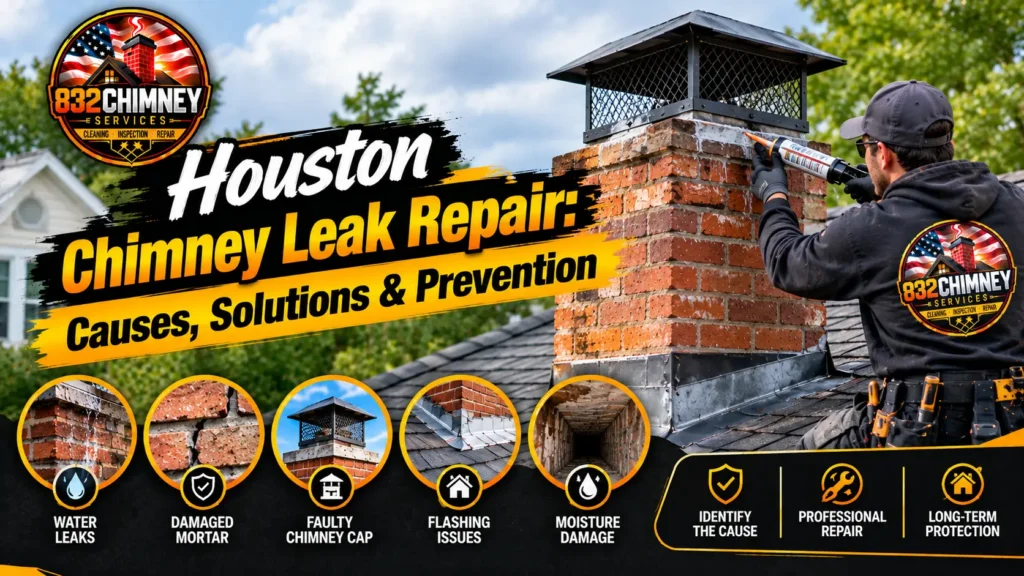
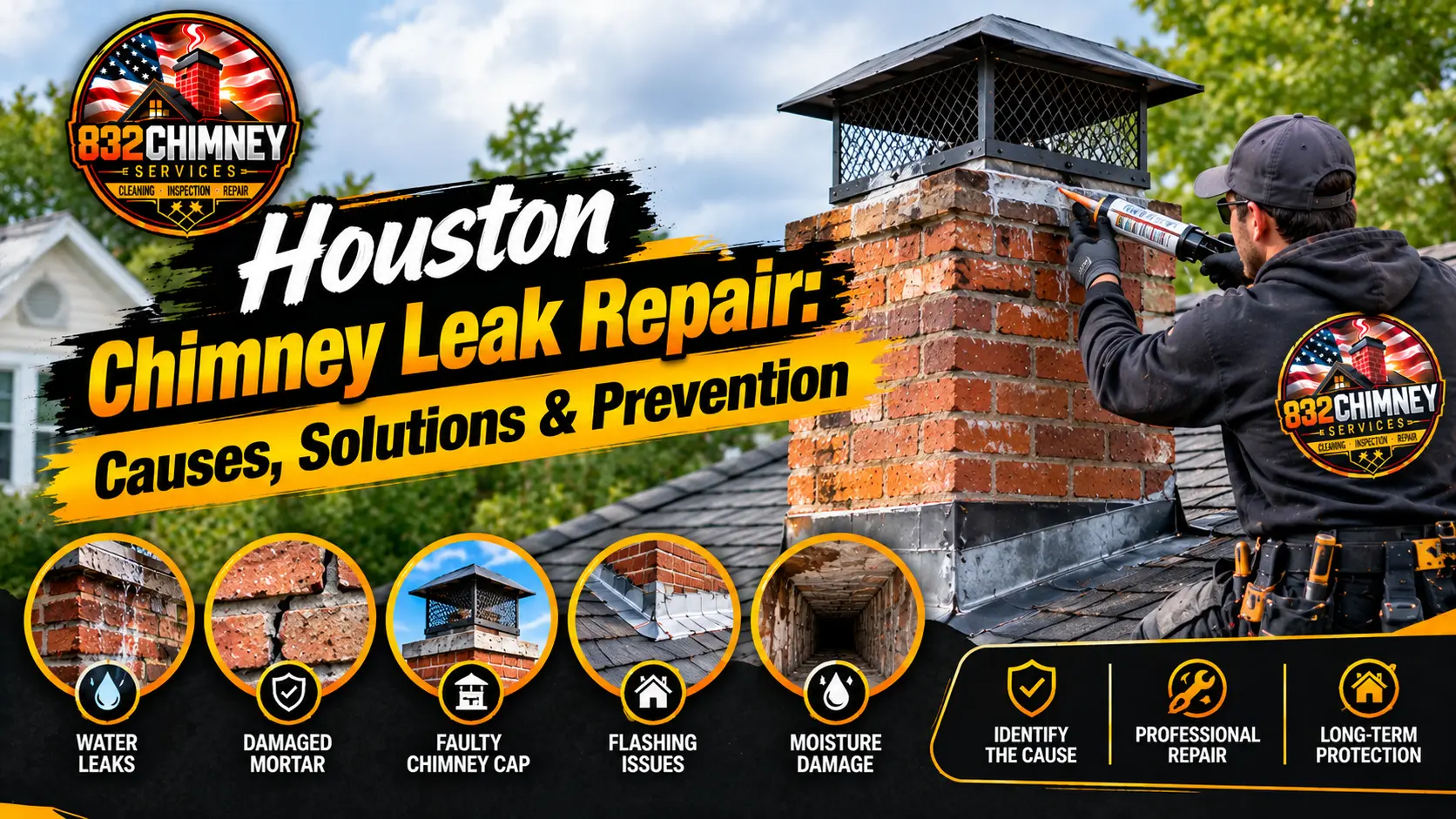
You’ve got four common sources of water intrusion to look out for:
- Missing or damaged chimney cap. If the cap is damaged, then rain can just pour right in & soak the firebox, rusting metal components and, worst-case, even compromise the chimney liner. Caps made of galvanized steel just corrode super fast in our Gulf humidity. And with no cap you’ve also got the added problem of birds & debris getting stuck in the flue and trapping moisture inside.
- Cracked chimney crown or chase cover. When the concrete crown goes it lets water right into the chimney framing. And even if it’s just a hairline crack it can let water seep into brick, block, or framed chases before you even notice a problem. On prefab chimneys, a rusted metal chase cover with failed seams can be just as bad.
- Failing chimney flashing. Flashing can warp or pull away over time due to our changing climate’s thermal stress. And then the high winds can lift or tear it where the chimney meets the roof, creating a hidden pathway for water to leak between the chimney and the attic.
- Masonry deterioration and missing mortar joints. Our humid weather really accelerates masonry deterioration in Houston. Bricks get all soggy, mortar joints start crumbling & water can just wick through the structure. And our expansive clay soils can lead to foundation shifting and more masonry cracking, making things worse. Older homes like in The Heights, Bellaire, and Spring Branch are especially bad off.
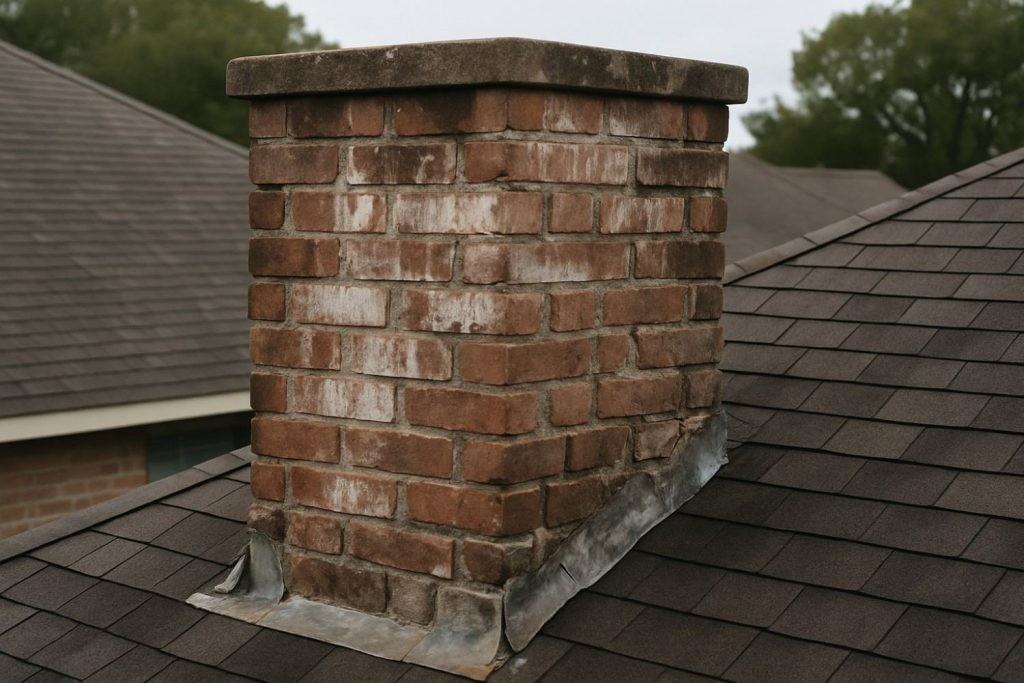
A certified chimney pro will need to verify which of these sources is your problem before any repair work is started.
The Difference Between a Chimney Leak and a Roof Leak – Professionals Know How to Tell
Many of our homeowners end up calling a roofer for what turns out to be a chimney leak – and vice versa. That stain on the ceiling or wall looks the same no matter where it comes from, so you really do need an accurate diagnosis.
A certified chimney technician is going to approach the job a whole lot differently from a roofer. They’ll be looking at every chimney component all the way from the firebox up – damper, chimney liner, smoke chamber, crown, chimney cap, masonry & flashing. That systematic approach catches failures that a roof-only inspection just wouldn’t find.
Professionals will often run some controlled water tests, applying water to specific spots – starting at the base & moving up – to see if the leak is coming from the roof or the chimney. They might also use cameras or video scans inside the flue to spot those little cracks, gaps or missing mortar joints that let water in invisibly. Houston’s complex roof lines – take the two story homes in Katy, Cypress and Sugar Land with the multiple valleys and dormers. If there’s a stain around the fireplace that just won’t go away, you’re often going to need to get a roofing contractor and a chimney service working together. The sorts of guys who specialize in finding leaks in chimneys will give you a list of confirmed entry points, suspected issues and areas to be on the lookout for.
Step by step: how the professionals do it in Houston
This is the sort of thing that chimney services across the Houston Texas area do on a daily basis. Now, this isn’t a DIY guide – this is just to give you an idea of what a job done right looks like.
Chimney cap installation or replacement.
You need the right size of cap, measured up by the technician and fitted properly to the flue. And then it’s a matter of choosing a stainless steel or copper cap – we prefer those over galvanized ones in our humidity. Secure it with some good strong bolts and check it’s all right. A good chimney cap is your first line of defense against moisture and debris getting in the flue – and it stops animal nests from collecting water as well.
Crown repair vs full rebuild.
You can fix a cracked crown with a waterproof sealant that can bend and flex – it’s what the experts recommend. But if the crown is so bad it’s beyond repair, then you’re talking about a full rebuild: take the old lot out, make a new crown the right shape, with the right slope and drip edge, and then let it dry properly. It’s a big difference between the two – one will just keep on leaking, and the other will set you up for a hundred years.
Flashing repair
Just ripping caulking off old flashing is never going to sort you out. You need to get the old flashing out, and then put in the new stuff – sort of flashing and counter flashing, all done the right way with shingles and underlayment in mind. Then seal the joins with proper sealant. Metal fabrication and installation is the key – don’t bother trying to fix it yourself with some bog standard caulk.
Masonry tuckpointing and brick replacement
The old mortar’s gone bad, and you need to repack it with some good, strong new stuff. And if you’ve got bricks that are cracked or broken, you replace them with ones that fit just as well. Breathable sealants will prevent water from seeping inside the brick once that’s all done.
Chimney liner repair
If that liner has been leaking away for years, and you’ve had to repair it a few times, it may be time to think about replacing it – a new liner to sort out the safe venting and prevent the brickwork from getting damaged by all the heat and fumes.
Protecting your home in advance of the next big storm in Houston
Prevention is generally way cheaper than fixing a problem after a hurricane or tropical storm. Heck, a few hundred dollars in maintenance can save you thousands down the line.
- Annual chimney inspections
You want to get up there and take a look at least once a year – give it a check, following the guidelines from the Chimney Safety Institute of America and the NFPA – especially before storm season. If you live in a high wind area, get it checked out before it’s too late.
- Correctly sized chimney cap
Both masonry chimneys and prefab systems need a good, rust-resistant cap to keep the rain, debris and animal nests out. It’s one of the cheapest parts on the system – one of the most important too.
- Professional waterproofing
You want sealers that let the brick breathe – water can get in, but it can’t get stuck there. Don’t use hardware store stuff that’ll just trap the water and make things worse.
- Attic checks
Once a season, get up there and have a look around the chimney for any signs of damp insulation, darkened decking or moldy smells. If you find anything wrong, don’t wait – get in touch with a chimney service.
- Regular chimney cleaning
Get a qualified sweep in to clean out the flue every now and then to keep creosote and soot from mixing with water and corroding everything. And it stops gas blockages too – it’s a win-win.
How leaks cause damage over time
Water is your biggest enemy in a chimney system – even when the fireplace isn’t being used much. And in Houston, it just gets worse and worse because the structure never gets a chance to dry out between rain events.
The long-term structural effects:
- Rusted fireboxes and dampers that seize up or fail
- Eroded mortar joints that weaken the whole thing
- Cracked flue tiles that prevent safe venting
- Weakened crowns that let more and more water in
- Brick and stone that start to fall apart
The safety risks:
- Mold growth behind the drywall – a serious health issue in this part of the world
- Warped woodwork, flooring and ceilings
- Stains that’ll need repainting or new sheetrock
- Damaged insulation and rot in the attic framing
A Wet Chimney Liner or a Saturated Chase Up a Damaged Area Can Seriously Up The Odds of a Chimney Fire. The Foul Stuff (Creosote) that builds up as a result of a poorly maintained chimney can ignite and cause a chimney fire. And that’s not even mentioning the risk of smoke spillage and carbon monoxide exposure – a real fire hazard and a major health threat. In fact, an astonishing 28% of home heating fires can be traced back to uncleaned chimneys. So making regular chimney service a priority is not just a maintenance thing, it’s actually a safety must.
The sooner you get that leak sorted out, the better your chances are of dodging major rebuilds or, worse still, having to replace your entire chimney system.
DIY Chimney Leak Repairs vs When To Call In The Pros
Houston folk often try to slap a quick fix on it when the summer heat sets in, but some repairs are pretty much a no-go without the proper training and gear.
Things to tackle yourself, if you’re handy:
- Take a good look for a missing chimney pot from the ground with a pair of binoculars
- Clear out the odd bit of debris from the firebox after a storm
- Check the attic for water stains near the chimney – you can’t miss them
Leave these to the pros:
- Working on high, steep or wet roofs
- Putting in or fixing flashing
- Rebuilding the crown or doing any masonry work
- Any chimney work that involves the liner, gas lines, or structural masonry
You want to make sure your chimney sweep is certified by a proper organization. CSIA credentials are a must – a certified sweep will know the local building codes and the wind and uplift requirements for your area, and how to secure the components.
Common DIY mistakes to avoid:
- Just smearing some roofing tar around the chimney (that’ll just trap in moisture and make a mess)
- Blocking air vents which are vital for a good draft
- Using interior paint in the firebox
- Putting in a chimney cap that’s too small and restricts the draft
How To Find a Good Chimney Repair Company in Houston
Finding a good chimney services provider in the Houston area takes more than just picking the first name that pops up on your Google search. Here’s what you need to look for:
- Make sure they’re insured, have experience with chimney leak diagnosis and can provide recent references in the Houston area – general roofing credentials just won’t cut it.
- Look for certified sweeps or technicians with membership in professional organizations. Fireplace specialists who also do dryer vent work and full chimney system diagnostics tend to offer a more comprehensive service.
- Ask about the warranty on chimney caps, crowns and waterproofing products, especially given Houston’s harsh climate.
- A good company should explain the repairs in plain English, provide a written estimate and coordinate with roofers or insurance adjusters if needed. Get a written estimate that outlines the specific repairs before work starts.
- Compare multiple contractor quotes to find a service that fits your budget without sacrificing quality. Check out customer satisfaction records – read reviews from nearby areas like Sugar Land, The Woodlands and Cypress.
Costs and Insurance: What You Can Expect To Pay
Costs vary depending on how bad the leak is, the type of chimney, the roof height and access to the property. A minor cap swap is a whole different job from a full crown rebuild with flashing replacement and liner repair.
General cost factors:
| Repair Type | What Drives Cost Up |
| Chimney cap replacement | Material choice (stainless vs galvanized), multi-flue sizing |
| Crown repair or rebuild | Extent of cracking, full demolition vs. sealant-only |
| Flashing replacement | Roof pitch, chimney height, number of transitions |
| Masonry tuckpointing | Height, scaffold access, historic brick matching |
| Chimney liner installation | Liner material, flue length, existing damage |
The national average chimney sweep cost is around $100-130 for a standard cleaning. A typical cleaning will take 30 to 60 minutes, though sweeps may charge more for complex jobs or where there are access issues. Cleaning can catch issues early and prevent costly repairs down the line.
Long term leaks that have already damaged interior walls, ceilings or flooring will of course add to your overall bill, and some water damage may be partially covered by your homeowners insurance – but you need to document the damage and get a detailed inspection report to support your claim.
Maintenance Calendar: Year-Round Chimney Care
A simple seasonal schedule can seriously reduce the risk of leaks and chimney fires in the Houston area.
Spring: Get a full chimney inspection after the burning season and after any major spring storms. Check for new cracks in the crown, flashing separation or cap damage. Spring is also a good time to tackle any masonry repair before the summer heat sets in.
Summer: Get your chimney cleaned and any repairs done before hurricane season gets into full swing in August and September. And make no mistake, if you’ve got more than a 1/8 inch of creosote built up, you need to get it swept – don’t wait till winter to sort it out. The reality is, you should be getting your chimney inspected at least once a year, and summer’s your best bet for getting any work done.
Fall: Have a good look at the caulking, flashing and the chimney crown and cap before the first cool snaps come and you start firing up the fireplace again. Make sure the damper opens and closes with ease and seals properly when closed.
Winter: Keep an eye out for new stains, musty smells or smoke issues whenever it rains in Texas. If you notice any signs of water getting in or a draft problem, schedule work fast. Even if you don’t use the fireplace much in a Houston winter, if you do fire it up from time to time, issues caused by hidden water damage can start to show up.
Regular chimney inspections, getting a pro to clean your chimney, and keeping on top of maintenance through a regular schedule will give you the best chance of keeping your Houston home safe from chimney problems for as long as possible. A properly looked-after chimney is not only safe but also keeps your home dry and repair bills down to a minimum. No matter what the weather throws at you next.