Top-Sealing Damper Installation in Houston, TX
Throat damper removed and top-sealing unit installed in a single visit. Crown-level sealing that stops air infiltration at the source.
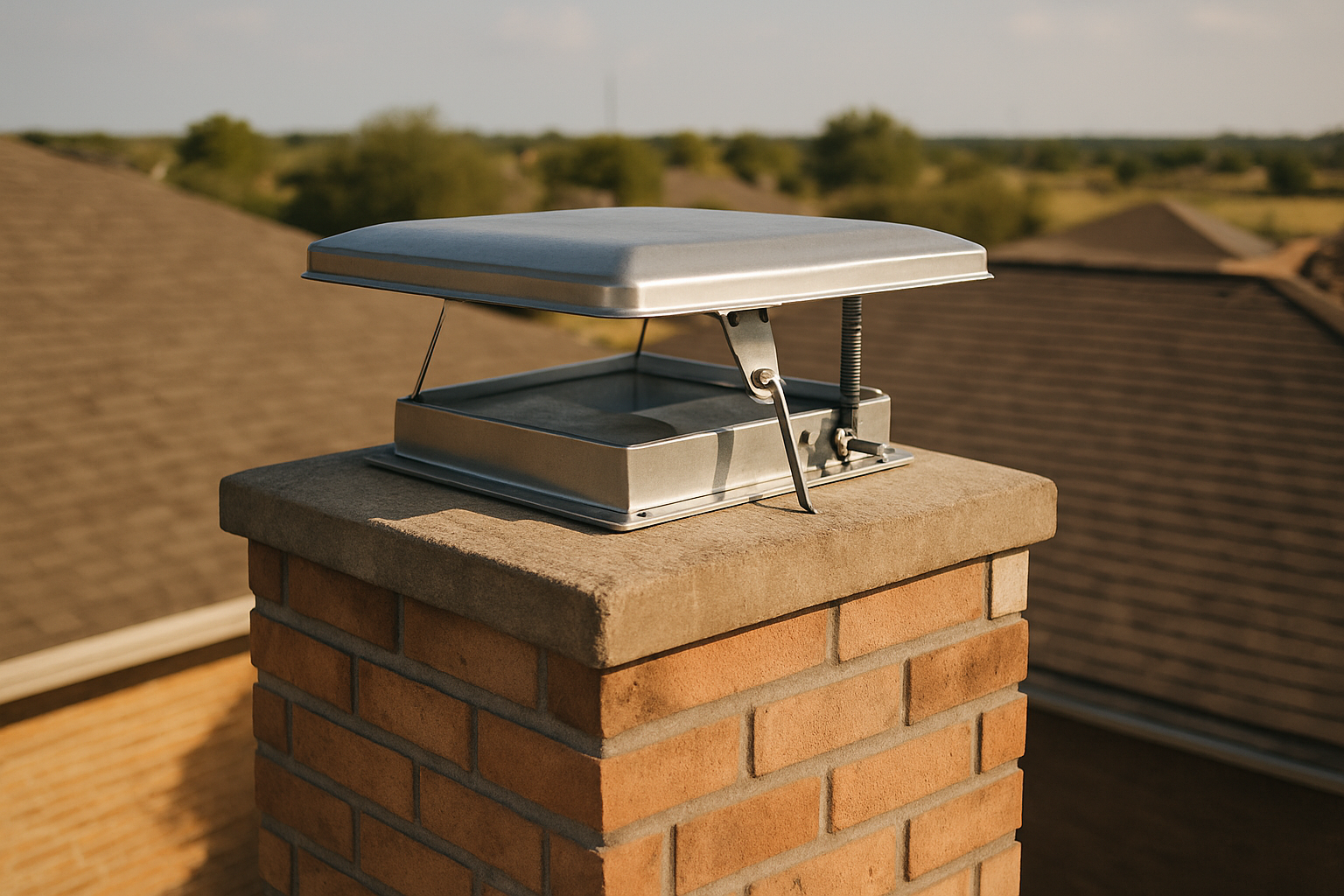
Top-Sealing Damper Installation in Houston, TX
A top-sealing damper mounts at the very top of your chimney stack and seals the flue opening at crown level, so the entire flue column stays closed off from Gulf Coast air. When your throat damper stops sealing, this is the upgrade that stops the problem at its source, and we complete it in a single service visit.
Throat Damper Removed and Top-Sealing Unit Installed in a Single Visit
Top-sealing damper installation follows four steps, each one confirmed before the next begins.
Diagnostic Assessment
We start at the firebox. The existing throat damper is inspected for condition, corrosion, and hinge function. The flue interior is checked for obstructions. We confirm the flue liner type and measure the flue opening at the crown. This determines the correct top-sealing damper unit size, ordered to match the actual opening, not a stock approximation.
Throat Damper Removal and Cable Preparation
The throat damper is removed completely. The damper frame or bracket is cleared from the throat opening. The stainless steel cable is staged for installation, length measured against confirmed flue height before it enters the flue. Cable length matters here. Too short and the handle doesn't reach the firebox comfortably. Too long and the cable loops.
Top Unit Mounting and Seal Verification
The top-sealing damper is mounted at the crown. The damper gasket seal is seated and compressed, we check the contact surface around the full perimeter of the flue opening. The unit is fastened and wind-tested before the cable is fully tensioned. In Houston's storm corridor, a top-mounted unit that moves under wind load defeats the seal over time.
Post-Installation Testing
The cable is connected to the firebox handle and tensioned. The damper is opened and closed from the firebox three times. We confirm smooth operation, full open position for fire use, and complete closure, damper gasket compressed, flue air column sealed. Written confirmation of installation is left with the homeowner.
Our Standards for Top-Sealing Damper Installation
Every installation follows the same material and sequence standards, throat removal is part of the job, not an add-on.
Throat damper removed first, not left in place to interfere with cable operation or create a secondary air gap
Cable-operated top-sealing damper installed using a stainless steel cable run down the full flue interior
Damper gasket seal verified to compress evenly against the flue opening, checked before and after final mounting
Firebox handle or hook installed at reachable height inside the firebox, cable tensioned for smooth single-hand operation
Top unit seated and fastened to the flue tile or liner at the chimney crown, no movement under wind load
Full flue clearance confirmed, nothing obstructs the cable run between the top unit and the firebox handle
Post-installation operation test, damper opened and closed three times before the job is called complete
A Top-Sealing Damper Closes Your Chimney at the Crown, Not the Middle
A top-sealing damper is the right upgrade when a throat damper stops sealing well enough for Houston's nine-month cooling season.
A top-sealing damper, a spring-loaded or cable-operated unit mounted at the very top of your chimney stack, closes the flue opening at the crown level. That means the entire flue column sits sealed off from outdoor air. A traditional throat damper, the cast-iron plate just above your firebox, closes somewhere in the middle. Outdoor air still fills the flue above it. When damper repair and replacement services are needed, understanding this distinction is where the upgrade decision starts. According to Chimney Safety Institute of America guidelines, crown-level sealing provides measurably better performance than throat-level closure in climates with extended cooling seasons.
Here's what most homeowners don't realize about that gap. Even a "closed" throat damper leaves the flue air column, the column of air running from the throat plate to the chimney cap, fully exposed to outdoor conditions. Humidity, insects, and chimney odor sealing for Houston homes concerns ride that column straight down. In Houston, where A/C runs from March through November, that's a constant air infiltration load on your cooling system.
The top-sealing damper eliminates that column entirely. Nothing enters from the top when the damper is closed. That's crown-level sealing, and it's different from what a throat damper can offer.
Seals in the middle. The flue column above stays exposed to Gulf humidity, insects, and outdoor air.
Seals at the crown with a rubber gasket. Nothing enters the flue from the top when closed.
What I See Every Summer in Friendswood and Stafford
The musty fireplace smell in July almost always points to the same thing, an unsealed flue column.
I'm on top of a lot of chimneys every summer across the southwest and south Houston suburbs. In Stafford and Friendswood, it's common to pull off a chimney cap installation at the crown during top-sealing inspection and find a throat damper below that's been in place since the home was built, 1988, 1993, 1997. The cast iron is warped from decades of heat cycling. The hinge is stiff from corrosion. The plate sits slightly open.
That gap is all it takes. The flue air column above the throat damper connects directly to outdoor air. During Houston summers, that outdoor air is 90-plus degrees and loaded with Gulf humidity. It flows down through the open chimney cap, fills the flue, seeps past the warped throat plate, and enters the living room. The homeowner smells a musty odor from the fireplace and assumes it's coming from inside the firebox. It's not. It's coming from outside, moving down.
Homeowners tell me they had the fireplace cleaned twice that season and the smell came right back. Cleaning the firebox doesn't fix a leaking throat damper. The problem is above the throat, it's the entire unsealed flue column from the throat plate to the top of the chimney. A top-sealing damper closes that problem at the source. The top unit mounts at the crown, seals with a rubber gasket, and the flue column no longer connects to outdoor conditions.
One job. One morning. The difference is immediate.
Installing a Top-Sealing Damper With the Throat Damper Still in Place Creates Two Problems
Removing the old throat damper before installation is the correct sequence, and here's the specific reason why.
We remove the throat damper before installing the top-sealing unit. A top-sealing damper installed over a remaining throat damper still has the throat plate in the cable path. That plate can stick open, interfere with cable tension, and create a secondary air gap below the top unit.
Here's the specific issue. The cable-operated damper, the stainless steel cable that runs down the flue interior to a handle mounted in your firebox, needs a clear, unobstructed path from the top unit to the firebox hook. A remaining throat damper sits right in that path. If it sticks open even slightly, the cable binds. If it warps further, it can jam the cable against the flue wall.
Removing the throat damper gives the top unit a clean cable run. It also eliminates the secondary air infiltration point, the gap the old throat plate created even when it appeared closed. One airtight seal at the crown. No backup plate creating a second leak point below it.
Southwest Houston Homes Run A/C Nine Months a Year, and Throat Dampers Feel It
Houston's cooling season is long enough to make chimney air infiltration a real energy and comfort issue.
832 Home Service installs top-sealing dampers in Sugar Land, Missouri City, and Stafford, Houston's southwest suburbs where post-1980 ranch and two-story homes frequently have their original throat dampers still in place. These homes run air conditioning from early spring through late fall. That's a long stretch for a cast-iron throat plate with metal-to-metal contact to be the only barrier between conditioned indoor air and Gulf Coast humidity. Understanding how Houston's climate affects chimney components explains why throat dampers in this region degrade faster than in drier parts of the country.
The damper gasket seal on a top-sealing unit, a rubber or silicone gasket that compresses against the flue opening when closed, is what makes the difference. Cast-iron throat dampers rely on metal-to-metal contact. There are always gaps. A rubber gasket against a steel seat doesn't have that problem. EPA ENERGY STAR guidance on air sealing identifies chimney bypasses as one of the most significant sources of conditioned air loss in homes, making crown-level sealing a practical energy improvement alongside comfort benefits.
Southwest Fort Bend County and Harris County both sit in Houston's longest A/C-season zone. For homeowners in those zip codes, upgrading from a throat damper to a top-sealing unit pays for itself in comfort before it shows up in energy numbers. Pairing the installation with chimney waterproofing and sealing services addresses both air infiltration and moisture penetration in a single service visit.
months of A/C season every year in Southwest Houston
serving Houston homeowners since
Areas We Serve in the Houston Area
832 Home Service installs top-sealing dampers across the Greater Houston metro and surrounding communities.
We serve Houston, Pasadena, Bellaire, West University Place, Stafford, Missouri City, Pearland, Friendswood, Deer Park, La Porte, Humble, Katy, Sugar Land, Baytown, League City, Spring, Cypress, Tomball, The Woodlands, Rosenberg, Richmond, and surrounding areas including Galveston, Beaumont, and communities throughout Fort Bend, Harris, and Brazoria counties.
Frequently Asked Questions
◆Why remove the throat damper if I'm getting a top-sealing unit?
A remaining throat damper sits directly in the cable path. It can stick open, interfere with cable tension, and create a secondary air gap below the top unit. Removing it gives the top unit a clean cable run and one airtight seal at the crown, with no backup plate creating a second leak point.
◆How long does a top-sealing damper installation take?
One morning. We remove the existing throat damper, mount and seal the top unit at the crown, run and tension the stainless steel cable, and complete post-installation testing, all in a single visit. The improvement in air infiltration is immediate.
◆Why is my fireplace still smelling musty after cleaning?
Cleaning the firebox doesn't fix a leaking throat damper. The problem is above the throat, it's the entire unsealed flue column from the throat plate to the top of the chimney letting in Gulf humidity. A top-sealing damper closes that problem at the source with a rubber gasket seal at the crown.
◆How is a top-sealing damper better than a throat damper?
A top-sealing damper seals the flue opening at crown level with a rubber or silicone gasket, so the entire flue column stays closed off from outdoor air. Cast-iron throat dampers rely on metal-to-metal contact and always leave gaps. In Houston's long A/C season, crown-level sealing stops constant air infiltration.
◆Should I schedule an inspection before the damper upgrade?
Yes. We recommend scheduling a chimney inspection before a damper upgrade to confirm flue liner condition, identify any obstructions, and ensure the correct unit size is ordered for your specific opening.
Ready to Get Started?
Contact our team today for a free consultation. A top-sealing damper installation takes one morning, and the improvement in air infiltration is immediate. One call. One visit. Done.
832 Home Service • in**@****************es.com • © 2026 832 Home Service. All rights reserved.