A substrate project first, a cosmetic project second. Clearance verification, proper substrate prep, and lasting stone results across the Greater Houston area.
Clearance verification before substrate installation is the step that protects the rest of the project and the reason we document it in writing.
The firebox clearance zone has specific requirements. The non-combustible area around the firebox opening specifies minimum distances on each side of the opening, minimum hearth extension depth, and a minimum height from the top of the opening to any combustible mantel material. Wood-backed stone substrates placed inside that zone without verification create a fire risk, regardless of how well the stone looks.
We measure those dimensions at the assessment visit. The findings are documented before substrate installation begins. If the planned design places any combustible material inside the required zone, we adjust the design before the substrate goes up, not after. That documentation stays with the project file. On post-1990 Houston homes where original construction records are often absent, that paperwork matters.
832 Home Service has observed Gulf Coast chimney deterioration patterns across the full Houston area since 2010.
Our crews have inspected chimneys in every major neighborhood in this service area, from the salt-air corridor along the Galveston coast to the clay-heavy lots in Sugar Land and the older masonry stock of Pasadena. The pattern that stands out, year after year, is this: homeowners who are surprised by significant chimney damage are almost always the ones who expected Houston’s mild winters to mean minimal chimney wear.
Serving Houston since
Most stone veneer fireplace surrounds in Houston’s southwest and western suburbs start as original builder-grade brick or painted drywall – and both need different substrate treatment.
Missouri City, Sugar Land, and Pearland have large concentrations of post-1990 homes. Many are now entering renovation windows – new flooring, updated kitchens, fresh paint. The fireplace sits in the middle of the living room as the visual anchor of that renovation. An original builder-grade brick surround from 1993 does not match travertine floors or modern trim profiles.
Here is what most Houston homeowners discover about stone veneer in this region: the thermal cycling creates a real challenge at the mortar bed. Air-conditioned interiors stay around 74°F year-round. The exterior chimney mass climbs well above that in summer. That differential stresses the bond between the veneer and the scratch coat. Polymer-modified thinset – not standard thinset – is the right material for this environment. We specify it on every Houston installation.
Three coats. Not two. Every Houston stone veneer installation uses a complete metal lath, scratch coat, and mortar bed system. Our standards for fireplace stone veneer Houston projects:
Metal lath application over existing drywall or masonry – creates the mechanical bond layer that the scratch coat requires
Scratch coat cured before mortar bed – veneer is not set over a wet scratch coat; cure time is built into the schedule
Polymer-modified thinset or mortar bed – specified for Houston’s thermal cycling between air-conditioned interiors and summer exterior temperatures
Full mortar embedment on each veneer piece – no voids; voids cause cracking and veneer separation at the next heat cycle
Clearance zone dimensions documented in writing before substrate installation begins – on file with the project record
Hearth extension reviewed as part of every full surround scope – not treated as a separate line item
First, the firebox clearance zone – the non-combustible area defined by NFPA 211 (the National Fire Protection Association standard that specifies minimum distances between the firebox opening and any combustible material). That zone has to be measured before substrate goes up. On post-1990 Houston builder homes, we frequently find no documentation of original clearance compliance. The dimensions have to be verified from scratch.
Second, the existing surround condition. Painted drywall surrounds need metal lath and a scratch coat before any mortar can be applied. Brick surrounds in good condition can sometimes accept direct mortar application – but only if the masonry is stable and clean. We never assume.
Third, the hearth extension. The hearth extension – the non-combustible floor surface extending forward from the firebox opening – has its own dimensional requirements based on firebox size. A stone veneer remodel that addresses only the wall surround and ignores a non-compliant hearth leaves a compliance problem in place. That gets caught and resolved before installation begins.
That is a lot of pre-work before a single piece of stone is set. It is also what makes the installation last.
Every phase is complete before the next begins – clearance first, substrate second, stone third.
We measure the firebox clearance zone at the assessment visit. Side setbacks, hearth extension depth, and mantel height above the opening are all recorded. If the planned stone veneer design would place combustible substrate material inside the required non-combustible zone, the design is adjusted before substrate work is scheduled. Findings are documented and shared with the homeowner before any work begins. This step takes more time upfront. It eliminates the most costly kind of rework - pulling installed substrate because the clearance check was skipped.
Substrate preparation - the process of creating a structurally sound, bonding-appropriate surface for stone veneer installation - depends on what is there now. Drywall surrounds receive metal lath fastened to the framing, followed by a scratch coat, which is a rough mortar layer that creates the mechanical bonding surface. Brick surrounds are cleaned, checked for stability, and assessed for direct mortar application suitability. Cure time is scheduled into the project - veneer is not set over uncured substrate.
The mortar bed - the polymer-modified thinset layer applied to the scratch coat and the back face of each stone piece - is applied in sections to control working time. Each piece is set with full embedment and no voids. Grout joints are finished to the specified profile. The fireplace surround - the complete assembly of side piers, breast above the opening, and the field extending to mantel height - is completed before the hearth extension surface work begins. The two are sequenced, not done simultaneously.
No. It is a substrate project first and a cosmetic project second. Clearance verification and substrate preparation happen before the first piece of veneer is set, and that pre-work is what makes the installation last.
Houston’s thermal cycling between air-conditioned interiors near 74°F and hot summer exterior temperatures stresses the bond between veneer and scratch coat. Polymer-modified thinset, not standard thinset, is the right material for that environment, and we specify it on every Houston installation.
Manufactured stone veneer is a lightweight concrete product molded to replicate natural stone, more consistent in profile and easier to cut. Natural stone veneer is quarried limestone, travertine, or slate, which is heavier and requires confirmed structural soundness of the substrate. Both are handled with the same substrate standards.
Yes. The hearth extension is reviewed as part of every full surround scope, not treated as a separate line item. Ignoring a non-compliant hearth would leave a compliance problem in place, so it gets caught and resolved before installation begins.
Tell us the existing surround material, the approximate firebox opening size, and your renovation timeline. We will confirm what the project scope looks like before any material is ordered or substrate work begins.
(832) 662-3437
Other work Houston homeowners commonly pair with this service.
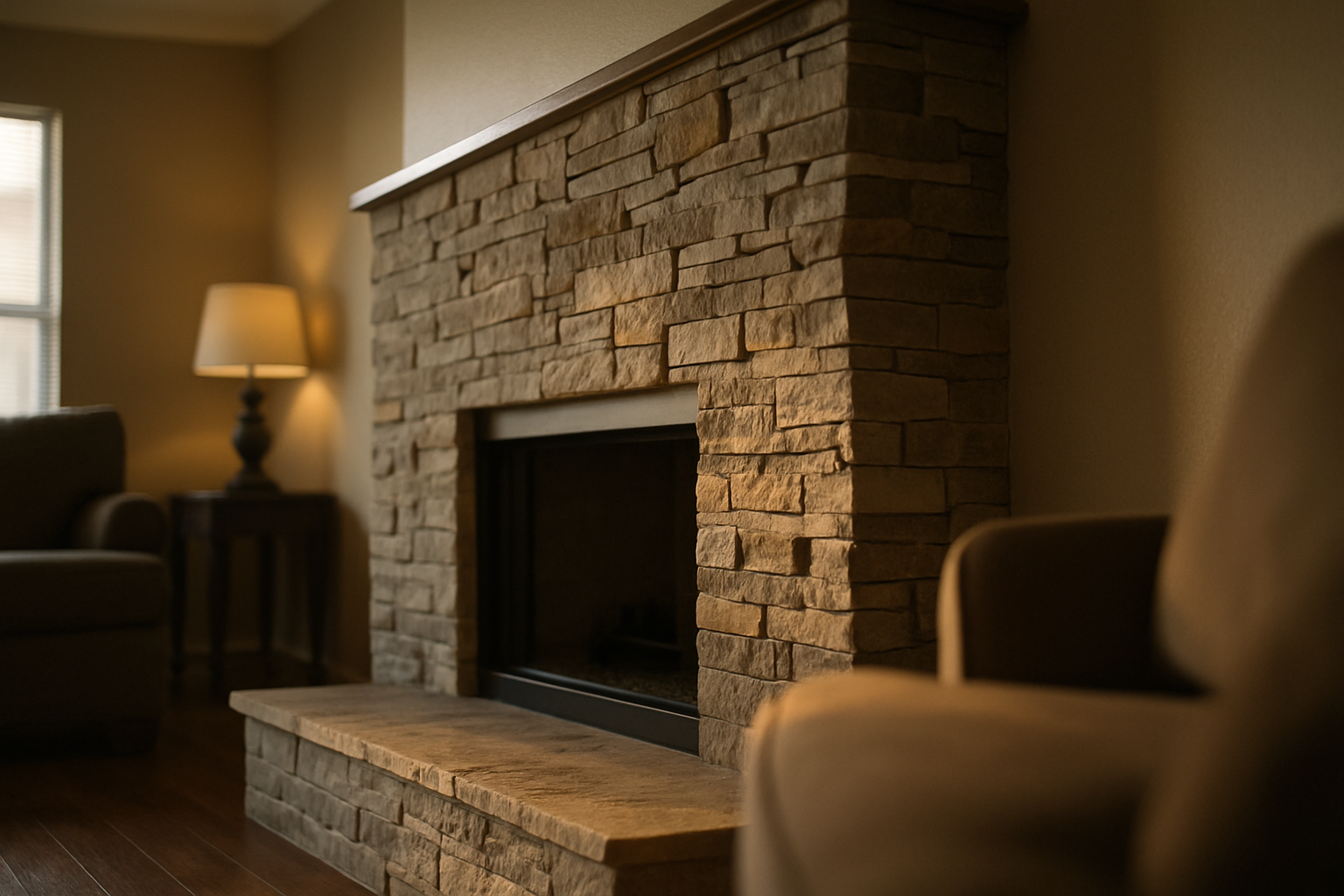
Cosmetic updates without touching the firebox.
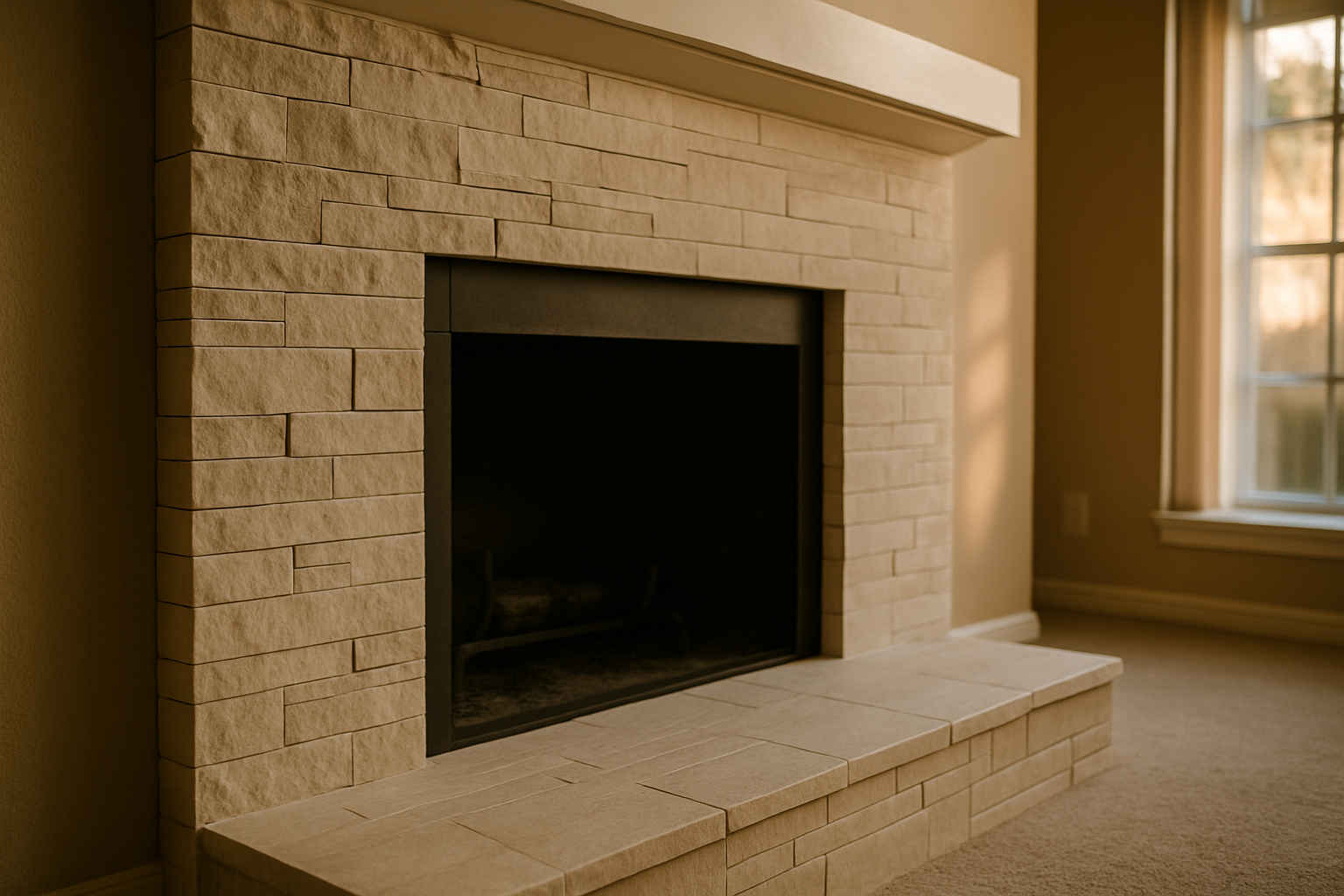
Other refacing materials and finishes.
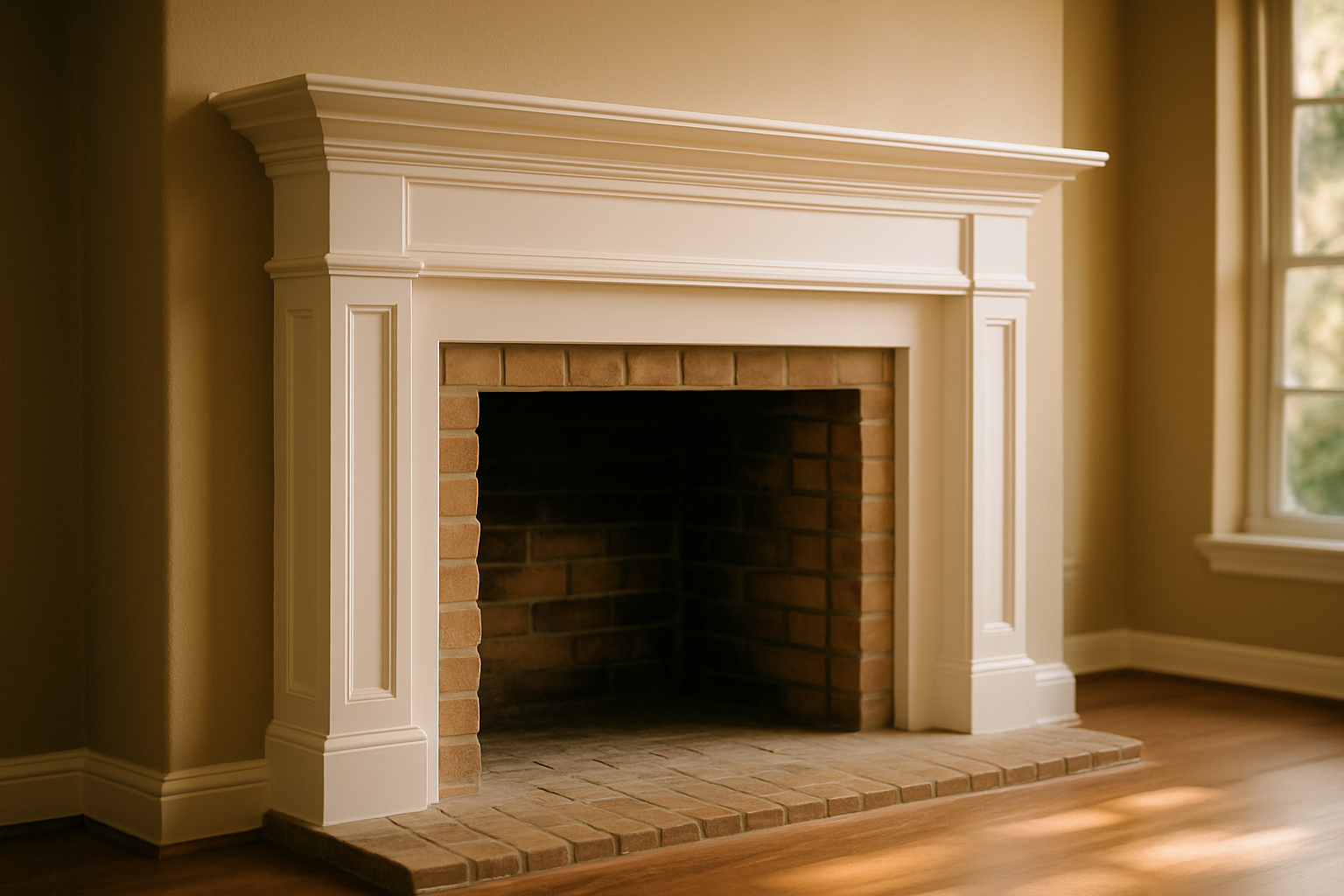
Finish the look with a fitted mantel.
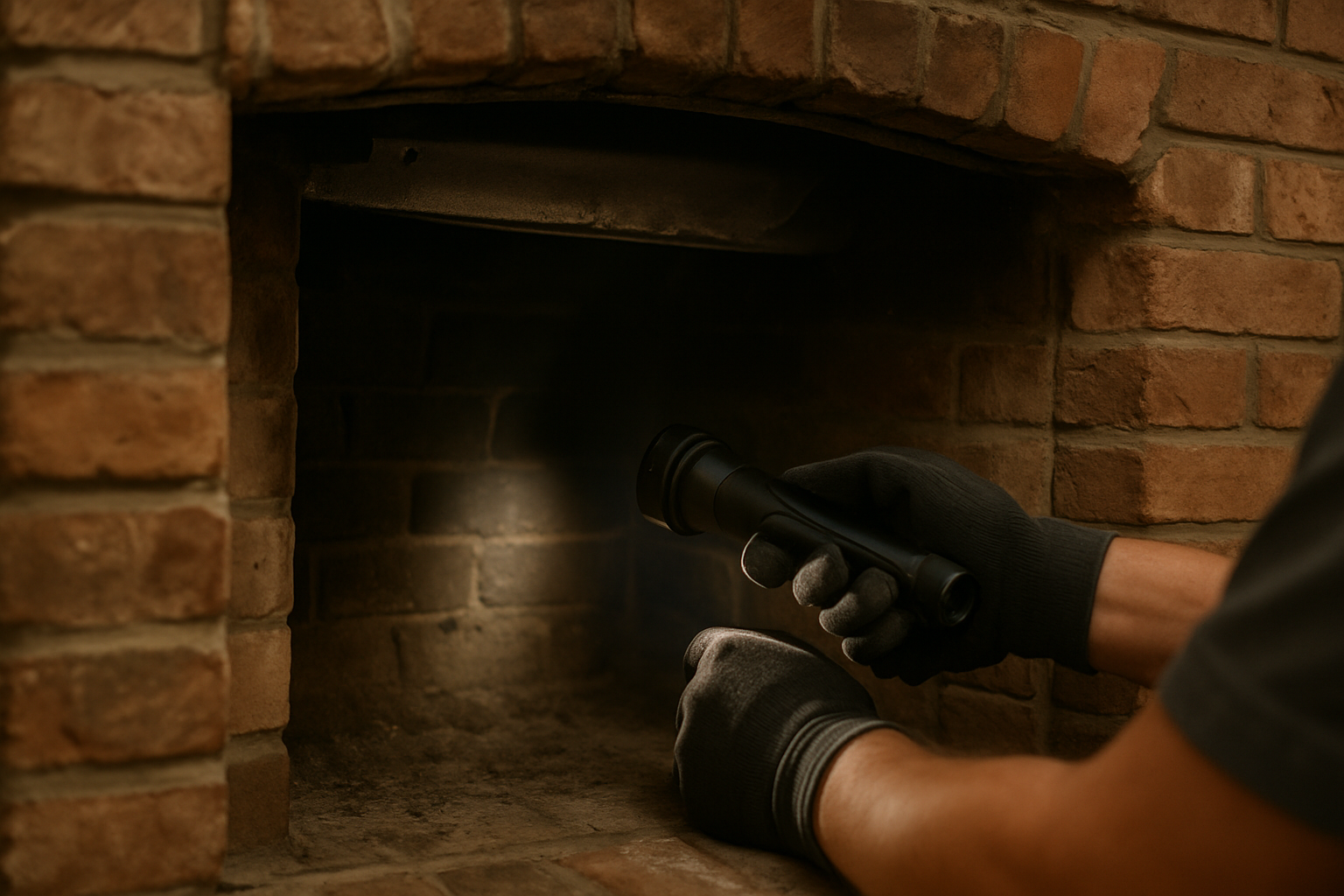
Safety checked before cosmetic work.
832 Home Service responds to emergency furnace flue cleaning calls throughout the Greater Houston area.
Inner-ring Houston neighborhoods, particularly those with post-1950 shared masonry flue construction, are a primary focus for same-day emergency furnace flue calls at the start of heating season.
832 Home Service scopes, quotes, and schedules stone veneer fireplace surrounds with clearance verification included in the assessment visit.
WhatsApp us
Tell us what’s going on and we’ll get back to you, often the same day.
Prefer to talk? (832) 662-3437