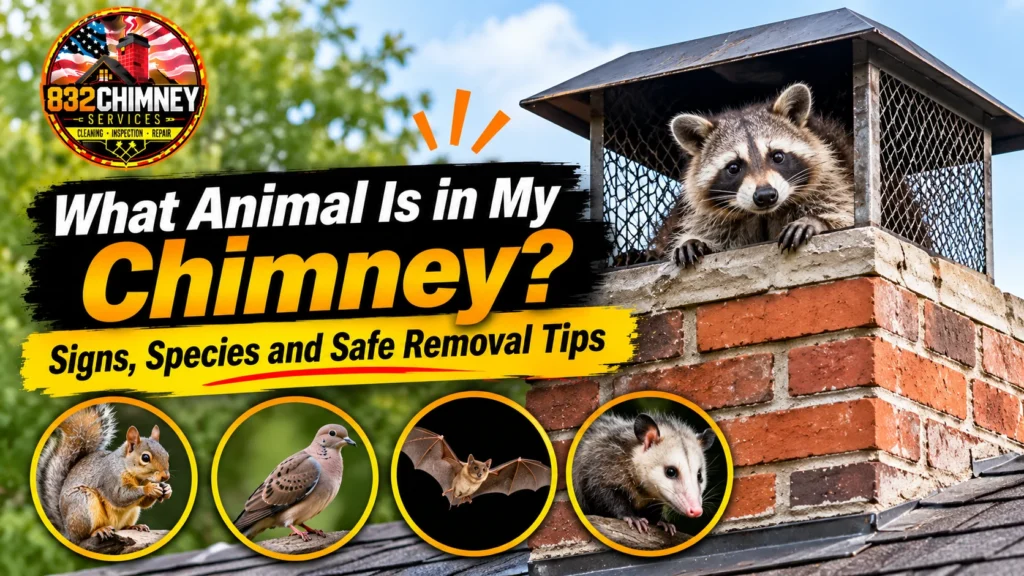
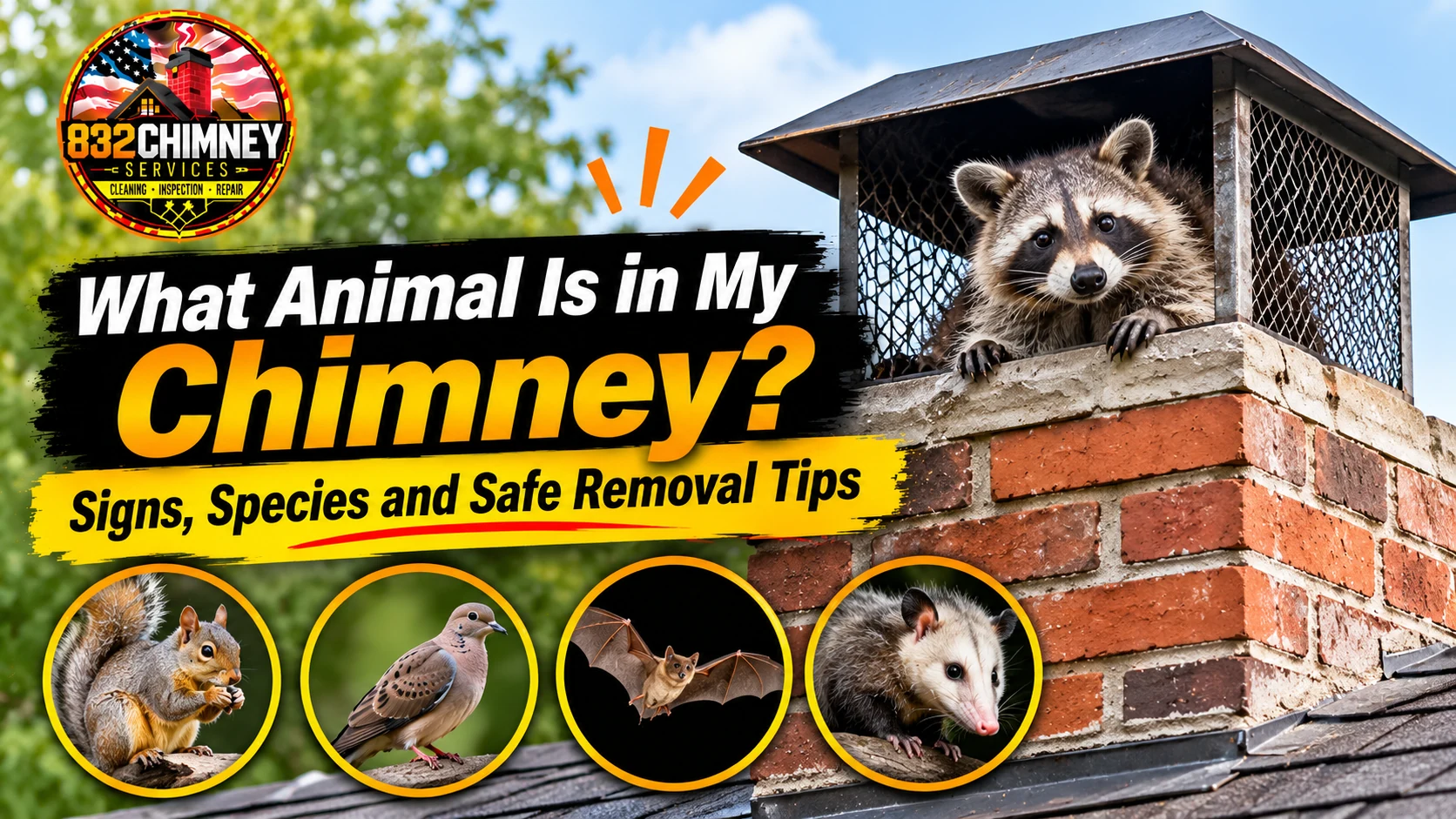
It usually starts with a sound. Scratching in the walls at night, chirping above the fireplace in the morning, or a heavy thump on the roof after dark. Before long you are standing in front of the fireplace wondering what animal is in my chimney and how it got there.
Houston’s mild winters, long nesting season and tree-lined neighborhoods make chimneys an easy target for wildlife. This guide explains the signs to look for, how to tell which animal you are dealing with, what to do right away, and how to keep animals out for good.
6 Proven Signs an Animal Is in Your Chimney
The first step in answering what animal is in my chimney is to look and listen for these signs.
1. Sounds from the fireplace or flue
Scratching, fluttering, chirping or thumping are the most common clues. When you hear them often tells you as much as the sound itself, which we cover in the species section below.
2. Nesting material in the firebox
Twigs, leaves, grass, acorns or shredded insulation in the firebox, especially when you have not used the fireplace in a while, usually mean something is building a nest above the damper or on the smoke shelf.
3. Droppings
Droppings in the firebox or on the hearth are a clear sign of activity. Bird and bat droppings can carry the fungus that causes histoplasmosis, so do not sweep them up dry or breathe in the dust.
4. Strange smells
A strong ammonia smell often comes from built-up droppings. A sweet, rotten smell that gets worse in warm weather usually means an animal has died in the flue.
5. Activity at the top of the chimney
Birds flying in and out at dusk, tracks or droppings on the roof, or a raccoon peeking over the edge of the chimney are all easy signs to spot from the yard.
6. A damaged or missing cap
A bent, rusted or missing chimney cap, or a chewed chase cover on a framed chimney, is often how the animal got in. If your cap is missing, assume something will move in eventually.
Matching the Clues to the Animal
Once you know the signs, the next question is what animal is in my chimney. The timing and type of noise usually narrow it down quickly.
Birds and chimney swifts
Chirping that gets louder at feeding time, often early morning and evening, usually means birds. In Houston, the most common chimney birds are chimney swifts, which arrive in spring and leave in the fall. Chimney swifts are protected under the Migratory Bird Treaty Act, so an active nest cannot be removed until the young have left. Our guide to chimney swift season in Houston explains the timeline.
Squirrels
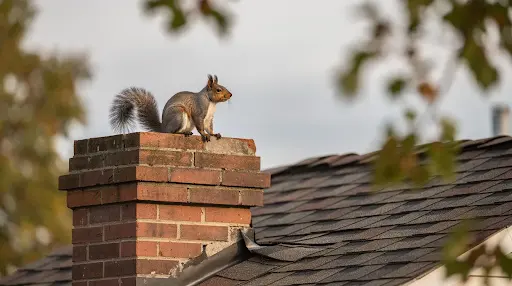
Scratching and scurrying during the day, mostly in the morning and late afternoon, points to squirrels. They often fall into chimneys while exploring the roof and cannot climb back up the smooth flue. They also chew caps and chase covers and drop acorns and nesting material.
Raccoons
Heavy thumping, chattering or crying sounds at night usually mean raccoons. Mother raccoons often raise their young on the smoke shelf in spring. They can bend dampers and leave large piles of droppings, which may carry raccoon roundworm.
Bats
Faint squeaking and rustling around dusk, when bats leave to feed, is a common sign. Bats tuck into gaps between flue tiles and brick or inside prefab chimney chases. Texas wildlife guidelines generally discourage bat exclusion during the summer pup season, when young bats cannot fly yet.
Rats and mice
Quick scurrying sounds at night, often inside the walls near the chimney, point to rodents. Overhanging tree branches make it easy for roof rats to reach the chimney.
Opossums
Opossums are less common, but they sometimes fall into chimneys at night. You may hear slow scratching or hissing and find a strong musky smell.
What to Do Right Away
Whatever the answer to what animal is in my chimney turns out to be, these steps keep your family and the animal safe.
- Do not light a fire or turn on gas logs. Smoke and heat can trap or kill the animal and push carbon monoxide back into the house.
- Close the damper and the fireplace glass doors if you have them, so the animal cannot get into the room.
- Keep pets and children away from the fireplace.
- Do not reach up into the flue or try to grab the animal with your hands.
- Do not use smoke, poison or loud noise to drive it out. Those methods often leave a dead animal stuck in the flue.
- Take note of when you hear the sounds and what they sound like. It helps the technician plan the removal.
Why You Should Not Try to Remove It Yourself
It is tempting to handle it alone, but chimney wildlife is harder to deal with than it looks. Protected species like chimney swifts cannot legally be disturbed during nesting season. Raccoons and squirrels can bite and scratch when cornered. Droppings and nesting material can carry disease. And if there are babies, removing the mother alone leaves the young to die in the flue.
Climbing onto a roof and working inside a dirty flue also carries real risk of falls and damage to the chimney liner or damper.
How Professionals Remove Animals From Chimneys
A trained technician starts by finding out what animal is in the chimney, where it is, and how it got in, often with a camera inspection of the flue. Depending on the species and the time of year, the animal is removed by hand with the right equipment or guided out through a one-way exclusion door that lets it leave but not return.
The technician then checks for babies, removes nests and debris, and cleans the smoke shelf and firebox. Our chimney animal removal service follows these steps for birds, squirrels, raccoons, bats and other wildlife. If an animal has already reached your living room or attic, call for emergency animal removal right away.
When the Smell Means a Dead Animal
A dead animal in the chimney is unpleasant at any time of year, and Houston’s heat makes it worse. The smell usually becomes strong within one to three days and can spread into nearby rooms and air returns. The carcass needs to be removed, and the smoke shelf and firebox should be cleaned and deodorized. Air fresheners and sprays only cover the smell for a short time.
How to Keep Animals Out for Good
Removing the animal solves today’s problem. Closing the way in stops the next one.
- Install a stainless steel cap with mesh sides. It is the single best way to keep animals out. Learn more about chimney cap installation.
- Repair or replace a rusted chase cover on framed chimneys
- Seal gaps around the chimney where it meets the roof and siding
- Trim tree branches so they are at least eight to ten feet from the roof
- Have the chimney inspected once a year so small openings are caught early
Frequently Asked Questions
How can I tell what animal is in my chimney without looking?
Listen to when the noise happens. Daytime scratching usually means squirrels, nighttime thumping points to raccoons, chirping at feeding times means birds, and squeaking at dusk often means bats.
Can I wait for the animal to leave on its own?
Sometimes birds and squirrels do leave, but many animals cannot climb a smooth metal or tile flue. Waiting can mean a trapped animal dies in the chimney. It is better to have it checked.
Is it safe to use my fireplace after an animal is removed?
Only after the nest and debris are cleared and the flue is checked. Nesting material is very flammable and can block the flue.
What time of year do animals get into chimneys in Houston?
Spring is the busiest season, when birds, squirrels and raccoons look for nesting spots. Chimney swifts stay through late summer. Rodents and opossums can show up at any time of year.
Still Not Sure What Is in Your Chimney?
If you are still asking what animal is in my chimney, we can find out for you. Call 832 Chimney Services at (832) 662-3437 or contact us. We serve homes across Houston, Katy, Cypress, Sugar Land and The Woodlands.