
The first cool front rolls into Houston, you flip the switch on your gas fireplace, and nothing happens. Or the pilot clicks but never lights, or the flame comes on weak and yellow and leaves soot on the glass.
Some of these problems have simple causes you can check in a few minutes. Others need a trained technician. This gas fireplace troubleshooting guide walks through the safe checks you can do yourself, the eight most common problems and what they mean, and when it is time to call a professional.
Safety First Before You Start
Gas fireplace troubleshooting should always start with safety. If you smell gas, do not try to light the fireplace or flip any switches. Leave the house and call your gas company’s emergency line from outside. In most of Houston that is CenterPoint Energy.
If your carbon monoxide alarm goes off, turn off the fireplace, open windows on your way out, and call 911. Carbon monoxide has no color or smell, and early symptoms feel a lot like the flu. You can read more about the warning signs of carbon monoxide poisoning.
For everything else, turn the fireplace off and let it cool completely before you touch the glass, logs or controls.
Quick Checks You Can Do Yourself
Good gas fireplace troubleshooting starts with the easy things. Run through these simple checks before you assume the worst. They solve more problems than most people expect.
- Make sure the gas valve or key near the fireplace is fully open
- Check that other gas appliances, like the stove or water heater, are working
- Replace the batteries in the remote and in the receiver, which is usually under the fireplace or behind the lower panel
- Confirm the wall switch is on and that a breaker has not tripped, if your unit uses electric ignition
- Follow the lighting steps printed on the label inside the lower panel or in the owner’s manual
- Look at the vent cap outside for leaves, nests or anything blocking it
If none of these fixes the problem, move on to the symptoms below.
8 Common Gas Fireplace Problems and What They Mean
These are the problems that come up most often in gas fireplace troubleshooting, along with what usually causes them.
1. The pilot will not light
If you hear clicking but see no flame, the igniter may be weak, the pilot orifice may be clogged with dust or spider webs, or air may be trapped in the gas line after months of sitting idle. Holding the knob down a little longer while lighting can push the air out. If it still will not light after a few tries, stop and call for service.
2. The pilot lights but will not stay lit
This is one of the most common calls we get. The usual cause is a worn or dirty thermocouple, the small sensor that tells the gas valve the pilot is lit. When it weakens, the valve shuts off the gas as soon as you let go of the knob. A dirty pilot flame that does not fully touch the sensor can cause the same problem. A technician can test the thermocouple with a meter and replace it if needed.
3. The pilot is lit but the burner will not turn on
When the pilot stays lit but the main flames never come on, look at the wall switch and remote first. If those work, the thermopile, which produces the small current that opens the main valve, may be failing. Loose or corroded wiring between the switch and the valve is another common cause.
4. The flame is weak, low or uneven
Low gas pressure, clogged burner ports, or logs and embers that have shifted out of place can all cause a small or patchy flame. Spiders love to build webs in burner tubes while the fireplace sits unused over the summer. Cleaning the burner and placing the logs correctly often brings the flame back.
5. Yellow flames and soot on the glass or logs
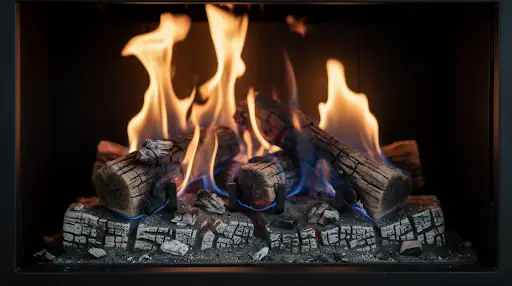
A healthy gas flame is mostly blue with some yellow at the tips. Tall, lazy yellow flames and black soot on the glass usually mean the air and gas mix is off or the logs are blocking the flame. Soot is more than a cleaning problem. It can be a sign of poor combustion, so have it checked before you keep using the fireplace.
6. A strange smell when the fireplace is on
A dusty, burning smell for the first few minutes of the season is normal. Dust burns off the burner and logs. A smell that lasts, smells like chemicals, or smells like rotten eggs is not normal. Turn the fireplace off, and if you smell gas, leave the house and call the gas company.
7. The fireplace shuts off by itself
A fireplace that runs for a while and then shuts down may have a weak thermocouple or thermopile, or it may be overheating. Vent-free units have an oxygen depletion sensor that turns the fireplace off when oxygen in the room drops or the sensor gets dirty. Repeated shutoffs should always be checked by a technician.
8. The remote or electronic ignition does not respond
Start with fresh batteries in both the remote and the receiver. If that does not work, the remote may need to be paired to the receiver again using the steps in your manual. Power surges from Houston storms can also damage receivers and ignition modules.
Why Gas Fireplaces Act Up at the Start of the Season
Most Houston gas fireplaces sit unused from March to November. During that time, humidity can corrode the pilot assembly and connections, spiders and insects build nests in the burner tubes, and birds or wasps may move into the vent cap. When the first cold night arrives, all of those small problems show up at once. A little gas fireplace troubleshooting in early fall gives you time to fix them before you need the heat.
What Not to Do
Some shortcuts make gas fireplace troubleshooting dangerous. Avoid these.
- Do not bypass or remove safety sensors to keep the fireplace running
- Do not move, tighten or replace gas lines and fittings yourself
- Do not run the fireplace with cracked or missing glass
- Do not add extra logs, rocks or decorative material that the manufacturer did not approve
- Do not keep using the fireplace if it is making soot, smoke or a strong smell
When to Call a Professional
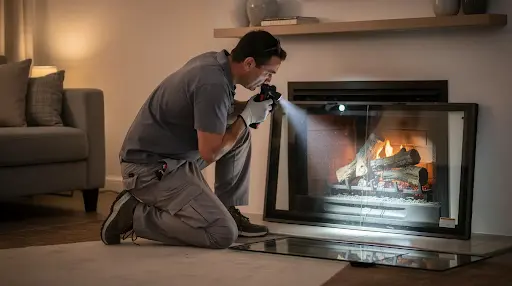
Gas fireplace troubleshooting at home has limits. Call a trained technician if the pilot keeps going out after the quick checks, if you see soot or yellow flames, if the fireplace shuts off by itself, or if you smell anything other than a brief dusty odor. Any work on the gas valve, lines or safety parts belongs to a professional. Our gas fireplace repair service handles pilot assemblies, thermocouples, thermopiles, burners and ignition systems for the brands found in most Houston homes.
The best way to avoid problems is a yearly check before the cold weather starts. A gas fireplace inspection covers the burner, pilot, venting, glass seals and safety controls in one visit. If you have any concern about fumes, a carbon monoxide safety inspection confirms the system is venting the way it should.
Keep the Vent Clear
Vent problems are easy to miss during gas fireplace troubleshooting. Whether your fireplace vents through a brick chimney or a direct-vent pipe on an outside wall, the vent has to stay clear. Nests, leaves and wasp activity can block it and push exhaust back into the room. A properly fitted cap keeps animals and debris out. If yours is missing or damaged, see our chimney cap installation service.
Frequently Asked Questions
Is it safe to relight my gas fireplace pilot myself?
Yes, as long as you do not smell gas and you follow the lighting instructions on the label or in your manual. If the pilot will not light or will not stay lit after a few tries, stop and call for service.
Why does my gas fireplace glass get foggy?
A light white haze when the fireplace first heats up is usually condensation and goes away as the glass warms. A haze that stays, or black soot, means the glass needs cleaning and the burner may need adjustment.
How often should a gas fireplace be serviced?
Once a year, ideally in late summer or early fall before Houston’s first cold front.
Still Having Trouble?
If your gas fireplace troubleshooting did not solve the problem, 832 Chimney Services can help. We serve homes across Houston, Katy, Sugar Land, Pearland, Cypress, Spring and The Woodlands. Call (832) 662-3437 or contact us to book a visit before the next cold night.