
Crumbling mortar is the most common cause of preventable chimney damage in Houston. Here is how to tell if yours needs attention — and when it does not.
Most homeowners have never watched a tuckpointing job. Here is exactly what happens on a typical Houston chimney.
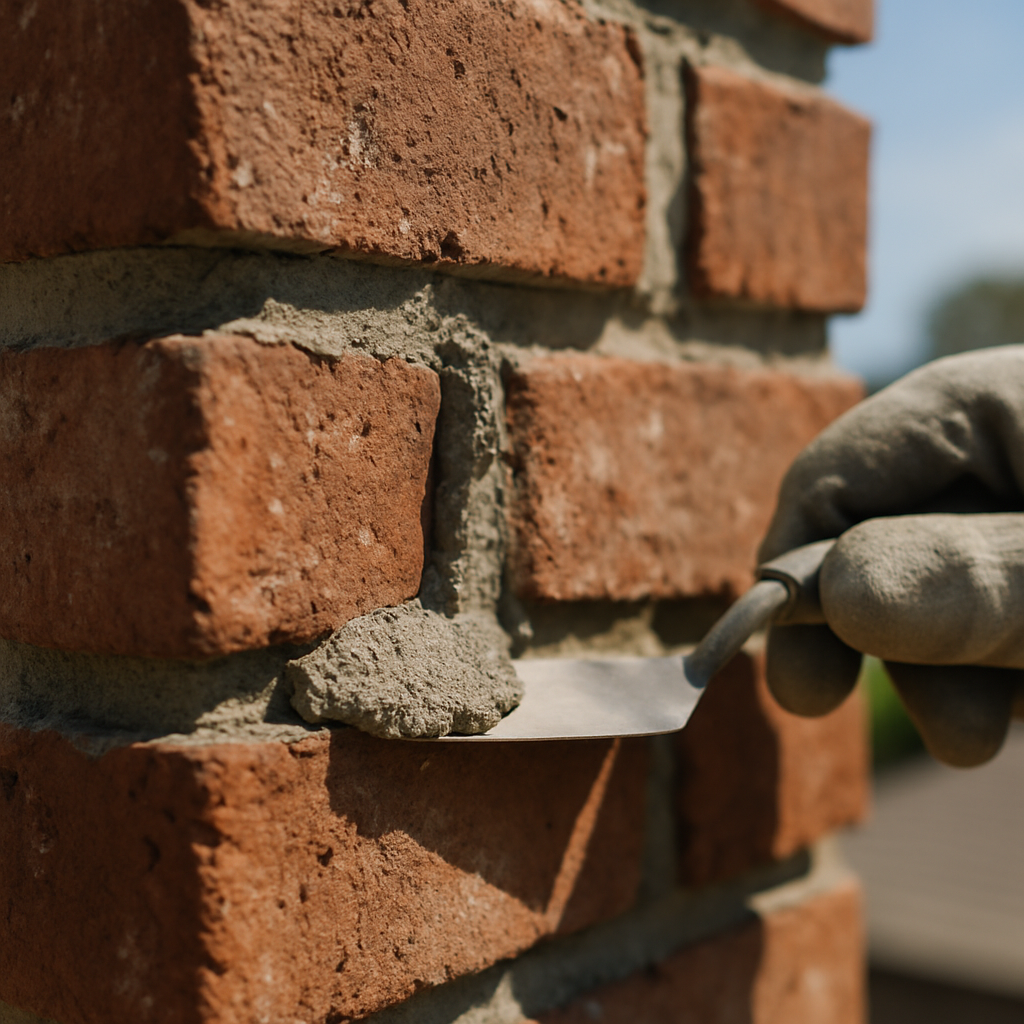
Old mortar is removed to a depth of at least 3/4 inch using an angle grinder with a mortar-raking blade or an oscillating tool for tighter spots. Removing less than that gives the new mortar no surface to bond to. This is the step most DIY attempts get wrong — they apply new mortar over old without adequate removal.
The new mortar type and mix ratio must match the original. Older Houston homes often have softer lime-based mortar that requires a Type N or O mix, not the harder Type S used in new construction. Using the wrong type can actually crack the bricks, which is a harder and more expensive fix.
New mortar is packed into the joints in layers and tooled to match the original joint profile. The joint profile matters structurally, not just visually. A concave or V-shaped joint sheds water better than a flat one. Once done, the chimney needs 24-48 hours before water exposure.
Cost varies with chimney height, the extent of mortar failure, and access difficulty. A single-story chimney with moderate joint deterioration runs less than a three-story chimney with widespread failure across all four faces. Scaffolding adds to the price on taller structures.
The most important cost factor is how long you wait. Mortar that has been failing for two seasons is a tuckpointing job. Mortar that has been failing for five seasons, with water infiltration over that time, may mean damaged brick, a failed liner, or interior water damage that multiplies the repair cost significantly.
For ballpark figures specific to Houston, see our chimney repair cost Houston guide. It covers tuckpointing alongside other common repair types so you can plan accordingly.
2-4
Hours for a typical chimney tuckpointing job
Houston's clay-heavy soil shifts seasonally. When the ground moves, chimneys move with it. That constant micro-movement cycles stress through mortar joints year after year. It is why you can have a chimney with no visible exterior damage but still have mortar that has lost most of its bond strength.
High humidity also slows mortar curing and can trap moisture behind freshly installed mortar if the work is done during saturated conditions. This is why scheduling tuckpointing after a dry spell matters. We follow Brick Industry Association guidance on temperature and humidity thresholds during application. See their standards at gobrick.com.
After major storms like those from a Gulf hurricane or a winter freeze event, mortar joint failures are common across the Greater Houston area. If your chimney is 15 or more years old and went through a severe weather event, having the joints inspected is worth doing even if you do not see obvious signs of failure. Read about preventive chimney inspections in Houston to understand what that involves.
The Chimney Safety Institute of America (CSIA) recommends annual inspections for active fireplaces. For chimneys with known masonry age, checking mortar condition during that annual inspection makes sense regardless of visible symptoms.
When mortar damage has progressed to brick damage, restoration goes beyond tuckpointing. We replace individual bricks, rebuild damaged sections, and restore the chimney's structural integrity.
Learn more →After tuckpointing, applying a vapor-permeable waterproofing sealer adds years to the mortar life. The product needs to allow the chimney to breathe while blocking liquid water from penetrating the joints.
Learn more →A cracked chimney crown lets water run directly down the chimney stack, accelerating mortar deterioration. Fixing the crown before or alongside tuckpointing prevents the same damage from recurring.
Learn more →Failed flashing is often mistaken for mortar failure. The flashing seals the joint between the chimney and the roof. If it is pulled back or cracked, water enters at the roofline, not through the mortar joints.
Learn more →Active water intrusion needs diagnosis first. We trace the source before doing any repair work. Tuckpointing the wrong area while the actual entry point stays open does not solve the problem.
Learn more →When a chimney has multiple simultaneous failures — mortar, crown, cap, and flashing all compromised — a coordinated repair approach is more efficient and cost-effective than addressing each issue separately.
Learn more →On a single-story chimney, ground-accessible joints, using the correct mortar type, yes. The risk is mortar matching. Wrong type or wrong joint depth causes more damage than doing nothing. If you are unsure of your chimney's age or original mortar composition, have it assessed first.
Done correctly with matched mortar, 20-30 years is realistic on a chimney that is otherwise in good shape. In Houston's climate, the lower end of that range is more common. Waterproofing the chimney afterward extends mortar life noticeably.
If the bricks themselves are structurally sound and the failure is confined to the mortar joints, tuckpointing is the right approach. If bricks are spalling, missing, or the chimney has visible lean or separation, reconstruction or partial rebuilding is needed. A Level 2 chimney inspection will tell you which category you are in.
It fixes leaks caused by failed mortar joints. It does not fix leaks caused by a cracked crown, failed flashing, or missing chimney cap. Often several of these issues exist at the same time. Diagnosing the source accurately before starting repairs prevents paying for work that does not address the actual problem.
Yes, especially if you have not had one in the last few years. An inspection confirms which joints actually need work, identifies any co-existing issues that need to be sequenced correctly, and documents the chimney's baseline condition. Tuckpointing without inspection means guessing at scope. See how chimney inspection differs from cleaning to understand what each covers.
Yes. Mortar should not be applied in temperatures below 40°F or above 90°F, and not during heavy humidity or expected rain within 24 hours. In Houston that mostly rules out July and August for outdoor work, and the days immediately following a major weather system. Fall and spring are the best windows here.
832 Home Service has been doing chimney work in Greater Houston since 2010. We handle everything from annual sweeps and Level 1 inspections to masonry restoration and emergency leak repairs. Our technicians work on both residential and commercial chimneys across the area.
We are not a call center that dispatches subcontractors. The people who answer the phone are connected to the people on the roof. When we diagnose a problem, we explain exactly what we found and why the repair is or is not necessary. If tuckpointing is not what your chimney actually needs, we will say so.
Commercial property owners can find details on our dedicated commercial chimney repair Houston and commercial chimney cleaning Houston service pages. Homeowners with urgent situations can reach us any time — we offer 24/7 emergency response for emergency chimney leak repair in Houston.
Read the full company background at our About 832 Home Service page.

A visual inspection from a trained eye takes less than an hour and tells you exactly where things stand. We give you a straight answer, not a sales pitch.
More than 15 years of chimney work in the Greater Houston area means we have seen every variation of what Houston's climate and soil do to masonry structures.
We service single-family homes, multi-family properties, and commercial buildings throughout Greater Houston. Same standards, same certified technicians, regardless of property type.
Active chimney leaks after a storm do not wait for Monday morning. Emergency chimney leak repair is available around the clock for Houston-area homeowners and property managers.