Most Houston homeowners try to avoid thinking about their chimney until suddenly you’ve got smoke drifting back into the living room or a weird smell wafts through the house on a muggy day. By that point, the problem’s usually been brewing for months. A chimney sweep in Houston does way more than just clean out soot – they give your entire chimney system a thorough cleaning, inspection, and evaluation to catch problems before they turn into a disaster or a big expense.
This guide breaks down exactly what’s involved in a visit from a pro, what common problems you’ll face in Houston’s climate, and how you can tell when it’s high time to give the sweep a call.
What a Chimney Sweep Actually Does
A modern-day chimney sweep is more than just a soot-remover – they handle chimney cleaning, inspection, basic repair advice, and safety checks to cut down on chimney fires and smoke problems. Their job is to check every component of the chimney and fireplace system – not just the visible firebox. That includes the flue, smoke chamber, damper, chimney cap, crown, masonry joints, flashing, and any gas logs or inserts that connect into the system.
What happens during a typical chimney sweep visit, you ask?
- They start by getting rid of all that creosote and soot from the flue liner and smoke chamber walls.
- Check for blockages caused by nests, leaves, and other debris. Local wildlife likes to nest in chimneys when it’s not in use.
- Inspect for any cracks, gaps, or leaks in the liner, mortar, and masonry.
- Make sure the draft is working properly so that smoke goes out the chimney and not back into the room.
- Evaluate the chimney cap, crown, and flashing for any damage.
- Recommend any repairs that might be needed.
In Houston, TX, sweeps also pay close attention to water damage and rust. This humid climate and heavy rain really take a toll on both masonry and prefab chimneys in ways that homeowners in places with less humidity don’t have to deal with.
Why Chimney Sweeping Matters in Houston’s Climate
Houston’s subtropical climate is hard on chimneys. Even if you just light a fire a handful of times between November and February, your chimney’s exposed to moisture, heat and shifting soil all year round. This climate really speeds up chimney deterioration and rust on metal parts a lot faster than you’d expect.
What are the specific concerns that make regular chimney cleaning and inspections so important in this area?
- High humidity keeps mortar joints constantly damp, which means mortar breaks down a lot faster than it should. What would last 30-40 years elsewhere might be showing visible wear in just 15-20 years in Houston.
- Those heavy, sudden rainstorms can drive water right through cracked crowns, missing caps, and failing flashing. Once moisture gets inside the chimney, the damage can spread fast.
- Houston’s located on expansive clay soil that swells and contracts with moisture changes, putting extra stress on chimney foundations and masonry. Chimneys can shift, crack or develop crumbling mortar right at the base.
- Those metal chase covers on factory-built chimneys (which are pretty common in newer Houston suburbs) corrode a lot faster in this climate, creating leak points that can go unnoticed until water stains start showing up on your ceiling.
- Even those rare freeze events cause a lot more damage because bricks have been saturated with months of humidity and rain.
Common Chimney Problems a Sweep Looks Out For
A chimney inspection is all about catching small problems before they turn into big structural failures or safety hazards. An experienced technician’s seen the same patterns crop up over hundreds of Houston homes.
What are some of the key issues a Houston chimney sweep is always on the lookout for?
- Creosote buildup from wood-burning fireplaces that can ignite and cause chimney fires. If you’ve got more than 1/8 inch of creosote on the flue walls, it’s time to get it cleaned.
- Cracked flue tiles, gaps in metal liners, or missing mortar between tiles.
- Damaged or missing chimney cap, allowing rain and wildlife to get in.
- Deteriorated chimney crown or hairline cracks in the crown that have separated from the brick.
- Rusted chase covers and damaged siding on factory-built chimneys that are common in newer Houston subdivisions.
- Loose or crumbling masonry from all those wet/dry cycles – and the white efflorescence stains might be an early warning sign.
- Staining on exterior bricks from water leaks or poor flashing at the roof junction.
Some of these findings will need immediate repair, while others just need monitoring and re-checking at the next inspection.

Signs You Need Your Chimney Cleaned or Inspected
All too often, Houston homeowners wait until they notice smoke filling a room or a stinky smell that just won’t go away. But there are earlier warning signs worth paying attention to. A visible buildup of creosote and a strong, acrid smell from the chimney tell you it’s time for a cleaning – and catching these signals early makes the job a whole lot simpler.
- Smoke backing up into the room when you start a fire.
- A strong campfire or sour, musty smell from the chimney even when it’s not in use – it’s especially noticeable during Houston’s humid summers when that mix of soot and creosote really takes hold.*Black, flaky, or sticky gunk visible on or around the damper or on the walls of your fireplace.
- Bits of tile, brick, or rust falling into the firebox.
- Animals or birds seen going in or out of the chimney, or you can hear chirping and scratching sounds.
- Water stains around the fireplace front or on the ceiling near the chimney.
- A fireplace that used to pull well but now feels like it’s struggling or hard to light.
If you’ve got a gas fireplace, being on the lookout for unusual smells, soot on the glass, or trouble getting the thing to light are all good reasons to go ahead and schedule a chimney inspection.
Inside a Professional Chimney Cleaning Visit
Knowing what to expect when you’ve got a chimney sweep coming to the house takes all the mystery out of it and helps you tell if the guy is doing a good job. Here’s the general process, step by step:
- The pre-visit overview: the tech confirms what kind of fuel you’re using and asks about the history of any previous chimney maintenance done on the house.
- Site prep: drop cloths around the fireplace, the opening gets sealed off, and HEPA vacuums get set up to catch any soot and debris that might otherwise get all over your living space.
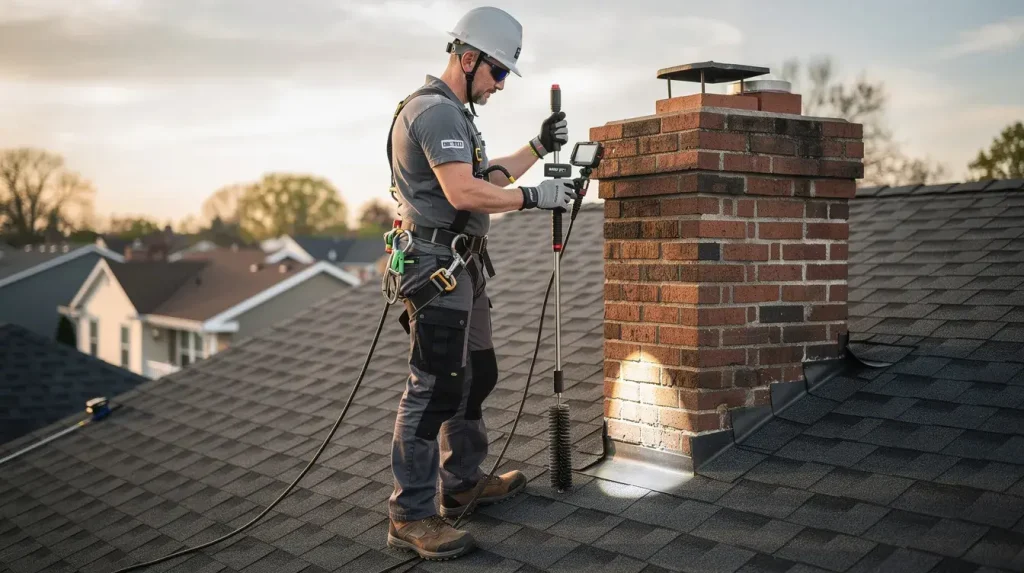
- The real cleaning happens when they go in through the bottom or top with long-reach rods and brushes that match the liner size – that’s where the creosote, soot, and loose debris get removed.
- Cleaning up the firebox, damper, and smoke shelf to get rid of all the ash, soot, and crud that’s accumulated there.
- A quick visual inspection, often aided by a camera, to check the liner condition, cap, crown, and flashing. Any of that structural stuff gets checked too.
- They’ll document what they find, and if there’s anything that needs to be fixed, they’ll take some photos of it so you can see.
A typical chimney sweep usually takes 30 to 60 minutes if it’s just a standard single-flue system. In Houston, though, things can take 45–90 minutes if the sweep includes a really thorough inspection or if they hit some tough buildup or hard-to-reach roof spots. Reputable sweeps will leave your area looking cleaner than it did when they got there – no soot piles, no muss or fuss.

How Often Should Houston Homeowners Schedule Chimney Services?
Fire safety organizations – like the Chimney Safety Institute of America (CSIA)– say that regular annual inspections are a must for safety, and that’s regardless of how often you use your fireplace. They recommend inspections at least that often everywhere, but in Houston, the humidity and occasional storms add a little extra nuance to the situation.
- Wood-burning fireplaces: at least one inspection per year, with a cleaning if there’s creosote or soot buildup. You might need to clean it twice a year if you’re a heavy user.
- Fireplaces you only use a few times a season: still get an annual check, even if you don’t light a fire very often – the chimney can still get damaged from animal nesting or storms.
- Gas fireplaces: inspection every year or two to check the venting, soot patterns, and moisture problems in the chase.
- After a bad wind or hail storm, consider scheduling an extra inspection to check for chimney cap damage, cracked crowns, or shifted masonry.
Schedule your chimney maintenance during the spring or summer when prices are probably steady, and availability is better. And if you ever notice smoke issues, new odors, or visible damage, just book a visit already – regardless of what the calendar says.
Types of Chimney Repairs a Sweep May Recommend
When a sweep inspects your chimney, they’re looking to see if these components are in good shape, or if they’re cracked, rusted, missing, or damaged in some other way – and whether they need a fix-up or a full replacement. In a lot of cases, Houston homeowners have probably blamed roof problems on the roof itself when the real issue was a missing or damaged chimney cap, a rusted chase cover, or a cracked crown.
Don’t even think about trying to fix structural stuff or liner repairs yourself – hiring a qualified pro is the only way to go. In a city that gets hammered with around 50 inches of rain every year, water is probably the worst enemy a chimney could have. Three key components at the top of the chimney are the first line of defense:
In a city that averages around 50 inches of rain per year, water is often a chimney’s biggest enemy. Three components at the top of the chimney serve as the primary line of defense:
- Chimney Cap: This is a metal cover with some mesh that sits on top of the flue and helps keep moisture and debris out. Some have spark arrestors to make sure you’re not sparking a roof fire.
- Chimney Crown: this is the sloped concrete or mortar at the very top of your masonry chimney, around the flue. It’s meant to shed water away from the brick.
- Chase Cover: This is a metal lid used on a lot of factory-built chimneys. Like many other things in Houston’s climate, they can rust through and need to be replaced periodically.
When a sweep inspects your chimney, they’re looking to see if these components are in good shape, or if they’re cracked, rusted, missing, or damaged in some other way – and whether they need a fix-up or a full replacement. In a lot of cases, Houston homeowners have probably blamed roof problems on the roof itself when the real issue was a missing or damaged chimney cap, a rusted chase cover, or a cracked crown.

Chimney Fires: Risks, Warning Signs, and Prevention
A chimney fire happens when all that creosote inside the flue finally goes up in flames. Even if the fire never actually enters the living space, the intense heat can still cause serious damage – crack flue tiles, warp metal components, and even compromise the entire structure of the chimney. The one thing that stops this from happening? Regular chimney cleaning.
According to fire safety data, a staggering 28% of home heating fires are caused by uncleaned chimneys.
Here’s what a sweep might see after a chimney fire has already occurred:
- Warped or discolored metal on the caps or chase covers.
- Cracked, split, or missing flue tiles.
- Puffed, flaky, or honeycomb-textured creosote.
- Cracks in masonry or smoke chamber surfaces that weren’t there before.
The everyday steps homeowners can take to stay safe:
- Get your chimney cleaned and inspected regularly so creosote doesn’t get too out of hand. This, by the way, is the foundation of fire safety.
- Only burn seasoned, dry wood, not trash, cardboard, or green wood.
- Avoid those smoldering, low-temperature fires that tend to create more creosote in the first place.
- And of course, make sure your smoke and carbon monoxide alarms are in good working order.
If you even suspect a past chimney fire (that loud roaring sound, those popping noises, or that sudden heavy smoke from the chimney), then stop using the fireplace and get a proper chimney inspection before lighting another fire.
What You Can Safely Check Yourself vs. What Needs a Pro
Homeowners can do some basic visual checks, but they shouldn’t be climbing on the roof or disassembling chimney components. Safety is a big deal here, especially on those two-story Houston homes with steep roof pitches.
Homeowner-friendly checks:
- Look for obvious cracks or staining on the face of the fireplace or ceiling nearby.
- Check for any strong odors, drafts, or smoke spillage while the fireplace is in use.
- Shine a flashlight up from the firebox to spot any obvious obstructions or excessive soot near the damper.
- Take a gander from the yard and see if you can spot a missing chimney cap, a tilting chimney, or any obvious rust streaks.
Things that need a pro to do:
- Climbing on the roof, using ladders, or doing a close inspection of the chimney crown, cap, or flashing.
- Flue liner evaluation using cameras or specialized tools.
- Structural chimney repair, relining, or smoke chamber parging.
- Gas line adjustments, burner service, or gas fireplace diagnostics.
If something looks off from the ground, call a chimney sweep – don’t reach for that ladder.
Choosing a Chimney Sweep in Houston
Not all chimney services are created equal, and price isn’t the only thing that matters when you’re vetting a chimney sweep in the greater Houston area. Here’s what to look for:
- The proper insurance and business licenses (where required).
- Formal chimney training and certifications – look for certifications from the Chimney Safety Institute of America or the National Chimney Sweep Guild. Texas does not require state licensing for chimney sweeps, so a certified chimney professional stands out.
- Clear explanations of what’s included in a chimney cleaning or inspection – no vague “quick sweep” offers.
- Use of drop cloths, HEPA vacuums, and written reports with photos for any recommended chimney work.
- Familiarity with masonry chimneys and prefabricated or metal systems common in Houston neighborhoods.
- Respectful scheduling, on-time arrival, and transparent pricing for chimney services.
Ask how often the company performs chimney inspections versus just basic sweeping. It’s the inspection skill and experienced technicians that separate a good company from the ones just going through the motions. Companies like Lord’s Chimney focus specifically on chimney cleaning, chimney repair, and related services in the greater Houston area – that kind of focused experience is worth looking for.
Quick FAQs About Chimney Sweeps and Chimney Cleaning
Here are answers to questions Houston homeowners frequently ask about chimney services.
Just how long is a typical chimney sweep visit in Houston going to take?
Most of the time it’s about 30 to 60 minutes for a single flue system that’s in pretty good shape. If the sweep has to do a detailed inspection, deal with some heavy creosote buildup, or has to work on a tall or tricky roof, it can take closer to 90 minutes or even longer. Prices can vary, but the national average for a chimney sweep job is around $100 to $130, and costs can go up if the job is harder to get to or requires extra services.
Do gas fireplaces need chimney cleaning too?
Technically, no – they don’t produce the same amount of creosote that wood-burning systems do, so you don’t get the same buildup. But they still need regular inspections to make sure the chase and liner are okay, to clean off soot that can accumulate on the glass and venting bits, and to check that the venting system is working right.
Fireplace pros usually focus on inspection and troubleshooting with gas systems, rather than doing heavy soot removal. Cleaning and repair needs for gas fireplaces vary a lot depending on the system, so a qualified fireplace services pro can give you a good idea of when and how to clean your gas fireplace.
Is chimney cleaning a messy job?
Not if you get a real pro to do it. A good chimney company will cover up your fireplace with a drop cloth, use HEPA-filtered vacuums to clean up any soot or ash, and get the job done without leaving a mess in your home. Of course, if you’ve been putting off cleaning your chimney for a while and there’s a lot of buildup, that can add to the cost, but a reputable company will make sure they leave your house looking great when they’re done.
Can I just use a chimney sweeping log instead of hiring a sweep?
Well, sweeping logs can help loosen some of the surface-level creosote, but they just can’t replace a proper mechanical cleaning or a thorough inspection. They won’t get rid of animal nests, check for cracks in the flue tiles, or make sure your chimney is safe. If you wait too long to get a real cleaning, you might end up paying more for a complex job, so using a sweeping log instead of a real sweep can actually end up costing you more in the long run.
What’s the difference between a chimney cleaning and a chimney inspection?
Chimney cleaning is all about removing the creosote buildup and soot from the flue and firebox. A chimney inspection, on the other hand, is a much more detailed look at the whole system – the condition of your liner, the state of your chimney crown, how well the cap is working, how stable the masonry is, how your flashing is doing, and the airflow through the chimney.
A lot of companies will do both at the same time, but you really want to have the inspection done at least once a year to keep your system safe and running smoothly, whether you’re burning wood, using gas, or barely using the fireplace at all. And don’t forget – chimney fires can happen silently and quietly, without you even realizing it, and regular inspections are the best defense against that threat.