First real cool front of November – you haven’t touched that fireplace since last winter, and when you finally get a fire lit, the room fills up with this awful acrid smell, smoke is drifting back into the living space instead of going up the flue, and you start noticing dark stains around the firebox opening. Something made a mess during those eight or nine months when the fireplace was idle.
This article breaks down what chimney cleaning in Houston is all about, why the service matters more here than in drier parts of the state, what warning signs to watch out for, and what happens during a visit from a pro chimney sweep. Let’s face it, chimney cleaning is crucial for safe fireplace use – and understanding the process helps you make better decisions about maintenance.
What Is Chimney Cleaning? (The Lowdown on a Chimney Sweep Service)
Chimney cleaning is the process of mechanically removing the junk that builds up inside a chimney system – the soot, creosote, ash, and other obstructions that can cause problems. It’s maintenance work, not repair.
Here’s what a chimney sweep usually targets during a standard cleaning:
- Creosote and soot – the yucky stuff that coats the flue lining over time – from powdery deposits to hard, glazed layers
- Ash and loose debris – leftover junk in the firebox, on the smoke shelf, and inside the smoke chamber
- Blockages – animal nests, leaves, twigs, spider webs, and bits of fallen masonry that can restrict airflow
- Chimney cap and damper areas – getting rid of any obstructions so the system can breathe properly
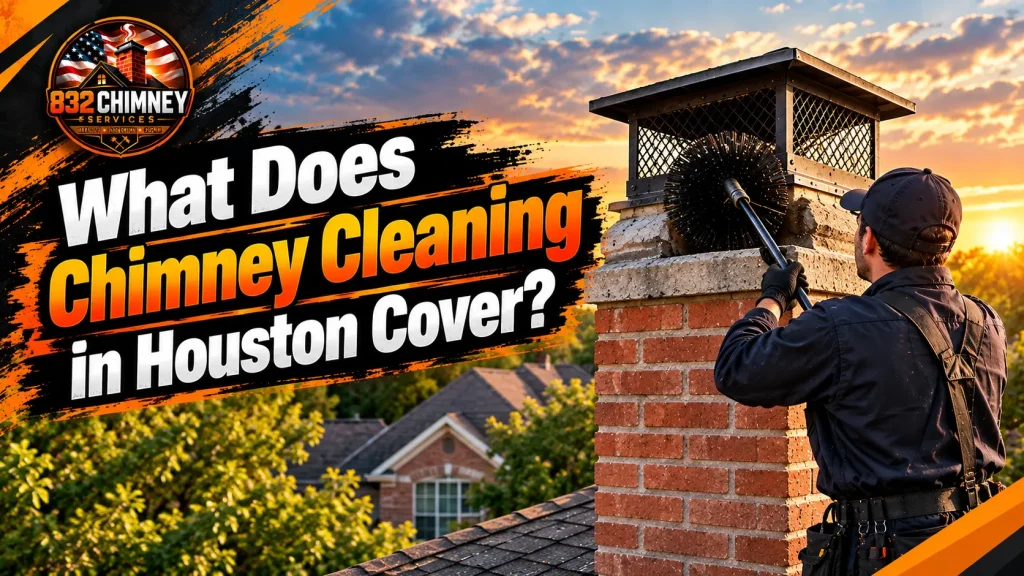
Chimney cleaning has come a long way from the old image of someone sweeping soot with a broom. Modern pros use all sorts of gear – rod-mounted brushes, wire and flexible brush systems, telescoping rods, and HEPA-filtered vacuums to keep dust under control. A cleaning job doesn’t fix structural cracks, leaning stacks, or damaged masonry – that’s repair work.
Gas fireplaces, wood-burning masonry systems, and prefab chimney fireplace units all need chimney cleaning although the kind of buildup is different. Wood-burning creates some of the creosote buildup. Gas systems can accumulate soot, carbon deposits or rust. When a chimney is not used it can gather animal nests and debris regardless of the fuel type.
Why Chimney Cleaning Matters in Houston’s Climate
Houston lies in a subtropical zone where humidity often exceeds 70 percent. Storms can deliver an amount of rain in one afternoon. These conditions treat chimneys in a way different from the dry heat of West Texas or the milder seasons up north.
Houston humidity can accelerate the breakdown of masonry and chimney parts. Bricks and mortar soak up moisture. Rarely dry completely between storms. Mortar joints that could endure 30 to 40 years in an area may begin to fail in 15 to 20 years when Houston experiences wet‑dry cycles. If a chimney cap is missing or damaged, flashing fails, or the crown cracks, rain enters. That rain produces rust on metal parts and crumbles masonry. Creates a stubborn, musty odor.
Creosote buildup can start chimney fires. When moisture is added, the danger becomes larger. Wet creosote creates a sticky, tar‑like layer or hardens into a glaze that’s more flammable and much harder to clean. Professional chimney cleaning removes soot and smoke before it becomes a problem. Regular chimney cleaning stops creosote buildup. Reduces fire hazards that could threaten your home and family.
Many fireplaces in Houston stay unused for eight to ten months. During that time, dust gathers, spiders spin webs, and birds or squirrels can build nests in an unprotected flue. When the first fire of the season is lit, these blockages limit draft and force smoke and gases back into the house.
Some Houston chimney companies also offer dryer vent cleaning, since lint in humid environments holds moisture and compacts faster, but the biggest concern here is the chimney itself.

What Professional Chimney Cleaning in Houston Typically Involves Getting Your Chimney Clean
A standard chimney sweep visit is a pretty predictable affair – here’s what most pros will do:
Getting Ready
The technician. Carefully covers the floors, furniture and hearth area with drop cloths or tarps to keep everything under control. The technician positions a HEPA vacuum at the base of the chimney to catch any falling soot, ash and creosote particles before they spread into the room. The technician focuses on keeping the job as tidy, as possible from start to finish.
The Cleaning Process
- Brush the flue lining from bottom to top (or top to bottom, depending on the system and access) with the right size brushes and rods.
- Get rid of creosote buildup on the flue walls, including that stubborn or glazed stuff when it’s present.
- Give the smoke shelf, smoke chamber, and firebox a good going over to remove loose soot and ash.
- Clear the chimney cap area of all the usual suspects – leaves, animal nests, and debris.
Checking the Components
Doing a quick visual inspection is pretty standard for most chimney cleaning services in Houston, including names like 832 Chimney Services. The technician will check that the damper is working okay, take a look at the accessible parts of the flue liner, and see how the chimney cap is faring. If anything looks dodgy, they’ll make a note and suggest some further investigation.
Dust Control & Cleanup
Modern chimney cleaning is all about leaving the room looking like you never even had someone in there cleaning the thing. Vacuum systems and containment methods at the fireplace opening all work together to keep soot from spreading into the living space. And let’s face it, in Houston with its wet climate, airborne soot is going to stick around longer, so getting this right is vital.
How Often Should Your Houston Chimney be Cleaned?
There’s no one-size-fits-all rule here – it all depends on how often you use the fireplace, what you burn, and the condition of the system as is.
The CSIA reckons an annual inspection is a good idea, and it’s worth doing at least once a year regardless of how often you light the fire. Cleaning happens when the creosote buildup hits around a 1/8 inch on the flue walls, or when you get soot, debris or blockages.
Wood-burners that get a fair bit of use through the winter months in Houston will likely benefit from an annual clean, best done before or after the main heating season. If you are burning softwood or fresh wood you will probably have to do it often because that material makes creosote build up very quickly.
If you only use the fireplace a few times each year creosote may not pile up much. You still need to get a professional inspection from time to time to look for animal nests, debris and moisture damage. Vented gas fireplaces tend to develop a bit of scale or rust so that is something to watch for.
Regular inspections and cleanings are, about keeping the system safe and running efficiently not depending on the calendar. Watch for any warning signs. Seek professional advice.
Warning Signs Your Chimney Needs Cleaning
If you notice any of these, it’s time to give a professional a call rather than trying to sort it yourself:
- Strong odors – a smoky or tar-like smell coming from the chimney fireplace – especially noticeable on humid days or after rain – means creosote or water’s accumulated
- Visible deposits – black, flaky or shiny residue on the firebox walls, damper or around the fireplace opening means creosote’s built up; and if you leave it, it can lead to a chimney fire
- Smoke backing into the room – struggling to get a fire to burn properly, slow drafting or smoke hanging around the firebox suggests the flue’s blocked
- Animal activity – funny noises, feathers, twigs or droppings in the fireplace are all signs you’ve got nests or pests inside the chimney
- Moisture indicators – stains on the ceiling or wall near the chimney, rust on the damper or crumbling mortar all hint at water getting into the system
- Carbon monoxide concerns – blocked chimneys can lead to carbon monoxide poisoning, and at the very least, trapped gases in the living space; so if you suspect poor venting, stop using the fireplace and call someone right away
Chimney Cleaning vs. Chimney Inspection vs. Chimney Repair
These three services may be linked,. They are not identical. Understanding the difference lets you schedule the work, at the correct time.
Chimney Cleaning is the task where you get a professionals hands dirty and physically sweep away all the soot, creosote, ash and blockages.
Chimney Inspection is where someone does a proper assessment of the whole system . A visual check aka Level 1 inspection. More detailed inspections might involve camera scopes, attic access, or actually climbing up onto the roof. Chimney inspections help identify all the venting system hazards & catch the problems that you cant spot during a standard sweep. If you catch structural issues early you can prevent expensive repairs down the line.
Chimney Repair is the work that gets done to fix problems that show up during a clean or inspection -cracked flue tiles, mortar joints that are gone to pot, chimney caps that are shot, faulty dampers, or corroded chase covers. You get chimney repair to stop dangerous gas building up & prevent fires that a clean alone cant sort out.
Booking just a chimney cleaning wont get you automatic full diagnostic testing, masonry repair, or major fireplace reconstruction. There’s a good chance you might want to combine occasional chimney inspections with your cleaning in Houston. That way you catch water damage & structural issues before they become a real expense. Early detection of problems can prevent costly repairs.
When Chimney Cleaning May Not Be Enough
Sometimes a technician turns up to clean the chimney & realizes there are some other issues that need sorting . A tech might find
- Large cracks in the flue liner that could let heat or exhaust into your framing
- Severe brick spalling or missing mortar that has compromised the whole structure
- Heavy rust on metal components of prefab systems, making it unsafe to keep using them
- A chimney that has started to lean or separate
Repeated water leak problems, missing bricks, or gaps in mortar mean you need chimney repair work beyond your normal cleaning services. Repair work will get your chimney back to working properly & safely for years to come.
Some Houston homes have had water getting in for so long that you get stains, mold , or soft drywall near the chimney inside the house. A cleaner may point these out but cant fix them – that will need a dedicated repair crew.
If a chimney sweep like 832 Chimney Services recommends stopping cleaning to discuss safety issues, listen to them. Get a proper inspection done to sort out what needs fixing before you use the fireplace again.
What to Expect During a Professional Chimney Cleaning Visit in Houston
Here is what happens from scheduling to completion in a nutshell
Booking a visit. Generally speaking, you’ll schedule a time outside of any heavy rain. The company will ask about whether you have gas logs or a wood-burning fireplace – and if the fireplace has been used recently. Be sure to leave the fireplace alone for at least 24 hours before they arrive.
Homeowner prep:
- Move furniture a few feet clear of the chimney fireplace
- Clear the mantel & hearth of any decorations & ornaments
- Get the pets safe in another room
- Open the damper right up if you have a wood-burning system
On-site process. The technician shows up, introduces themselves, explains what will be done, & lays down some protective coverings. They will likely do a quick visual check before getting started. Then they’ll get to work on the sweep. That’s the bit where they brush the flue, vacuum all the debris, clear the smoke shelf & firebox, & check the chimney cap & damper.
After the clean. Many professional cleaners will go over what they found, show you some photos if any, & tell you what they recommend. They may suggest a future chimney inspection, a dryer vent clean, or chimney repair depending on what was found during the sweep.
Most standard cleanings for a residential chimney with moderate buildup take about 1 to 3 hours to do. Homes with really bad creosote, a lot of animal nests, or weather damage may take longer or need a revisit.
Other Related Services: Dryer Vent Cleaning & Fireplace Care
Lots of chimney companies in Houston, including 832 Chimney Services, also do work on things like dryer vents & fireplace components. Its usually a good idea to bundle these services with the chimney work. Dryer vent cleaning involves taking out the buildup of lint and debris from the vent line to cut down on fire hazards and make your dryer more efficient. A clogged dryer vent works a lot like a blocked chimney flue – it restricts airflow and lets heat just build up. In Houston’s humid climate, lint is gonna hold onto moisture and compact a whole lot faster, so some homeowners end up scheduling both services together just for the convenience.
Additional chimney and fireplace services we often get asked about include:
- Replacing or installing chimney caps
- Adjusting or replacing dampers
- Repairing or replacing bricks in the firebox or refractory panels
- Doing light repair work on your fireplace
You should let trained professionals handle the really tough stuff though – like major masonry work, and repairs to gas fireplaces and chimneys. Don’t even think about trying to tackle it as a DIY project.
Choosing a Chimney Cleaning Service in Houston
Picking a reliable chimney cleaning company is more than just about getting the lowest bid. Scammers in the chimney cleaning business often lowball you at first, then inflate the repair costs once they’re inside your home. Here are a few real-world things you can do to avoid getting taken:
- Look for a company that actually explains what they’ll be doing for you – and shows you their chimney services, including inspection and repair options
- Ask if they’re CSIA certified – that means they’ve got the specialized training and follow all the safety codes
- Make sure they’re properly insured, and check out recent reviews from people in your area to see how they handled things like cleanliness, communication, and punctuality
- Get written estimates and clear communication before they start cleaning – and make sure you know exactly what’s included
- Ask what exactly they’ll be cleaning – like the chimney cap, damper and accessible masonry – and if they can add on dryer vent cleaning at competitive rates
832 Chimney Services is one local company that Houston residents can get in touch with for an evaluation. They cover Houston and the surrounding areas, including Sugar Land, The Woodlands and Conroe.
Frequently Asked Questions About Chimney Cleaning in Houston
How often should I schedule chimney cleaning in Houston?
If you use your wood-burning fireplace a lot, once a year is probably a good place to start. The CSIA recommends annual chimney inspections for anyone – even if you only use your fireplace occasionally, that’s a good idea.
Does chimney cleaning cover a chimney inspection?
Usually they’ll do a basic visual check of stuff that’s easy to see – like the firebox, damper, visible parts of the liner and chimney cap. A more thorough inspection with a camera or climbing up into the attic is a separate service, and usually something you’d want to do if the tech found something that really caught their eye.
How long does a typical chimney cleaning take?
For a standard residential chimney with a little bit of buildup, it’s usually between 1-3 hours – any heavier buildup or weather damage will take longer to deal with.
What does chimney cleaning get rid of?
Soot, creosote, ashes, animal nesting material, leaves, spider webs and all the other junk that’s just building up inside the flue. Now, structural problems like cracked liners or bad mortar are not something you just ‘clean away’ – that’s repair work.
Is it safe to clean my own chimney?
If you’re just taking out cold ash from the firebox, that’s probably okay. But if you’re climbing onto the roof, or dealing with creosote, you’re running a lot of risks including falls and soot inhalation. Let professionals do it – they’ve got the right equipment and the knowledge to do it safely and effectively.
Can chimney cleaning turn up problems that need repair?
Yep, it definitely can. In the course of cleaning, the tech might spot cracks in the liner, missing mortar, or rust on the metal parts that need to be fixed. That’s why it’s always a good idea to get a professional in there – they might notice things you wouldn’t even see.
Summary and Next Steps for Houston Homeowners
Chimney cleaning in Houston removes all that flammable junk that’s just building up and keeps your fireplace working the way it should. The upshot is a warmer, healthier home that’s also a lot safer.
Houston’s weather and the fact that lots of people go months without using their fireplaces means regular maintenance, inspections and a good chimney cap are super important. It’s all about keeping the system clean, dry and in good shape – and not having to deal with emergency repairs or replacing your whole chimney down the line.