A cracked brick fireplace is one of the most common things we see in Houston homes. Sometimes it is a thin hairline in the firebox that has been there for years. Other times it is a split running through the mortar, a loose brick in the surround, or a hearth that has started to tilt.
Not every crack means trouble, but some do. This guide explains why brick fireplaces crack in our climate, how to tell a harmless crack from a dangerous one, and how a mason actually repairs the damage.
Why Brick Fireplaces Crack in Houston Homes
Most cases of a cracked brick fireplace come down to a few causes. Brick and mortar are tough materials, but a fireplace puts them through more stress than almost any other part of a house. In Houston, the weather and the soil add even more.
Heat and thermal cycling
Every fire heats the firebox to well over 1,000°F, then lets it cool back down overnight. Each cycle makes the brick expand and shrink a little. Over hundreds of fires, that movement opens small cracks in the firebrick and loosens the mortar joints between them.
Gulf Coast moisture
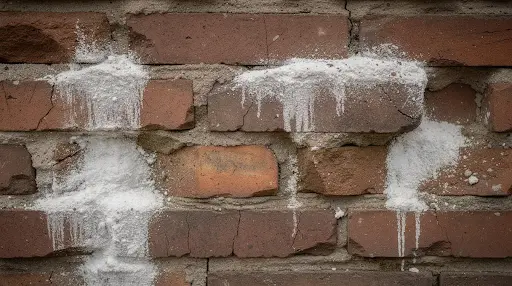
Brick is porous. Houston’s humidity and heavy rain soak into the masonry, especially when a chimney cap or crown is damaged. Trapped water breaks down mortar, causes the brick face to flake off (known as spalling), and leaves white mineral stains called efflorescence. If you see those white stains, our efflorescence diagnostics can trace where the water is coming from. We explain the bigger picture in our guide on how Houston’s climate damages chimneys.
Clay soil and foundation movement
Much of the Houston area sits on expansive clay that swells when wet and shrinks during dry spells. A heavy masonry fireplace sits on its own footing, so when the soil moves, the fireplace can move differently from the rest of the house. That shows up as cracks that run diagonally through the brick or as a hearth that sinks or tilts.
Old or wrong mortar
Many fireplaces built from the 1960s through the 1990s still have their original mortar. After decades of heat and moisture it turns soft and sandy. We also see repairs where someone used regular mortar inside the firebox. Standard mortar is not made for direct flame, so it cracks and falls out within a season or two.
Chimney fires
A chimney fire can burn hot enough to crack firebrick, flue tiles and mortar in a single night. Many homeowners never notice a small chimney fire, so unexplained new cracks in the firebox are worth having checked.
Warning Signs Your Brick Fireplace Needs Attention
Catching a cracked brick fireplace early keeps the repair small. Look closely at your fireplace before the first cool front. These are the signs we tell homeowners to watch for.
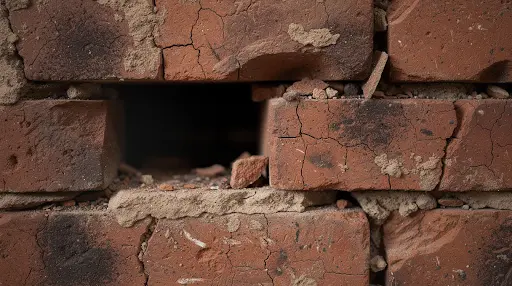
- Cracks in the firebox that are wider than a hairline, or that you can fit a coin edge into
- Mortar that crumbles when you scrape it with a key
- Gaps between bricks where you can see darkness behind them
- Bricks in the surround that move when you press on them
- Flaking or chipped brick faces
- White powdery stains on the brick, or water stains near the opening
- A hearth that has cracked, sunk or pulled away from the wall
- Smoke stains above the opening that are new or getting worse
Hairline Cracks vs Structural Cracks
Homeowners ask us this more than anything else. Here is how to tell them apart.
Hairline cracks in individual firebricks are common. Firebrick is built to handle heat, and fine surface cracks often appear after years of normal use. If the brick is still solid, the crack is thinner than a credit card, and the mortar around it is intact, it usually only needs to be watched.
Structural cracks are different. Treat a crack as serious if it:
- Runs through several bricks and mortar joints in a line or a stair-step pattern
- Is wider than about 1/8 inch
- Gets longer or wider from one season to the next
- Comes with a leaning chimney, a sinking hearth, or gaps where the fireplace meets the wall
Cracks like these can let heat and sparks reach the wood framing behind the fireplace. Do not use the fireplace until a professional has looked at it. If the exterior chimney is also leaning or separating, see our full chimney repair service.
6 Proven Fixes for a Cracked Brick Fireplace
The right fix for a cracked brick fireplace depends on where the crack is and what caused it. These are the six fixes a mason uses most often.
1. Repointing failed mortar joints
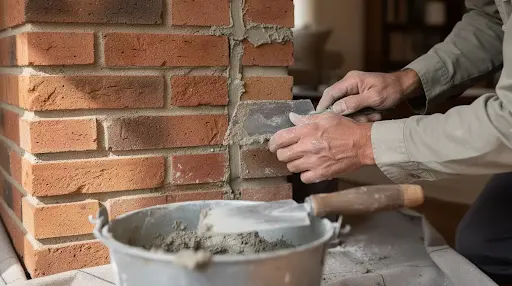
Repointing means grinding out the damaged mortar to a depth of about 3/4 inch and packing the joint with fresh mortar. Inside the firebox, that has to be refractory mortar. On the outer surround, we match the color and joint style so the repair blends in. Learn more about our chimney mortar repair work.
2. Replacing cracked firebrick
When individual firebricks are broken or crumbling, we cut them out and set new firebrick in refractory mortar. Replacing a few bricks early costs far less than rebuilding the whole firebox later.
3. Rebuilding the firebox walls
If the back or side walls have widespread cracks, loose bricks and failed joints, a partial or full firebox rebuild is the safer fix. Some prefab fireboxes use refractory panels instead of brick, and those panels can be replaced as a set. Damage higher up, above the damper, may point to a problem with the smoke chamber.
4. Repairing a cracked or sinking hearth
A cracked hearth extension is more than a looks issue. It is the non-combustible floor that stops sparks and embers from reaching your flooring. Building codes require it to extend at least 16 inches in front of the opening and 8 inches to each side, or 20 inches and 12 inches for larger openings. We level and rebuild hearths so they meet those measurements.
5. Replacing damaged face brick
Chipped or spalling brick on the front of the fireplace can be cut out and replaced one at a time. For older Houston homes, matching the brick can take some searching, so we often use salvaged brick. If the whole face looks worn out, fireplace refacing may be a better long-term choice than patching.
6. Stopping the moisture first
Any repair will fail again if water keeps getting in. Before we rebuild anything, we check the cap, crown and flashing. A chimney leak inspection finds the entry point, and a breathable chimney waterproofing treatment helps keep the new work dry.
Cracks Around a Gas Fireplace
A cracked brick fireplace is not only a wood-burning problem. Gas fireplaces crack too. The steady heat from gas logs can dry out and loosen the mortar on the surround, and facing brick that was glued on rather than mortared sometimes pulls away from the wall.
When we repair the brick around a gas unit, we remove and reset the surround without disturbing the insert or gas line. If we notice a weak flame, soot on the logs or a pilot that keeps going out during the visit, we will point it out. Those are appliance problems, and our team handles them through our gas fireplace repair service.
Can You Fix a Cracked Brick Fireplace Yourself?
Some small jobs are fine for a handy homeowner. You can seal a hairline crack on the outer surround with a high-heat masonry caulk, and you can clean light efflorescence with a stiff dry brush.
Leave the rest to a professional. Firebox repairs need the right refractory materials and the right joint depth, and a mistake there puts heat right next to your wall framing. Structural cracks also need someone to find the cause, because patching the crack without fixing the soil movement or water problem only hides it for a while.
What Happens During a Repair Visit
Every repair starts with an inspection. We look at the firebox, hearth, surround and the visible parts of the chimney, take photos of the damage, and explain what we found in plain language. You get a written estimate before any work starts. For a general idea of pricing, see our chimney repair cost guide.
On repair day we cover your floors and furniture, set up dust barriers, and clean up when the job is done. Most small fireplace repairs take one day. A firebox rebuild or hearth repair may take two.
If we used refractory mortar, you will need to wait at least 24 hours before lighting a fire, then start with a few small fires so the mortar can cure properly. If the inspection turns up a cracked crown, a missing cap or heavy creosote, we can take care of those on a separate visit through our chimney crown repair or chimney sweeping services.
When to Schedule Fireplace Repairs in Houston
Houston’s burning season usually runs from late October through February. Most homeowners call the week of the first cold front, which is when schedules fill up fast.
The best time for repairs is late summer or early fall. Booking in August or September gives the mortar time to cure and leaves room for any extra work. The Chimney Safety Institute of America recommends a yearly inspection before you start using your fireplace, and that is a good time to have a cracked brick fireplace looked at. Our preventive chimney inspections cover the fireplace and chimney in one visit.
When you call, it helps to have the age of your home, the type of fireplace (wood or gas), and a few photos of the cracks ready.
Frequently Asked Questions
Is it safe to use a fireplace with a cracked firebox?
A fine hairline crack in a single firebrick is usually safe. Wide cracks, missing mortar, or cracks that run through several bricks are not, because they can let heat reach the wall framing. Stop using the fireplace and have it inspected.
Why does my brick fireplace keep cracking after repairs?
Repeated cracking usually means the cause was never fixed. The most common reasons are water getting in from above, foundation movement, or the wrong type of mortar used in the firebox.
How long does a brick fireplace repair take?
Most small repairs are done in one day. Larger firebox or hearth work can take one to two days, plus at least 24 hours for the mortar to set before your first fire.
Can cracked fireplace bricks be repaired without replacing them?
Surface cracks on the outer surround can often be sealed. Cracked bricks inside the firebox should be replaced, because sealant does not hold up to direct flame.
Get Your Fireplace Ready for the Season
A cracked brick fireplace rarely fixes itself, and small cracks are always cheaper to repair than a full rebuild. If you have spotted cracks, loose bricks or crumbling mortar, contact 832 Chimney Services or call (832) 662-3437. We will take a look, explain your options, and get your fireplace safe before the first cold night.