A damp, ashy smell after a rainstorm. A rust stain on the damper. A few crumbs of brick in the firebox. Each one is easy to shrug off in a city where the fireplace might see only a few weeks of use a year. But humidity, heavy rain, and shifting soil wear on a chimney whether or not you ever light a fire. This guide covers what to look for, why damage tends to move faster in this climate, and when it makes sense to call for chimney repair in Houston, TX.
A Quick Check Before Burn Season
Spend ten minutes on these before the first fire of the year. Any one of them is reason enough to hold off and book an inspection:
- Smoke drifting back into the room instead of rising, which points to a blockage or a damaged flue liner
- A strong soot or creosote smell, a sign of buildup or trapped moisture
- Cracks in the exterior masonry
- Water stains on walls or ceilings near the chimney, usually traced to a leaking crown, cap, or flashing.
- Chips of brick or tile in the firebox
- Rust on the damper, firebox, or other metal parts
- Birds, nests, or debris in the fireplace, which often means the cap is missing or damaged
Many of these problems turn up during a routine sweep, well before they become dangerous. Others don’t announce themselves at all, which is why a yearly inspection is worth the appointment.
Why Chimneys Break Down Faster Here
Brick and mortar are porous, and they take on water. Houston gets roughly 50 inches of rain a year and sits in humid air most of the season, so masonry here stays wet far longer than it would in a drier region. Mortar joints that might last 30 to 40 years elsewhere can need attention in 15 to 20.
Storms add to the problem. Wind and driving rain loosen flashing, shift caps, and crack crowns, and once water finds a way in, it can rot the framing around the chimney and rust the metal components inside. The rest of the damage follows from there: smoke leaks, structural decay, and in the worst cases, carbon monoxide entering the house. Catching a small defect early is almost always cheaper than repairing what it becomes.
What You Can See From the Ground
You don’t need a ladder for a first look. Stand back and scan the stack for:
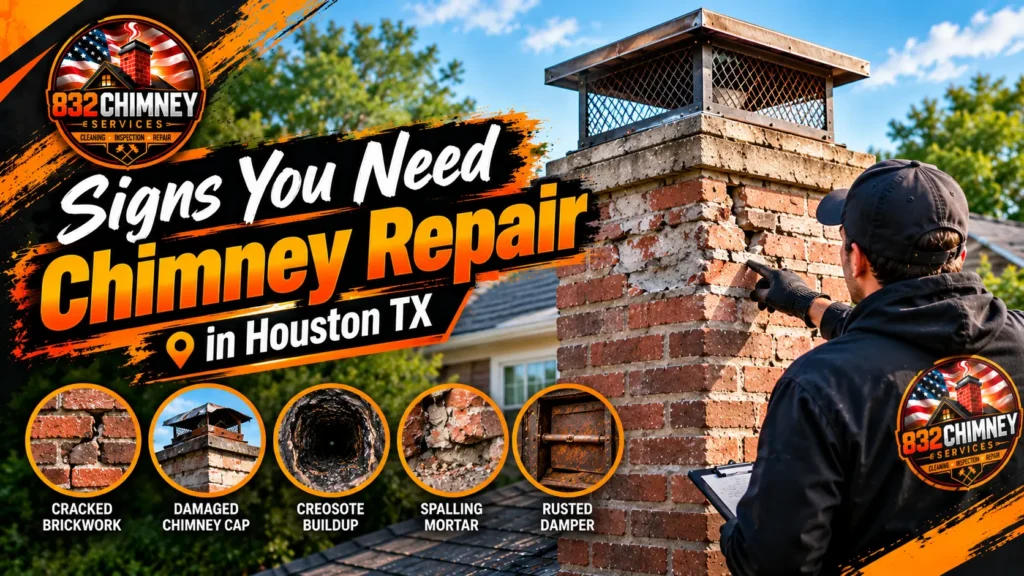
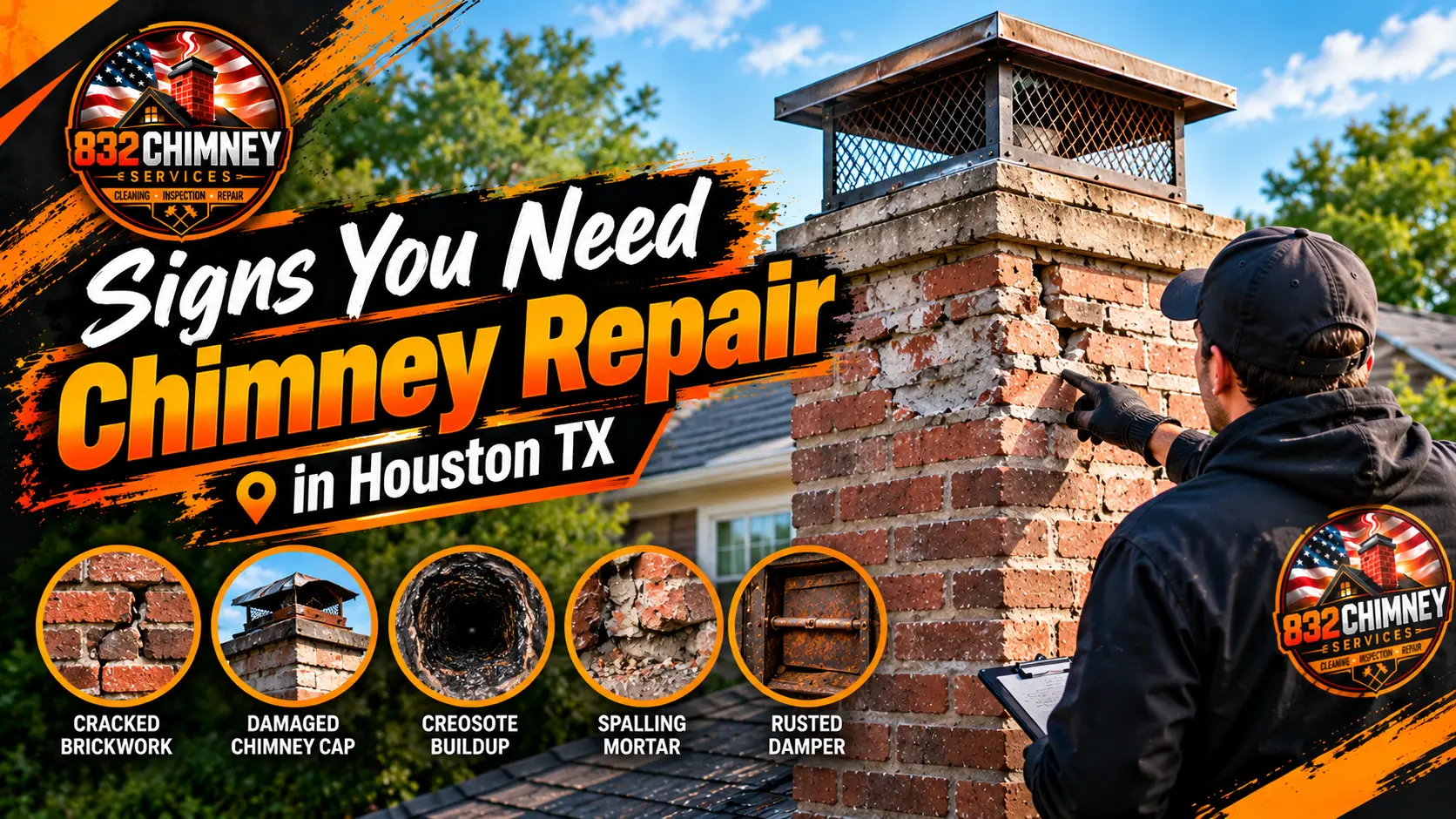
- Bricks that are cracked, missing, or flaking at the surface (spalling)
- Mortar joints that are crumbling or recessed
- A chimney that appears to lean, which can mean foundation movement
- Flashing at the roofline that’s rusted, lifted, or gone
- A cap that’s bent or missing
- A crown with cracks or broken pieces
Hairline cracks deserve more attention than they usually get. Heat expands them, rain fills them, and over a few seasons they open wide enough to let in real water. If you notice damage, have a certified chimney professional look at the parts you can’t reach, especially the crown and the flue.
Clues Inside the House
Interior signs often show up before anything looks wrong outside. Pay attention to peeling paint or water stains near the fireplace or on the ceiling above it, a musty smell after rain, loose or cracked bricks in the firebox, rust on the damper or glass doors, and a damper that has become hard to operate.
Leaks can also be misleading. In a two-story house, water entering at the chimney may show up as a ceiling stain a long way from the fireplace itself. When you call a chimney company, tell them where the stains are and when they appear. It helps them trace the source faster.
Smoke, Draft, and Odor Problems
A fireplace that behaves differently is telling you something. Smoke entering the room, a burnt smell when the fireplace hasn’t been used, cold air sinking down the flue with the damper closed, and fires that smolder or refuse to stay lit all point to a draft problem.
Creosote, nests, and debris are the usual culprits. Anything that narrows the flue reduces draft, and a restricted flue raises the risk of a chimney fire and of carbon monoxide building up indoors. A yearly sweep and inspection is the most reliable way to keep the passage clear.
Rain, Leaks, and Water Damage
Moisture is the leading cause of chimney damage in this area, and the evidence tends to show up in a few predictable ways:
- Dripping sounds in the flue after rain
- A damp smell or visible wetness in the firebox
- White, powdery deposits on the brick (efflorescence), which is mineral residue left behind as water evaporates
- Mold or mildew near the chimney
- Warped wood around the mantel
A failed cap, a cracked crown, or deteriorating masonry usually lets the water in. Because roof flashing is part of the same system, it makes sense to have the roofline checked at the same visit as the masonry. Fixing one without the other often means the leak comes back.
Creosote and Chimney Fires
Creosote is a tar-like, flammable residue left behind when wood burns at lower temperatures. It forms even in chimneys that don’t get much use, and Houston’s humidity makes it worse by keeping the flue damp and the burn cooler.
Heavy buildup looks like a thick, glossy black coating in the flue, flakes or chunks dropping into the firebox, a sharp acrid smell after a fire, or soot staining around the fireplace opening. Left alone, creosote can ignite, and a chimney fire can crack liners and warp metal components. If you suspect a fire has already happened, stop using the fireplace and have a certified chimney service inspect it before anyone lights it again.
Caps, Crowns, and Liners
The smallest parts of a chimney often cause the biggest problems when they fail. A missing or bent cap lets in rain, animals, and debris. A cracked or crumbling crown, the concrete or mortar slab at the top, sends water straight into the masonry below. Chimney crown repair is one of the more common jobs for exactly this reason, and fixing a crown early is far less involved than rebuilding what the water destroys. A damaged flue liner can leak smoke into the house or leave persistent odors.
A qualified technician can repair or replace each of these parts, and doing so early often prevents the need for a larger rebuild.
What Chimney Services Typically Include
A full-service chimney company in the Houston area, including Sugar Land and The Woodlands, will usually offer:
- Chimney sweeping to remove creosote and debris
- Masonry repair for cracked brick and failing mortar
- Flue liner repair or replacement
- Cap installation
- Crown repair or replacement
- Inspections to catch early deterioration
- Bird and animal removal
Many companies also clean dryer vents, which are a separate fire hazard people tend to overlook. Having both done in one visit saves time, and a chimney sweep will often check the dryer vent while on site.
Mistakes That Make Repairs Bigger
The most common one is waiting. Chimney problems rarely fix themselves, and putting off a repair can end in extensive masonry damage or, in rare cases, collapse. Ignoring creosote or water stains is a close second, since both get worse quickly in humid weather.
Hiring an unlicensed or inexperienced tech is another. Incomplete work and missed hazards are the usual results. DIY repairs on a chimney are best avoided too. Working at height on masonry you can’t fully inspect often does more harm than good.
Getting the Chimney Ready for Wet Weather
Prevention is cheaper than repair. A well-fitted cap and a solid crown, along with properly sealed flashing at the base, keep water out of the masonry and the framing around it. A waterproof sealant on brick can also reduce moisture absorption, which cuts down on efflorescence and spalling.
None of this makes a chimney maintenance-free, but it extends the life of the masonry and makes the rainy season easier on the whole structure.
Choosing a Company for chimney repair in Houston TX
Start with local experience. Weather here creates specific problems, and a company that works in the area regularly will recognize them. Look for CSIA certification or membership in a professional chimney organization, both of which suggest the company follows recognized standards. Check customer reviews, ask for a detailed written estimate, and confirm that the company offers a warranty on its work.
It’s also fair to ask about their experience with masonry chimneys and whether they serve your part of the metro area, including Sugar Land and The Woodlands. Clear communication and photo documentation of what they find are good signs.
When to Call
Book a visit if you notice any of the following:
- Visible damage or leaks
- A change in how the fireplace draws or burns
- Signs of water getting in
- Storm or high-wind exposure
- More than a year since the last inspection or sweep
Keep records of past service and take photos of any damage you find. They give a technician useful context and make it easier to track how a problem develops.
If your chimney is showing any of these signs, or you simply can’t remember the last time anyone looked at it, 832 Chimney Services can inspect it and tell you what needs attention before the season starts. A short visit now is much easier than an emergency repair in the middle of winter.